
Hi, I’m Lena — a professional hairstylist with over a decade of salon experience working with athletes and active clients. In this post I’ve curated 24 easy basketball hairstyles for women that balance performance with style. These looks are designed to stay put during high-intensity play, reduce sweat-related frizz, and protect hair from breakage caused by repeated tying. You’ll find options for every hair type and length: sleek high ponytails, low buns, secure braids, hybrid braided-pony styles, and quick updos that transition from court to casual. I’ll share practical salon-tested tips for securing styles without excessive tension, choosing the right elastics and grips, and prepping hair for long-lasting hold. Each style is paired with an image and step pointers so you can recreate game-ready looks quickly, protect your strands, and feel confident whether you’re playing full-court or coaching from the sideline.
Double Dutch Braids — Sporty Braided Pigtails for Medium to Long Hair
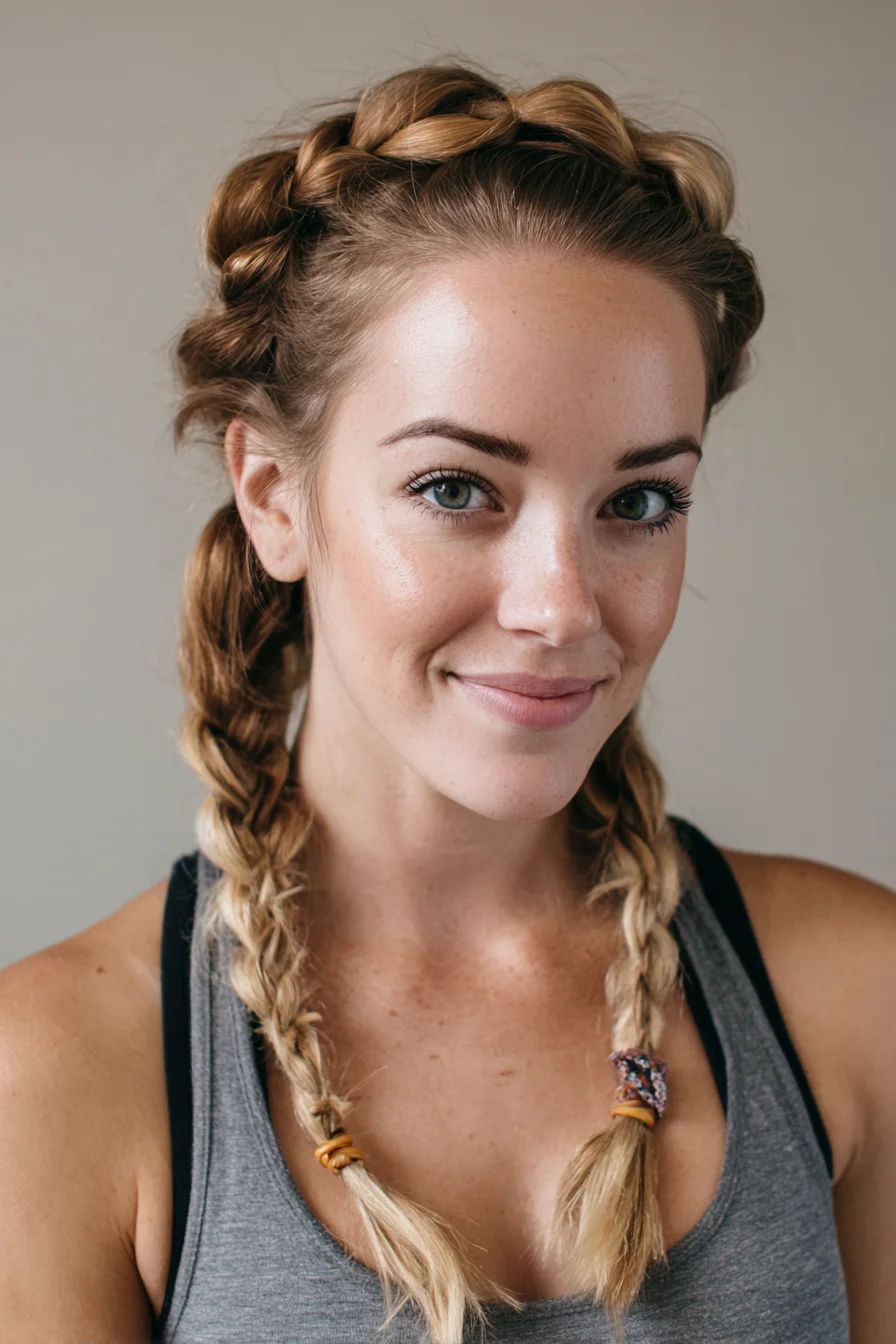
A practical, salon-friendly double Dutch braid style that suits medium to long lengths. Hair type suitability: ideal for straight, wavy, or slightly textured hair and works best on medium to thick densities. Fine hair can benefit from a texturizing spray, light backcombing, or clip-in pieces for added volume. Styling technique: start with clean, detangled hair and a precise center part. Create a Dutch braid on each side by crossing the outer sections under the middle and adding hair at each pass toward the nape; continue to the ends and secure with a small elastic. For a fuller finish, gently pancake the braid. Tools needed: tail comb for parting, sectioning clips, boar-bristle brush, and small clear elastics. Products required: texturizing or dry shampoo for grip, a light smoothing serum for ends, medium-hold hairspray to tame flyaways, and heat protectant if you pre-style with hot tools. Difficulty level: moderate — allow 15–30 minutes depending on experience. Maintenance tips: sleep on a silk pillowcase or wrap, refresh with dry shampoo, retighten at the roots as needed, and avoid heavy conditioners at the crown to preserve hold.
Textured Dutch Crown Braid Updo for Medium to Long Hair
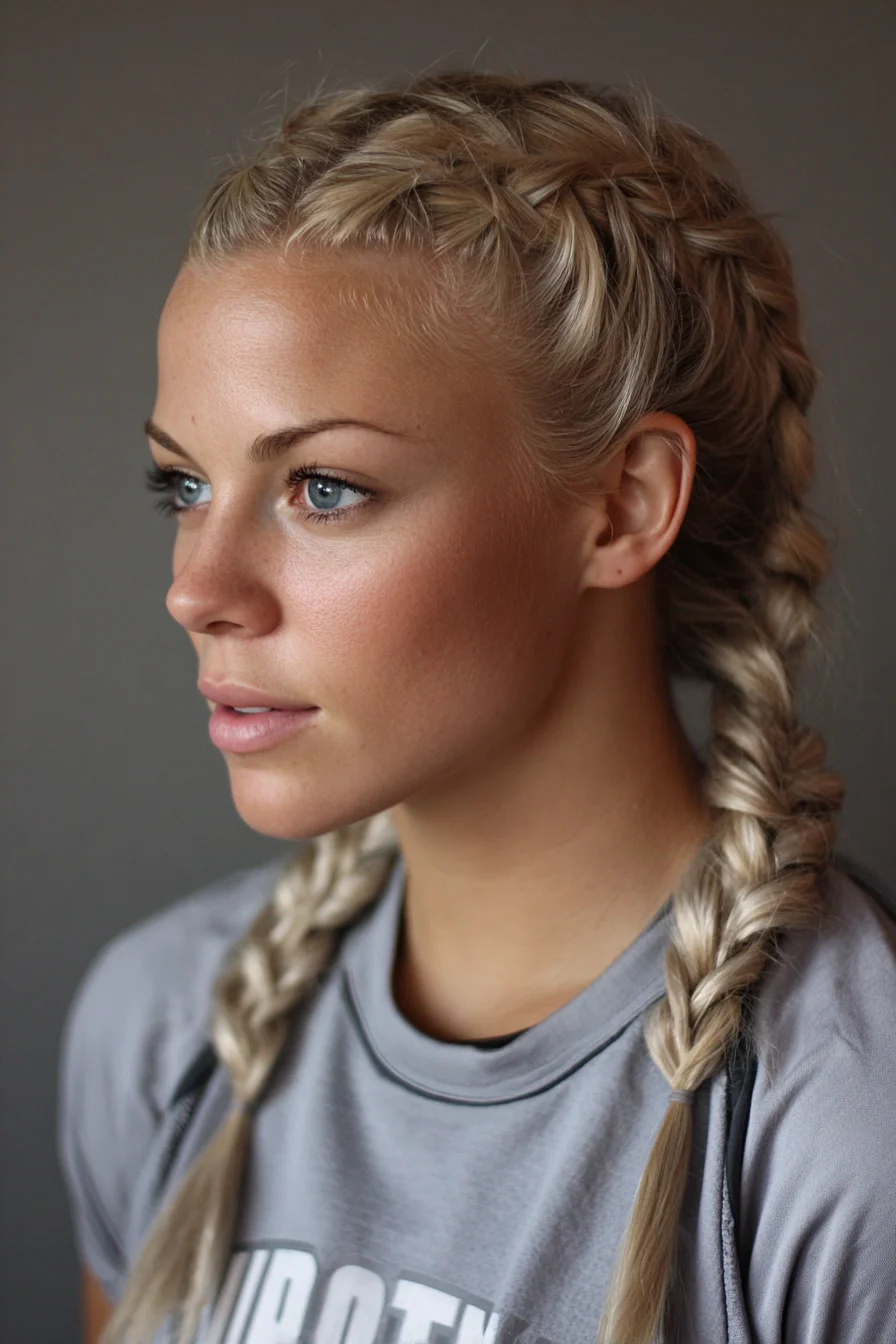
This polished yet relaxed crown braid updo works best on medium to long hair and suits straight to wavy textures; fine hair benefits from a texturizing spray or light volumizing mousse for grip, while thick hair may require stronger pins. Technique: create a Dutch (inside-out) braid along the hairline from one temple to the other, gently pancaking each section as you go for width and softness, then gather the remaining length into a low twisted bun and secure with pins. Tools needed: tail comb for clean parts, sectioning clips, small clear elastic, a selection of sturdy bobby pins, and optionally a 1 curling iron to add wave for hold. Products required: texturizing spray or dry shampoo, lightweight mousse or root-lift, anti-frizz serum for flyaways, and a flexible-hold hairspray. Difficulty level: moderate — expect 20–35 minutes with practice. Maintenance tips: style on second-day hair for best grip, refresh with dry shampoo and re-pancake braid to restore volume, tuck and re-pin loose pieces overnight or sleep on a silk pillowcase, and avoid heavy conditioners before styling to maintain texture.
Textured Dutch Braids Leading Into a Messy High Bun Updo
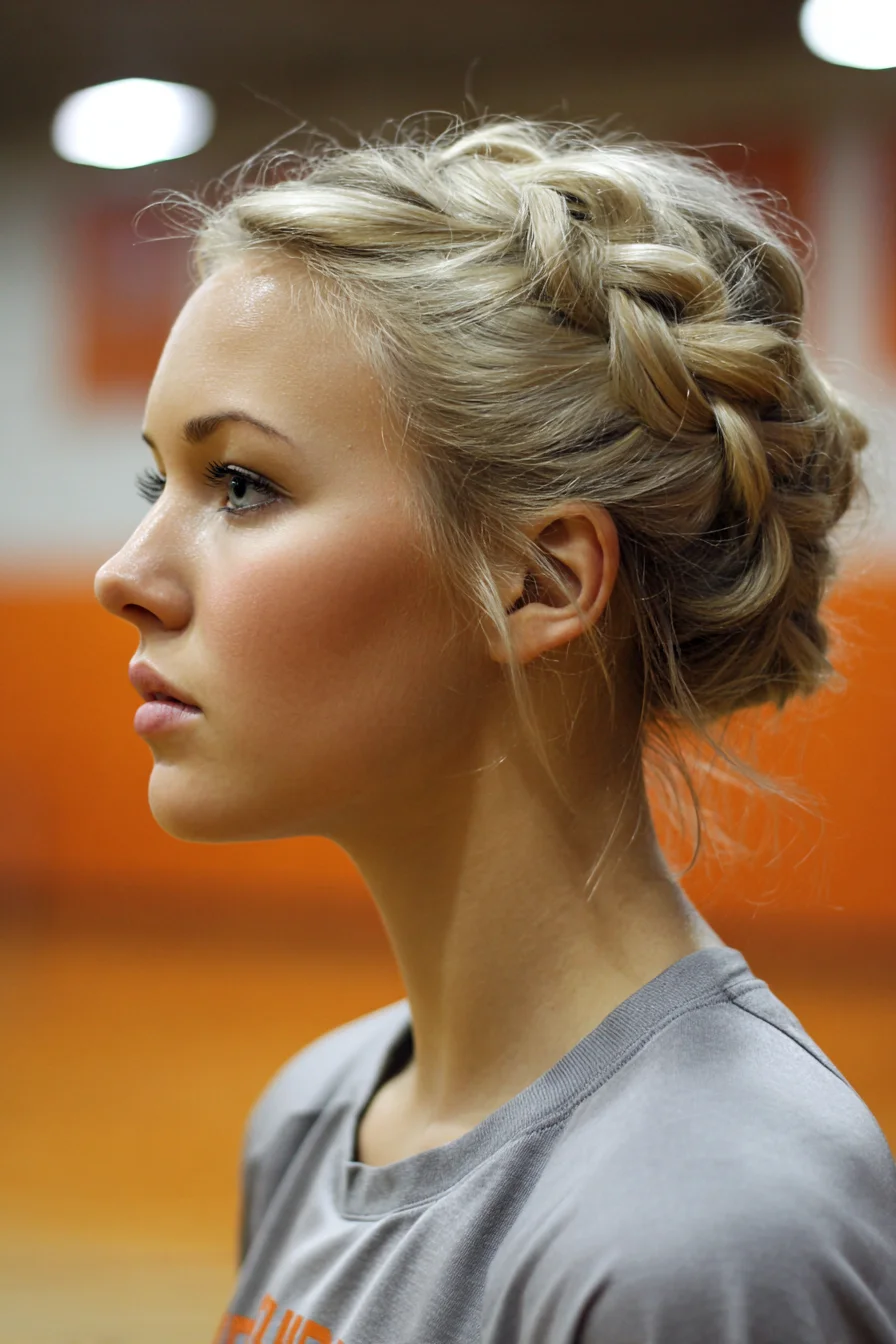
This look pairs Dutch braids with a textured high bun — best for medium to thick hair and shoulder-length to long lengths. Start on second‑day hair: apply a sea‑salt/texturizing spray or dry shampoo for grip. Section hair and create Dutch braids from the hairline toward the crown (two side braids or a single center braid both work), securing each braid with a small elastic. Pancake the braid sections gently to broaden them, then gather all hair into a high pony. Twist into a loose, messy bun and anchor with bobby pins, tucking braid ends for a seamless finish. Tools: rat‑tail comb, sectioning clips, small elastics, bobby pins, texturizing comb, optional curling iron. Products: texturizing spray or dry shampoo, light‑hold hairspray, smoothing serum for flyaways, and heat protectant if using hot tools. Difficulty: intermediate — requires confident Dutch‑braiding and secure pinning. Maintenance tips: sleep on a silk scarf/pillowcase, refresh roots with dry shampoo, tighten pins as needed, and re‑pancake braids on day two for extra volume; fine hair can use clip‑in pieces or a small bun donut for added fullness.
Textured Braided Crown with Messy High Bun — Face‑Framing Blonde Updo
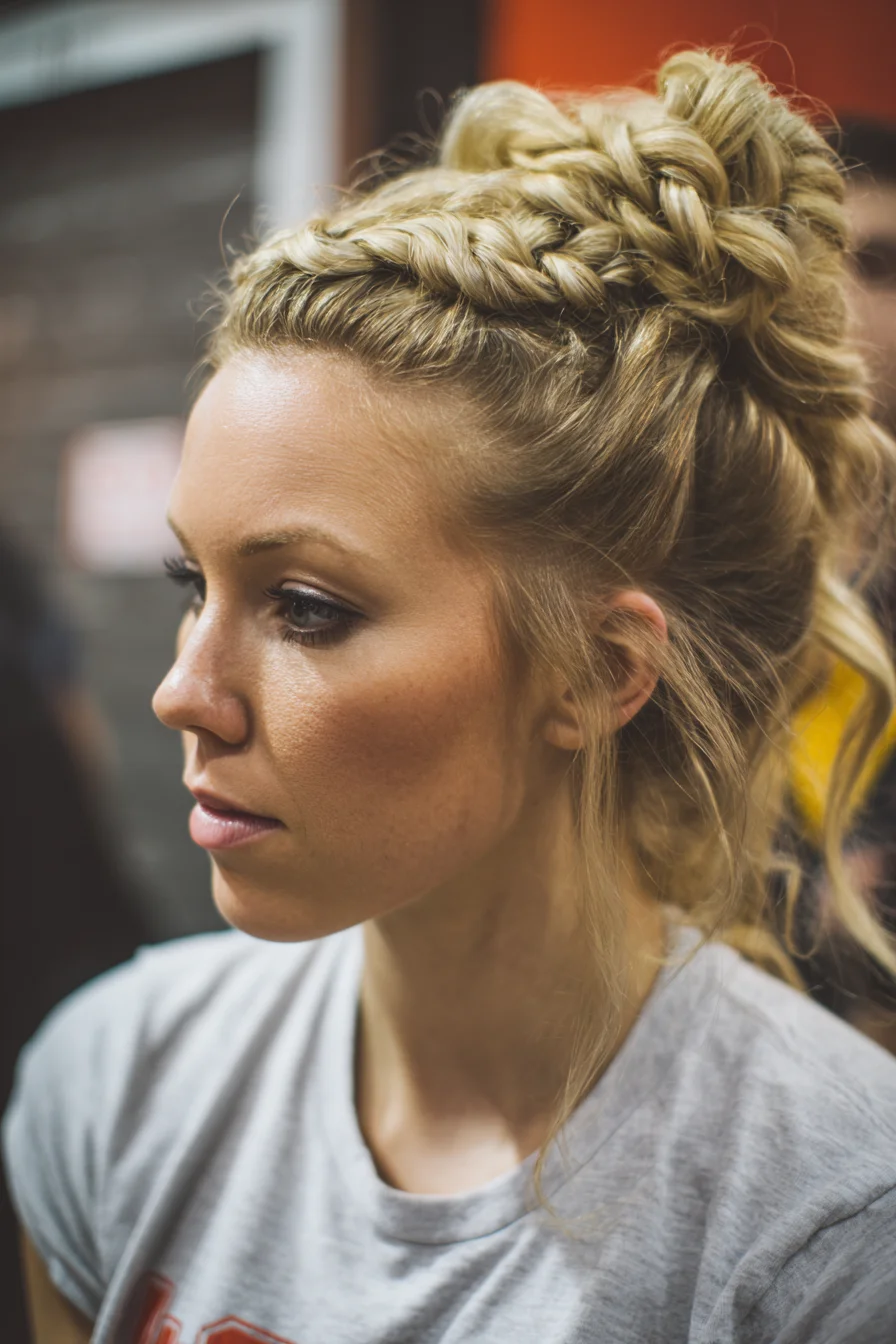
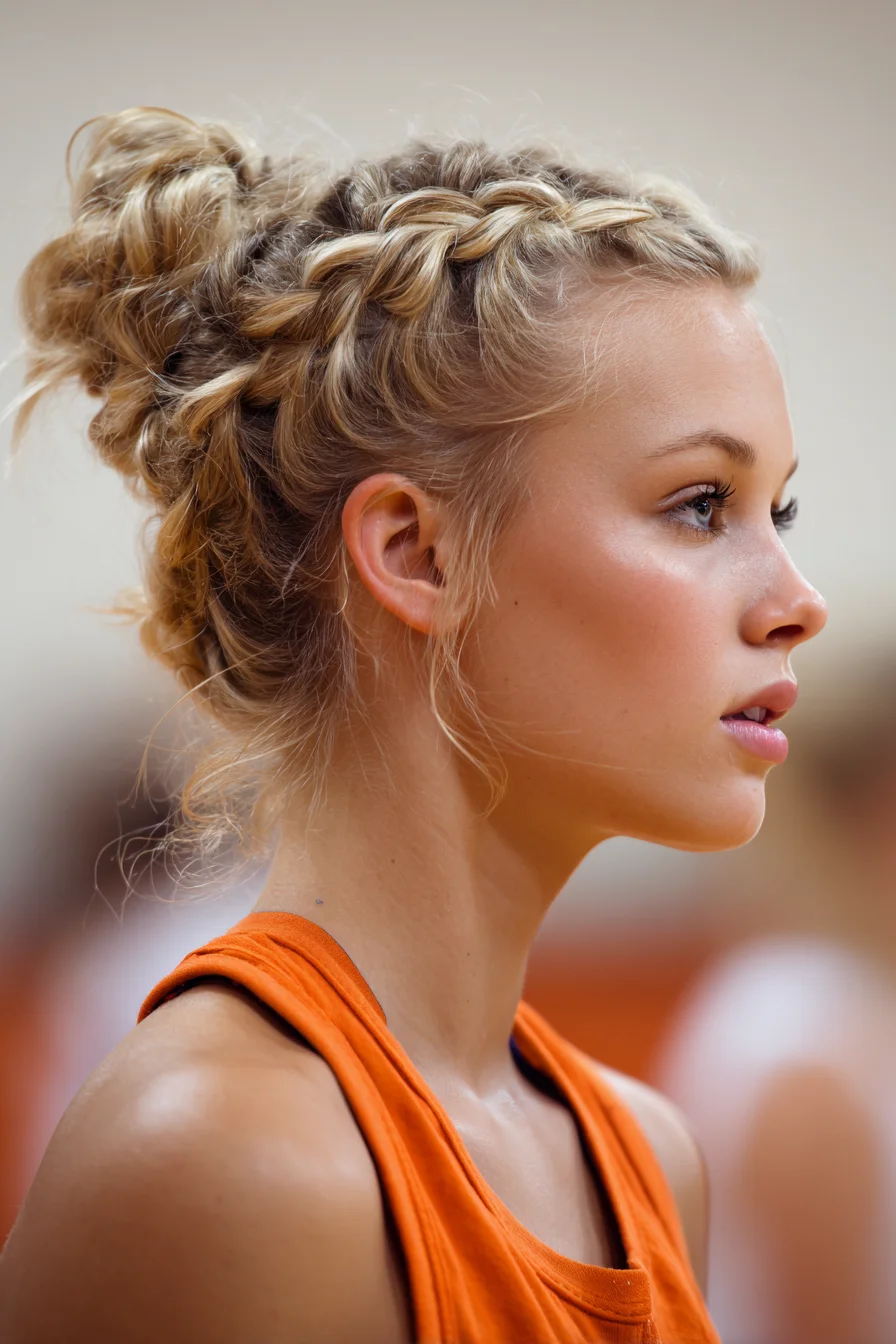
This look suits medium-to-long hair and works best on straight to wavy textures with medium to thick density; fine hair can achieve the same shape with light extensions or volumizing products. Technique: create a Dutch or reverse French braid along the hairline (braided crown), secure the ends into a high pony, then twist loosely into a messy bun, pulling out small face-framing strands for softness and texture. Tools needed: tail comb, sectioning clips, elastic bands, assortment of bobby pins, teasing brush, and a 1–1.25 curling wand to add loose bends. Products required: salt or texturizing spray for grip, root-lifting mousse or powder, heat protectant, light-hold hairspray, and a smoothing serum for flyaways. Difficulty: moderate — expect 20–40 minutes for an experienced stylist, longer when practicing. Salon tips: lightly tease the crown before braiding for added volume; pin the bun with crisscrossed pins for security. Maintenance: refresh with dry shampoo and re-pin loose areas the next day, sleep on a silk pillowcase or wrap with a scarf, and avoid heavy oils at the roots to maintain lift.
Loose Beach Waves with Front Crown Braid
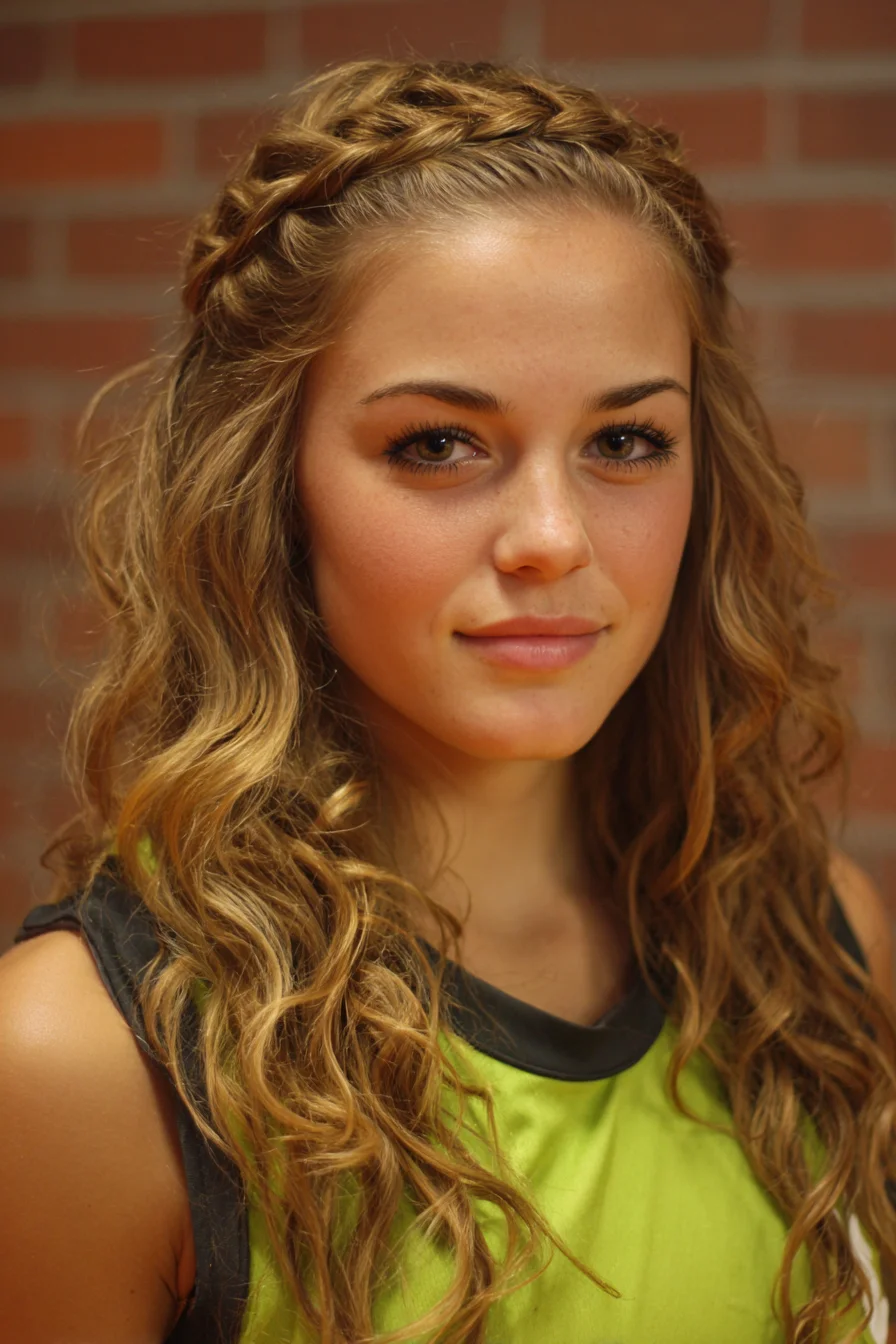
This relaxed crown-braid style works best on medium to long hair and suits natural waves or loose curls; straight hair can be pre-curled and very fine hair benefits from a texturizing product for grip. Technique: prep hair with heat protectant, then create loose waves with a 1 curling wand or curling iron, alternating the direction of curls for a natural finish. Take a small section along one temple, create a French/tight three-strand braid (or Dutch braid for more lift) and braid across the hairline to the opposite side. Secure with a small elastic, tuck and pin the tail beneath the surrounding hair, and gently pancake the braid for width. Tools needed: 1 curling wand or iron, tail comb, sectioning clips, bobby pins, small clear elastic. Products required: heat protectant, sea-salt or texturizing spray, lightweight smoothing serum, and a flexible-hold hairspray. Difficulty: easy–moderate; allow 20–35 minutes. Maintenance tips: sleep with the braid loose or wrap in a silk scarf, refresh waves with a mist of sea-salt spray or dry shampoo, and retighten pins as needed. Trim ends every 8–12 weeks to keep waves healthy.
Curly Double Braided Space Buns with Cornrows — Textured Hair Style
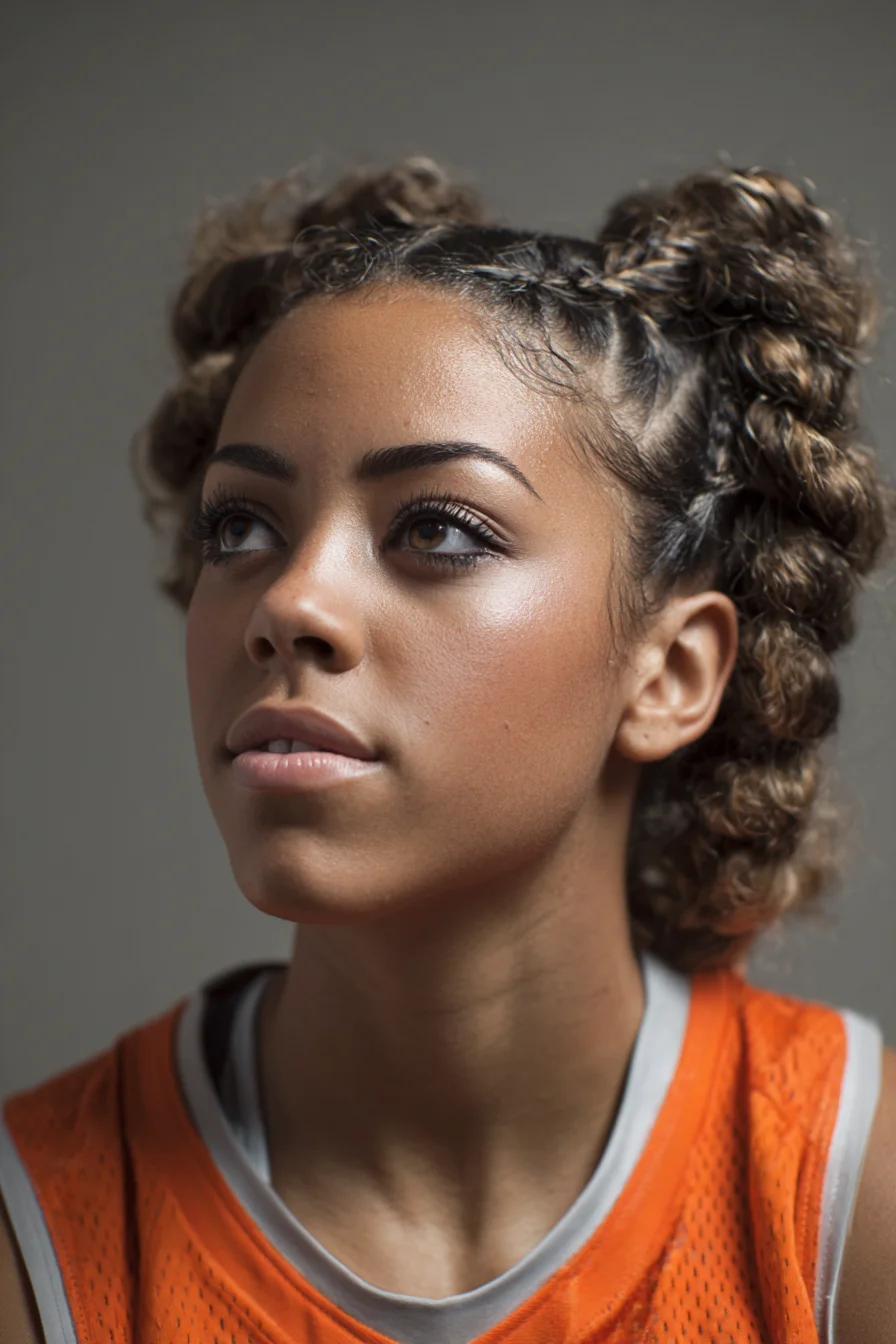
Suitable for 3A–4C curly and coily hair as well as thick wavy textures, this look pairs two front cornrows/flat twists with two textured buns at the crown. Technique: start on clean, detangled, slightly damp hair. Section a center part and create two cornrows or Dutch braids working from the hairline toward the crown; secure with small elastics. Gather the remaining hair in each side into a high ponytail, twist or loosely braid the length, wrap into buns and pin with strong bobby pins, pancake for volume if desired. Tools needed: rat-tail comb, wide-tooth comb, sectioning clips, small clear elastics, bobby pins, Denman or paddle brush, diffuser (optional). Products required: lightweight leave-in conditioner, curl-defining cream or styling gel, edge-control for baby hairs, light oil or serum for shine, and a flexible-hold hairspray to set. Difficulty: moderate — requires basic braiding skill and attention to tension. Maintenance tips: sleep on a silk bonnet or pillowcase, refresh with water + leave-in spray and a small amount of curl cream, re-secure pins after 2–4 days, avoid excessive tension to protect edges, and deep-condition weekly.
Textured Double Dutch Braids with Face‑Framing Pieces
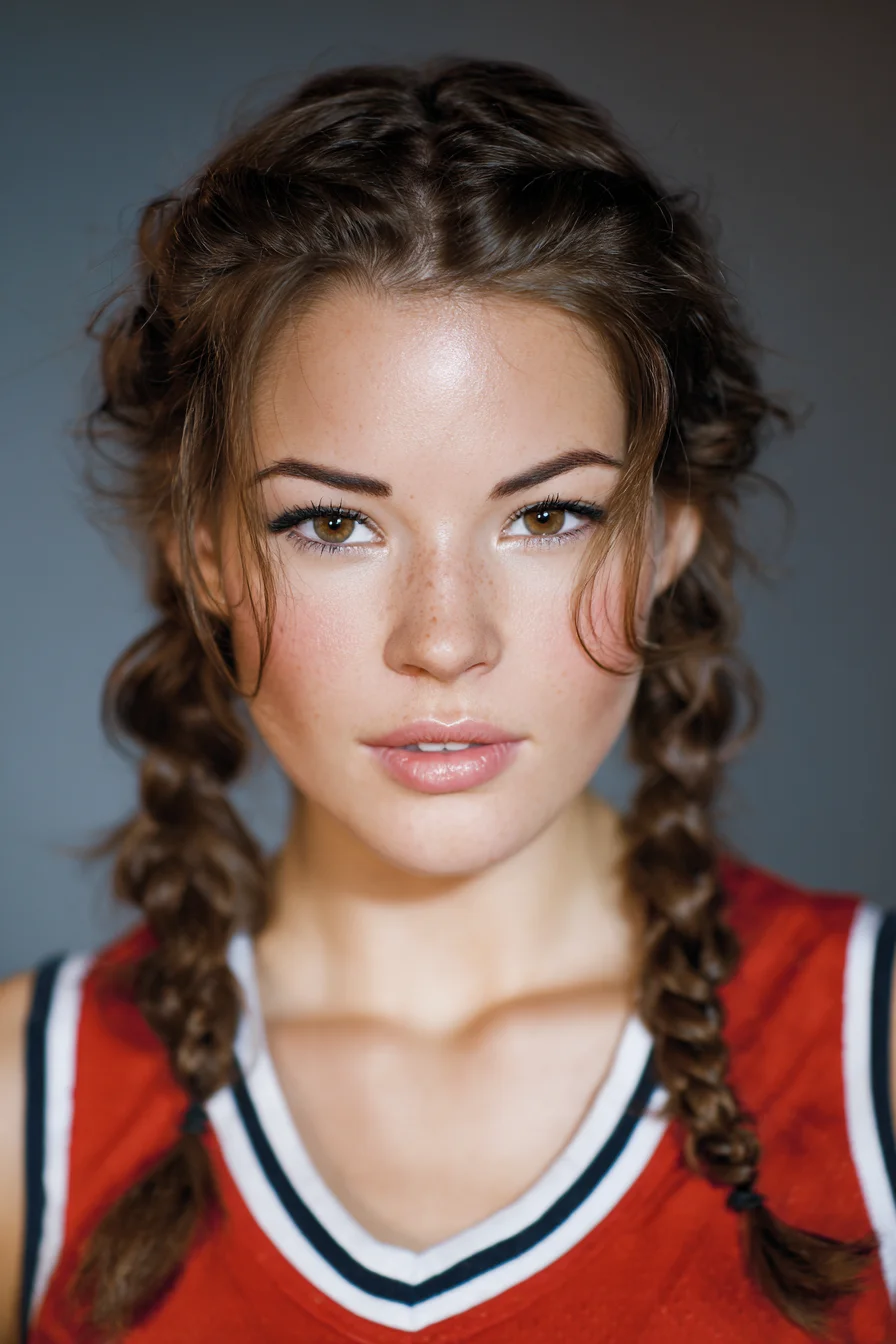
This relaxed double Dutch-braid look works best on straight to wavy medium or thick hair; fine hair benefits from a volumizing base or light extensions. Start on dry hair sprayed with a lightweight texturizing mist or sea-salt spray to add grip. Section hair down the center and clip one side out of the way. Beginning at the hairline, Dutch-braid (underhand) three strands tightly for the first 2–3 inches to anchor, then continue a looser three-strand braid to the ends, securing with a small elastic. Pull gently at braid sections to pancake for width and softness; leave a few face-framing strands unbraided for movement. Tools: fine-tooth comb, sectioning clips, small elastics, paddle brush. Products: volumizing mousse (applied at roots), texturizing spray, light-hold hairspray, smoothing serum for ends. Difficulty: easy–medium — basic braiding skills required. Maintenance: sleep on a silk pillow or wrap with a silk scarf, refresh texture with dry shampoo or mist, and re-tighten elastics as needed. Trim stray ends and re-braid every 2–3 days for best shape.
Double Dutch Braids with Textured Loose Waves — Sporty Braided Half-Up
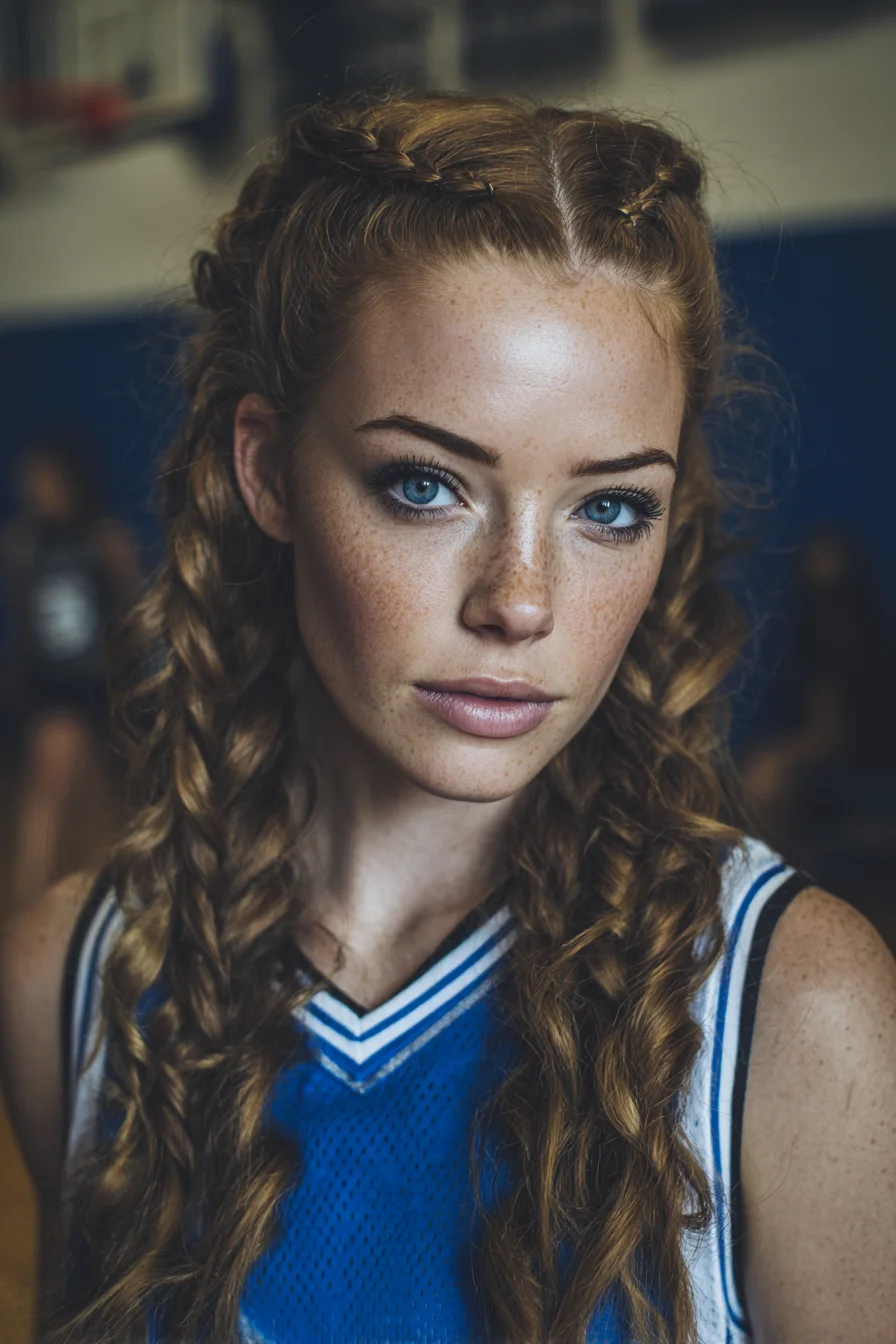
This look works best on medium to long hair and is ideal for medium-to-thick textures or fine hair with added texture. Start on dry, brushed hair with a clean center part. Section two panels from the hairline to the crown and create Dutch (inside‑out) braids close to the scalp, continuing into three‑strand braids down the length. Secure ends with small elastics, then gently pancake each braid to broaden and soften the shape. Finish the lower lengths with a 1 wand or large barrel iron to enhance natural waves and blend any unbraided pieces. Tools: rat-tail comb, sectioning clips, small clear elastics, 1 curling wand or flat iron, soft bristle brush. Products: heat protectant, sea‑salt or texturizing spray, light hold hairspray, small amount of smoothing serum for ends. Difficulty: intermediate — requires familiarity with Dutch braiding and pancake technique; expect 20–40 minutes. Maintenance: sleep with a silk scarf or loose bun, refresh texture with dry shampoo or misted sea‑salt spray, tighten elastics or re‑pancake braids after 2–3 days. Avoid heavy oils at the roots to preserve volume.
Double Dutch Crown-to-Pigtail Braids (Boxer-Style)
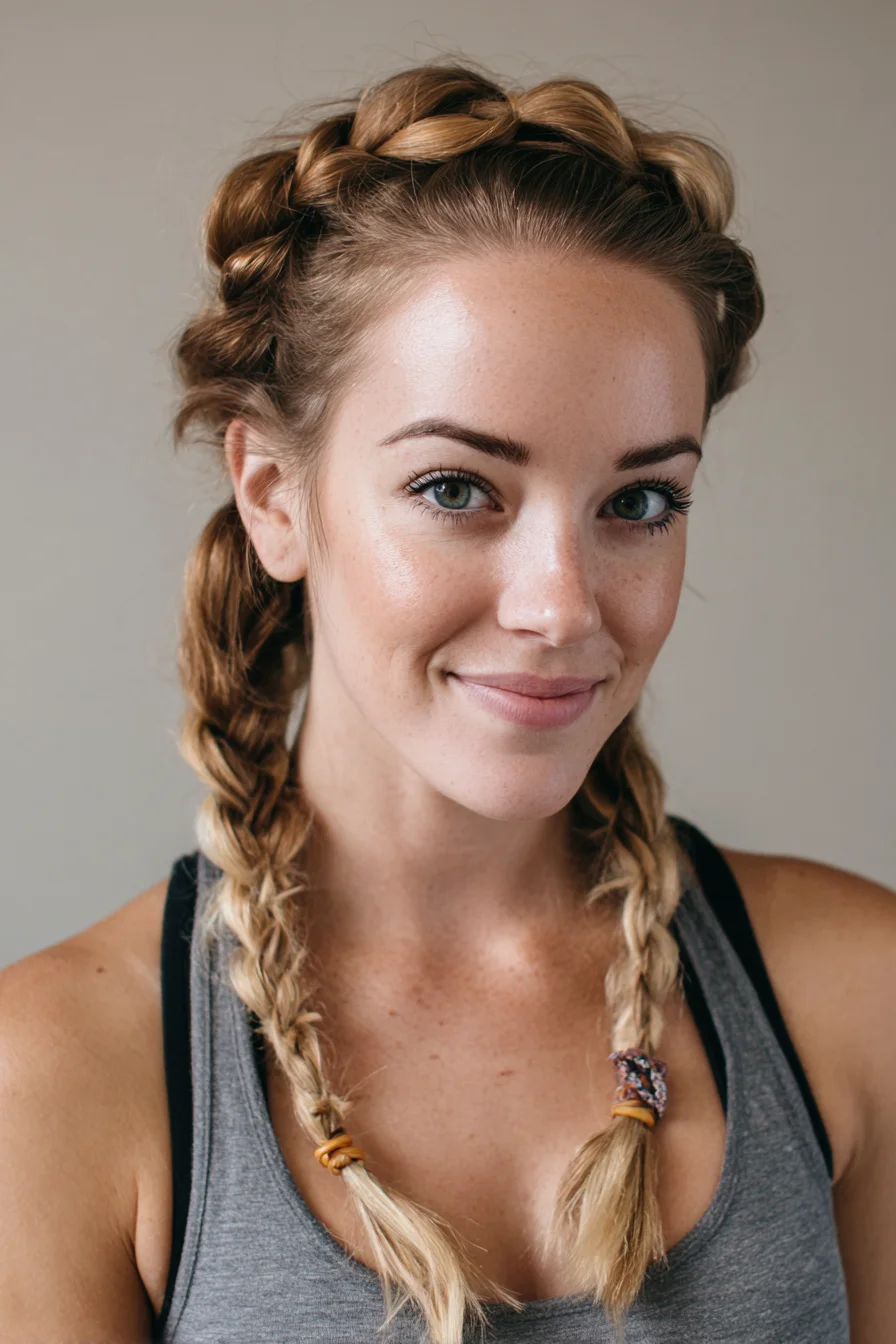
This double Dutch crown-to-pigtail style suits medium to long hair and works best on medium to thick textures; fine hair benefits from added texture spray or light volumizing mousse before braiding, while curly hair can be stretched slightly for cleaner braids. Technique: part down the center, create a Dutch braid along each side of the hairline (braiding under to push hair upward), feed hair across the crown and continue each braid down the back into secure pigtails. Pancake the braids gently for width and a softer finish. Tools needed: rat-tail comb for parting, sectioning clips, small clear elastics, bobby pins, and a brush. Products required: texturizing/dry shampoo for grip, lightweight mousse or styling gel for control, smoothing serum for ends, and flexible-hold hairspray. Difficulty level: moderate — requires confident three-strand braiding and even tension; expect 20–40 minutes. Maintenance tips: sleep on a silk pillowcase or wrap with a silk scarf, refresh with dry shampoo and light mist of hairspray on day two, re-tighten elastics as needed, and avoid overly tight braiding to protect the hairline.
Double Space Buns with Cornrows and Defined Face‑Framing Curls
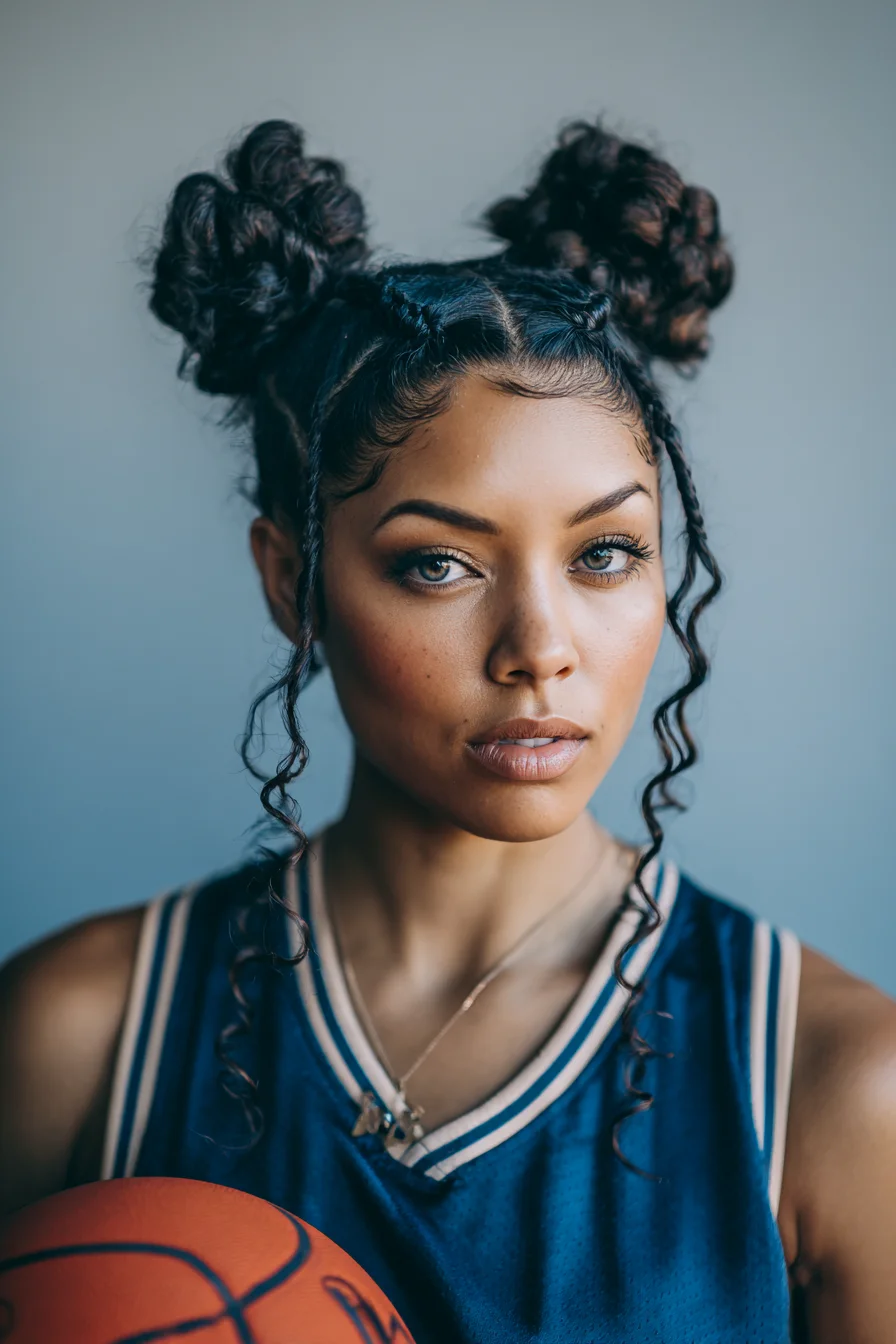
Suitability: Ideal for naturally curly, coily or wavy hair and medium to thick textures; can be adapted for straighter hair with added texture. Styling technique: Create a sharp center part, section hair into two top quadrants, then cornrow or flat-twist the front/top sections toward each crown to build a secure base. Gather remaining hair into two high ponytails, twist or coil into loose, textured buns. Leave two small face‑framing strands, curl or define them with a small barrel tool or finger coils for the spiral tendrils. Tools needed: rattail comb, sectioning clips, small elastics, bobby pins, fine‑barrel curling wand or flexi‑rods, diffuser (optional). Products required: moisturizing leave‑in, light styling cream or curl custard, edge control gel for baby hairs, heat protectant, light misting hairspray or holding spray, scalp oil for shine. Difficulty level: Moderate — requires basic braiding/twisting skill and clean sectioning. Maintenance tips: Sleep on a silk bonnet or pillowcase, refresh tendrils with a water‑based curl refresher or light mousse, reapply edge control as needed, and resecure buns after 3–5 days to prevent flattening. Keep scalp moisturized to avoid dryness during wear.
Textured Double Braids with Mini Top Buns and Blunt Fringe
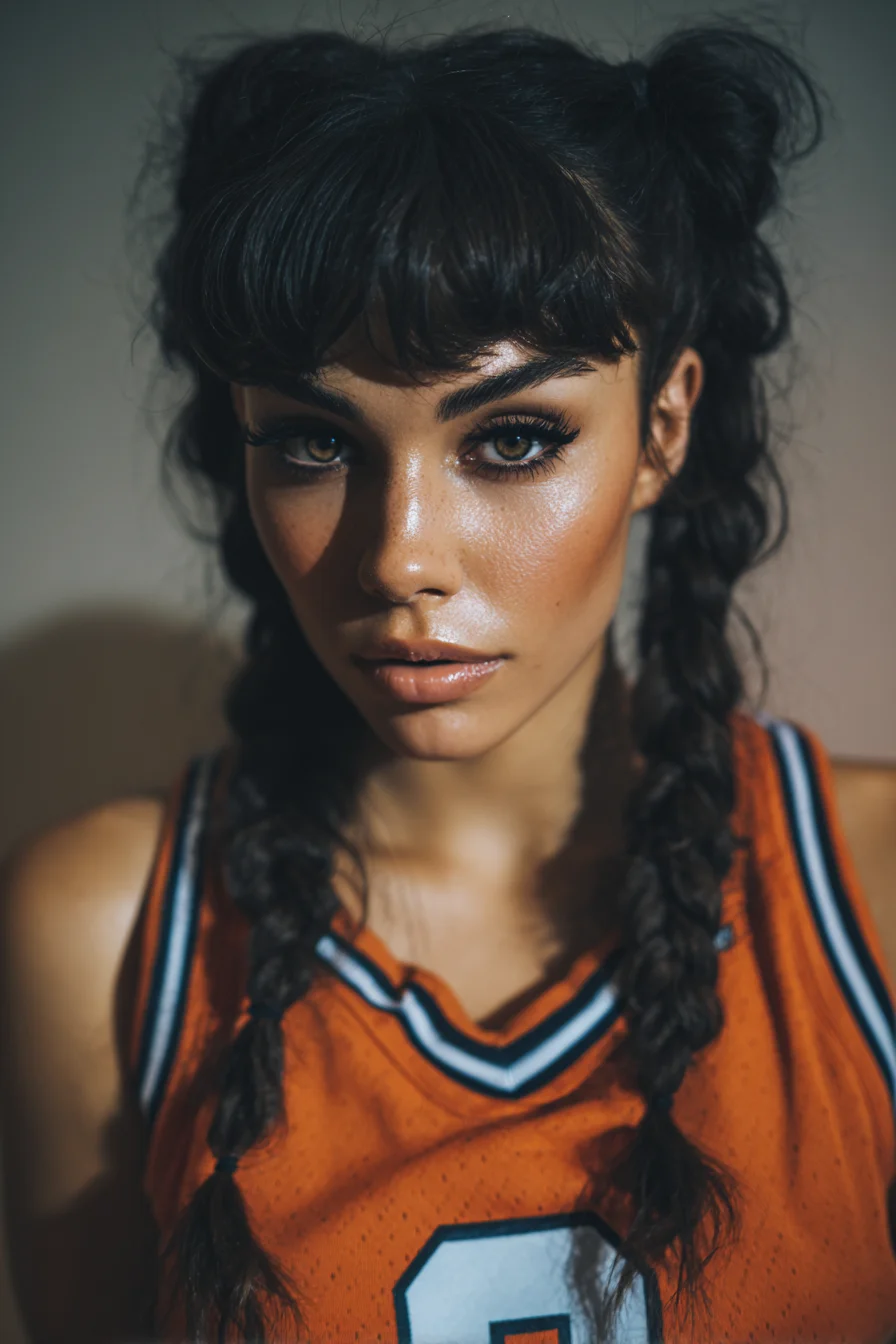
This look suits straight to wavy hair with medium to thick density; fine hair benefits from texturizing products and light teasing for grip, while very curly hair should be smoothed at the roots for clean braid lines. Start on dry or slightly second-day hair: part down the middle, clip one side, and mist roots with texturizing spray. For a neat finish use a three-strand or French braid from the hairline, feeding hair evenly and stopping at the nape to secure with an elastic. Take the top sections and twist into small buns, pinning with bobby pins for a playful crown. Tools: tail comb, small elastics, bobby pins, blow dryer (optional) and a fine-tooth comb for bangs. Products: sea salt or texture spray, light-hold pomade for smoothing baby hairs, heat protectant if you blow-dry, and flexible-hold hairspray to set. Difficulty: easy–medium (20–30 minutes). Maintenance: refresh texture with dry shampoo, re-twist buns and tighten elastics as needed, sleep on a silk pillow or tie a silk scarf to reduce frizz, and trim bangs every 4–6 weeks to keep the blunt shape.
Textured High Messy Bun (Top Knot) — For Medium‑Long, Wavy & Curly Hair
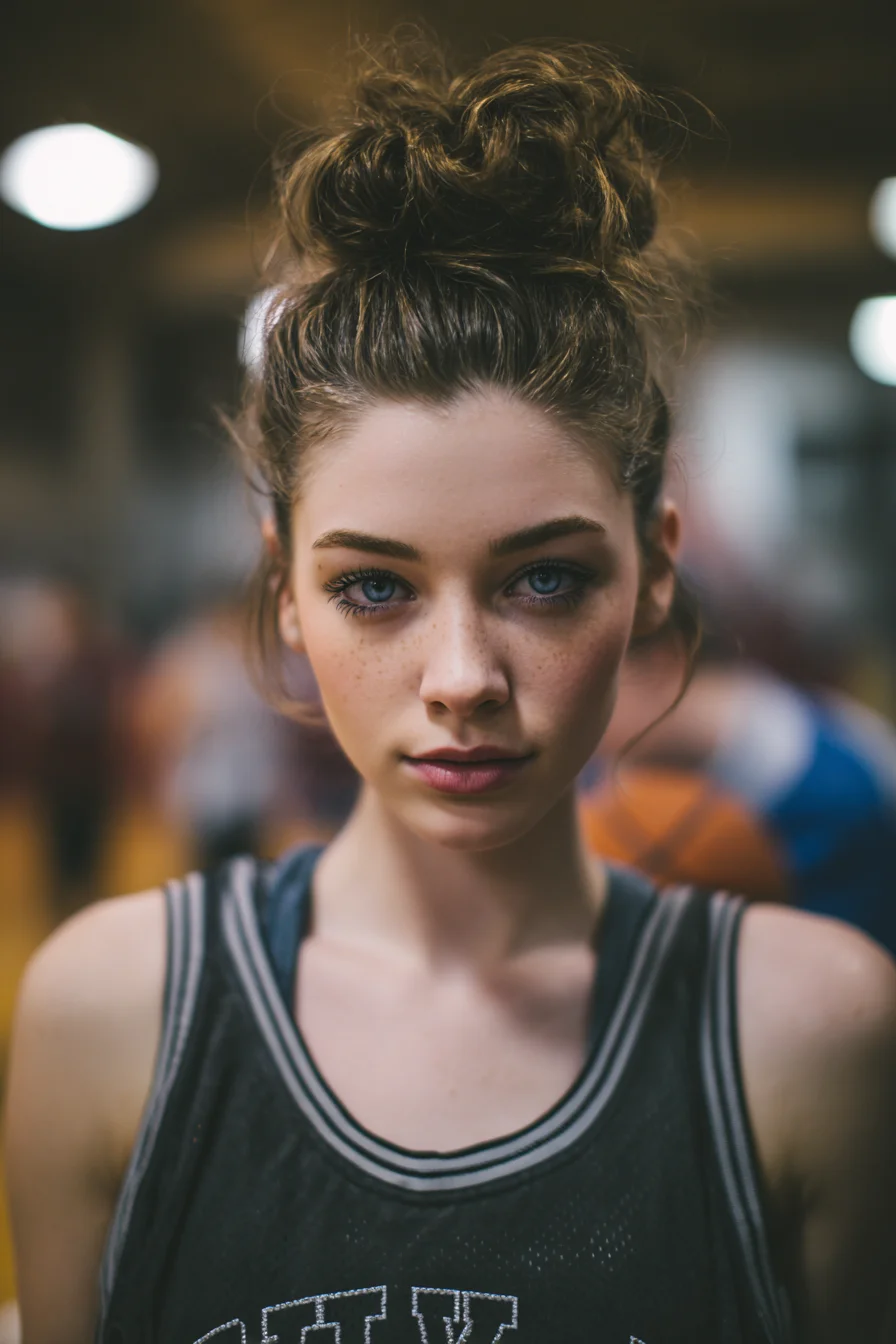
This relaxed, textured high messy bun (top knot) works best on medium‑long hair and is ideal for wavy, curly or naturally thick hair; fine hair can also achieve the look with added texture or light teasing. Start on second‑day hair or use dry shampoo to add grip. Gather hair into a high pony at the crown, secure with an elastic, then twist loosely and wrap into a bun, anchoring with bobby pins. Pull out small face‑framing pieces and gently tug at the crown for volume and a lived‑in finish. Tools needed: elastic bands, medium and fine bobby pins, a teasing comb or brush, and an optional curling wand for added pieces. Products: dry shampoo or texturizing spray, sea‑salt spray for separation, light serum for flyaways, and a flexible hold hairspray. Difficulty: easy to moderate — quick for everyday wear but requires practice to balance volume and control. Maintenance tips: refresh with texturizing spray and re‑pin loose sections, avoid over‑tightening to reduce breakage, sleep on a silk pillowcase, and deep‑condition weekly to maintain hair health.
Cornrow Mohawk with Defined Curls — Braids for Curly & Textured Hair
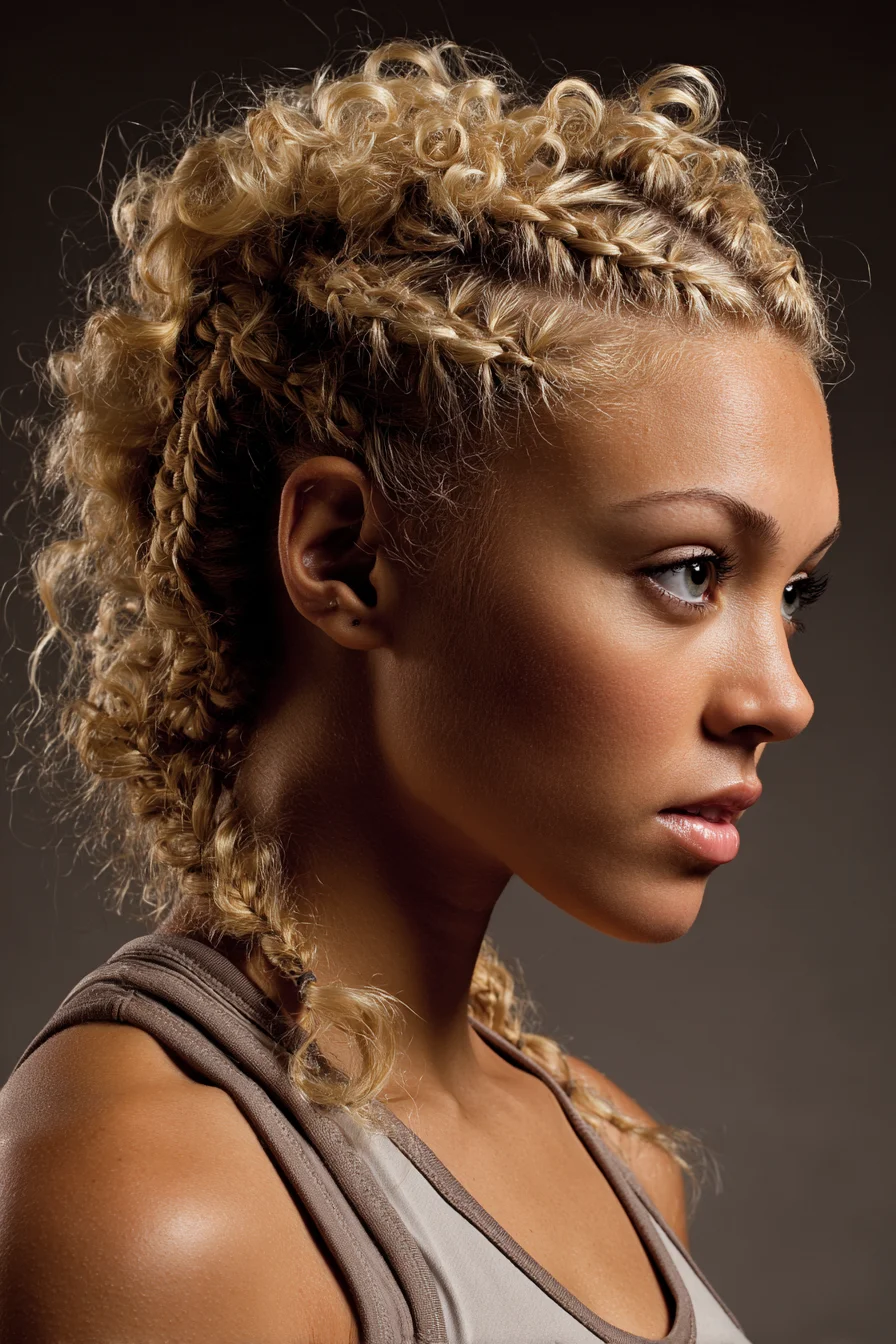
This look pairs tight cornrow-style braids along the sides and back with a voluminous, defined curly top — ideal for naturally curly, coily, or thick wavy hair. For straighter hair, lightly texturize or use extension pieces to build volume. Technique: section the hair into clean panels, create small to medium cornrows (Dutch or traditional) working toward the center spine, then leave the middle/top sections out for finger-coiled or rod-set curls. Finish by wrapping braid ends with elastics or small bands and gently separating curls for shape. Tools needed: rattail comb, sectioning clips, small elastics, Denman or paddle brush, flexi-rods or curling wand (if needed), and a crochet needle for extensions. Products required: lightweight leave-in conditioner, curl-defining cream or mousse, strong-hold gel/edge control for neat parts, light-hold hairspray, and a non-greasy scalp oil. Difficulty: intermediate — expect 60–120 minutes depending on density. Maintenance tips: sleep on a silk/satin scarf or pillow, refresh curls with water + leave-in spray, smooth edges weekly, avoid heavy buildup, and remove or redo braids after 2–4 weeks to protect the scalp and hair health.
Textured Curly Bob with Side‑Swept Fringe (Red Tousled Waves)
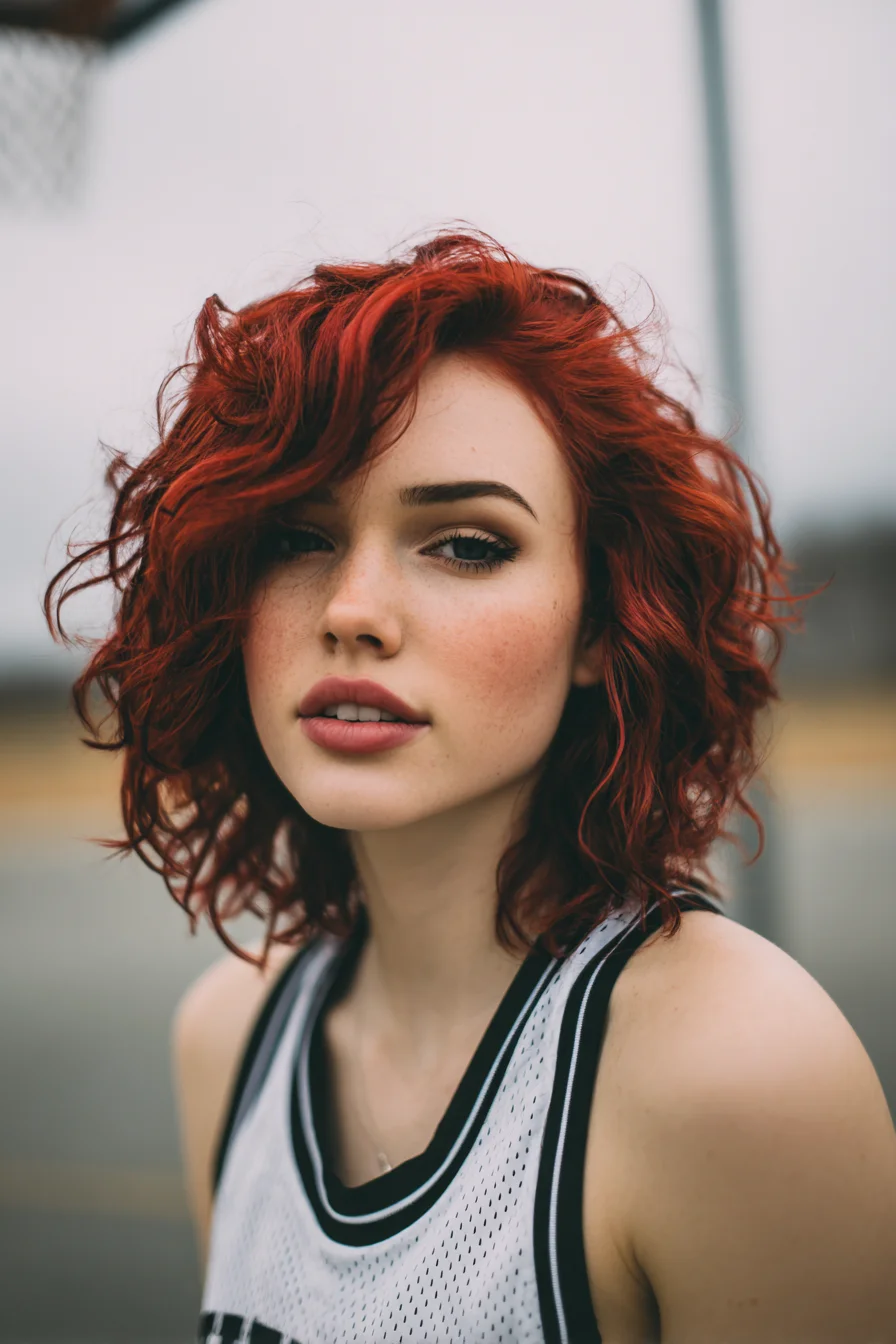
This chin‑length textured curly bob with a side‑swept fringe suits natural waves and curls (2A–3B) best, but can be recreated on straight hair with shaping and heat or a soft perm. The salon technique: cut into graduated, face‑framing layers to remove bulk and encourage movement, finish with point‑cutting around the fringe for softness. For styling, work on damp hair: apply a lightweight leave‑in conditioner and curl cream, then scrunch and diffuse with a cone diffuser on low heat to enhance natural pattern. Touch up a few pieces with a 3/4 curling wand for uniform definition and finish by separating curls with fingers and a light texturizing spray for hold. Essential tools: diffuser, 3/4 curling wand, wide‑tooth comb, sectioning clips, microfiber towel. Recommended products: sulfate‑free color shampoo, leave‑in conditioner, curl cream or mousse, heat protectant, light hairspray or texture spray. Difficulty: moderate — requires a precise layered cut and color upkeep. Maintenance: trim every 6–8 weeks, deep‑condition weekly, refresh curls with water + curl cream, sleep on silk and limit hot tools to protect the vibrant red.
Textured Braided Top Knot with Long Individual Braids
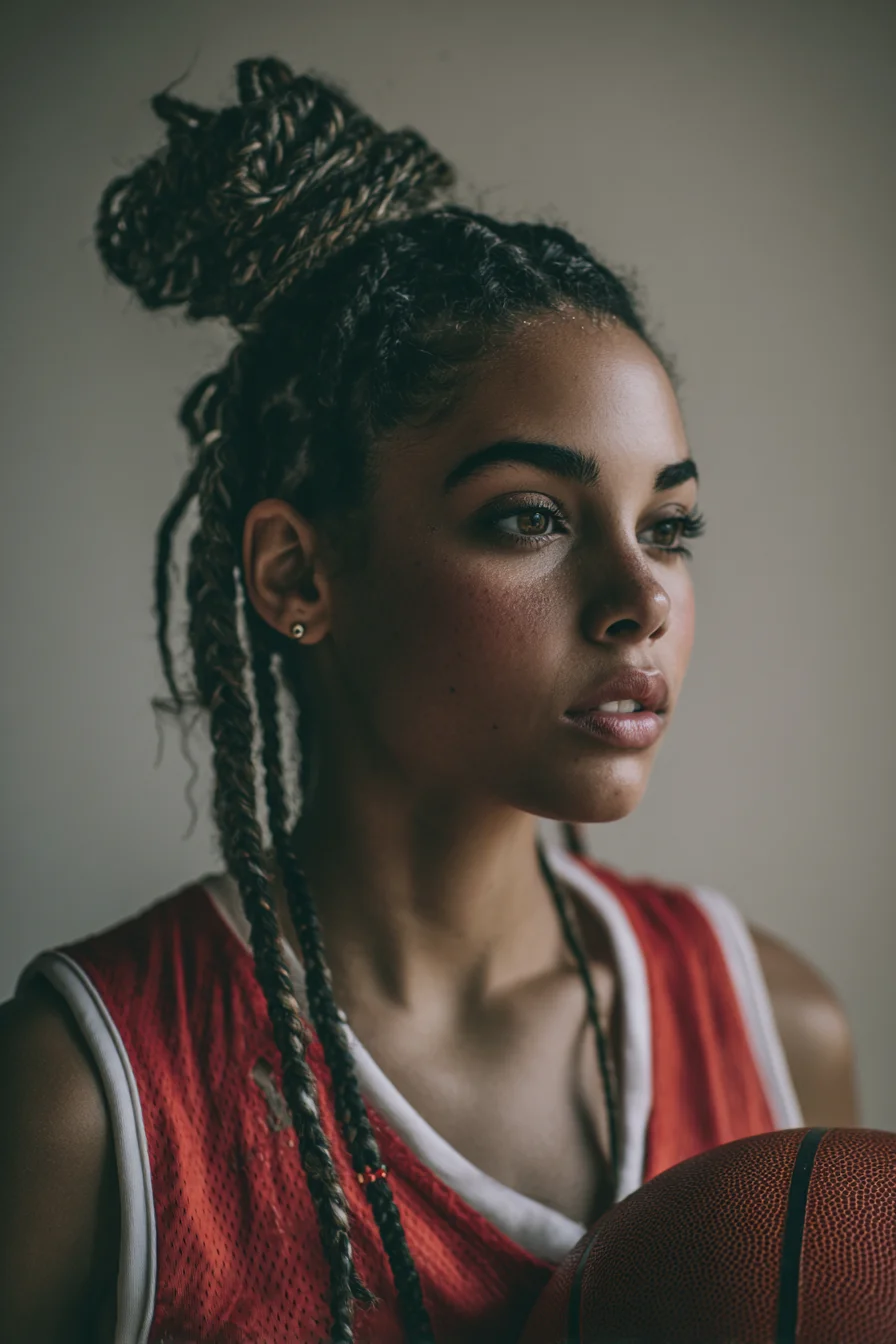
This style pairs small-to-medium braids gathered into a high, messy top knot while a few long individual braids are left to hang for contrast. It’s best suited to natural, curly or coily hair textures and works well on relaxed or straight hair when using added braiding hair for length and bulk. Salon technique: section the hair into clean rows, cornrow or feed-in braid toward the crown to form a secure base, then wrap remaining lengths into a loose bun and leave selected plaits down the sides. Tools needed: rat-tail comb, sectioning clips, elastic bands, long hairpins/bobby pins, crochet needle (for extensions) and a spray bottle. Products required: moisturizing leave-in, styling cream or braid gel for neat parts, lightweight oil or scalp serum, and a braid-refresh spray. Difficulty level: moderate to advanced — expect 1.5–3 hours depending on size and whether extensions are added. Maintenance tips: sleep on a silk scarf/bonnet, mist scalp and braids weekly, refresh edges with light gel, avoid over-tightening to prevent tension, and plan touch-ups or removal around 6–8 weeks to protect hair health.
Textured High Bun with Accent Braid and Face‑Framing Bangs
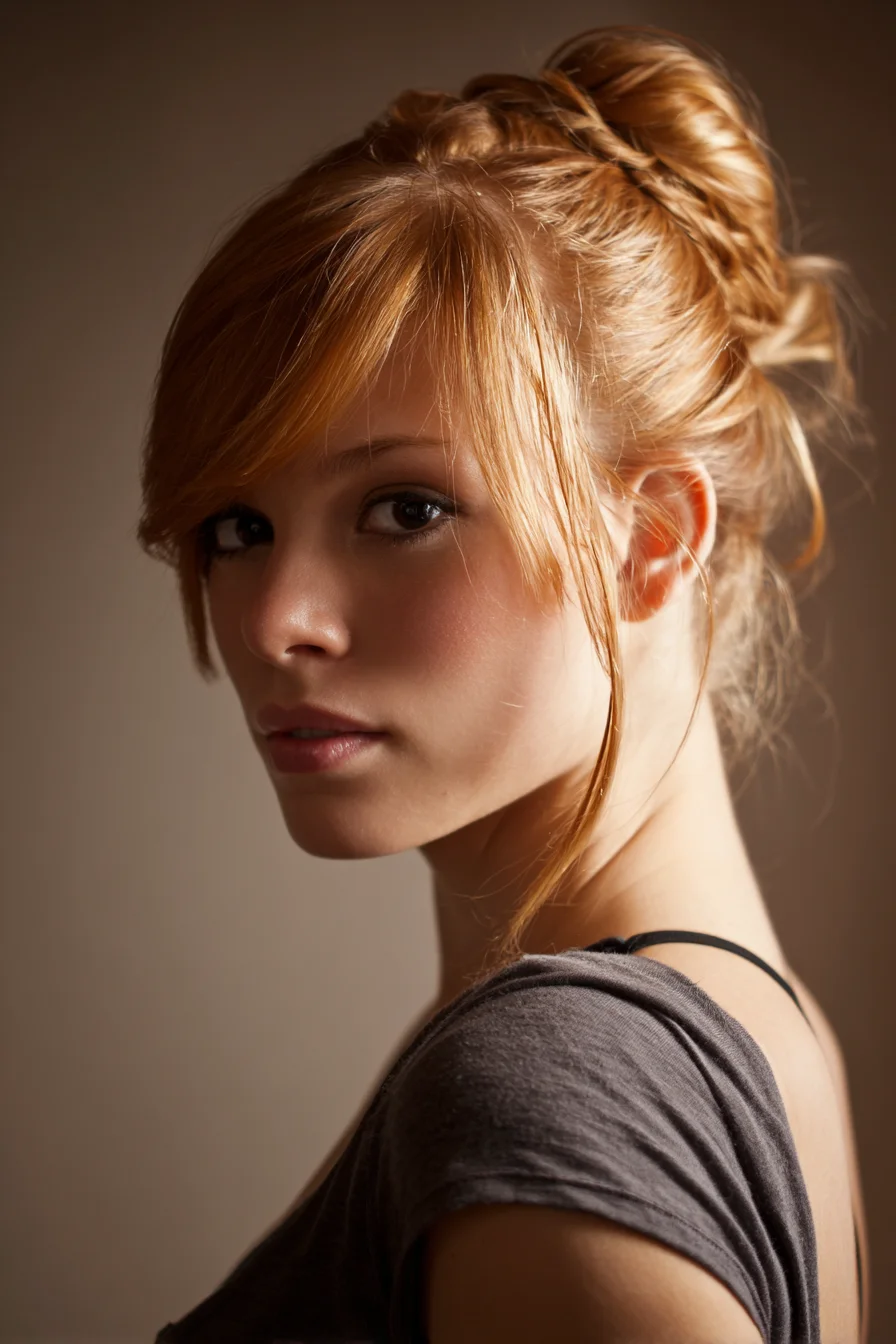
Suitable for medium-to-long hair and most textures (straight to wavy; fine hair will benefit from added texture, thicker hair may need smoothing or smaller sections), this elevated messy bun with a thin accent braid and soft face‑framing bangs creates a polished yet relaxed look. Start on towel‑dried hair: apply a volumizing mousse at the roots and a heat protectant through the lengths. Rough‑dry with a round brush to create lift, then add a light texturizing or sea‑salt spray for grip. Create a small braid or rope braid along the crown and secure with a tiny elastic; gather remaining hair into a high ponytail, twist into a loose bun and pin with bobby pins or U‑pins, incorporating the braid around the base. Use a curling wand to soften a few tendrils by the face. Tools: blow dryer, round brush, tail comb, curling wand (1”), elastics, bobby pins, sectioning clips. Products: heat protectant, volumizing mousse, texturizing spray, flexible hold hairspray, smoothing serum and dry shampoo for refresh. Difficulty: intermediate — expect 15–30 minutes. Maintenance tips: sleep on silk, refresh lift with dry shampoo, re‑pin loose pieces as needed, and lightly re‑curl face pieces to revive the shape.
Double Dutch Braids into Low Pony with Accent Micro-Braids
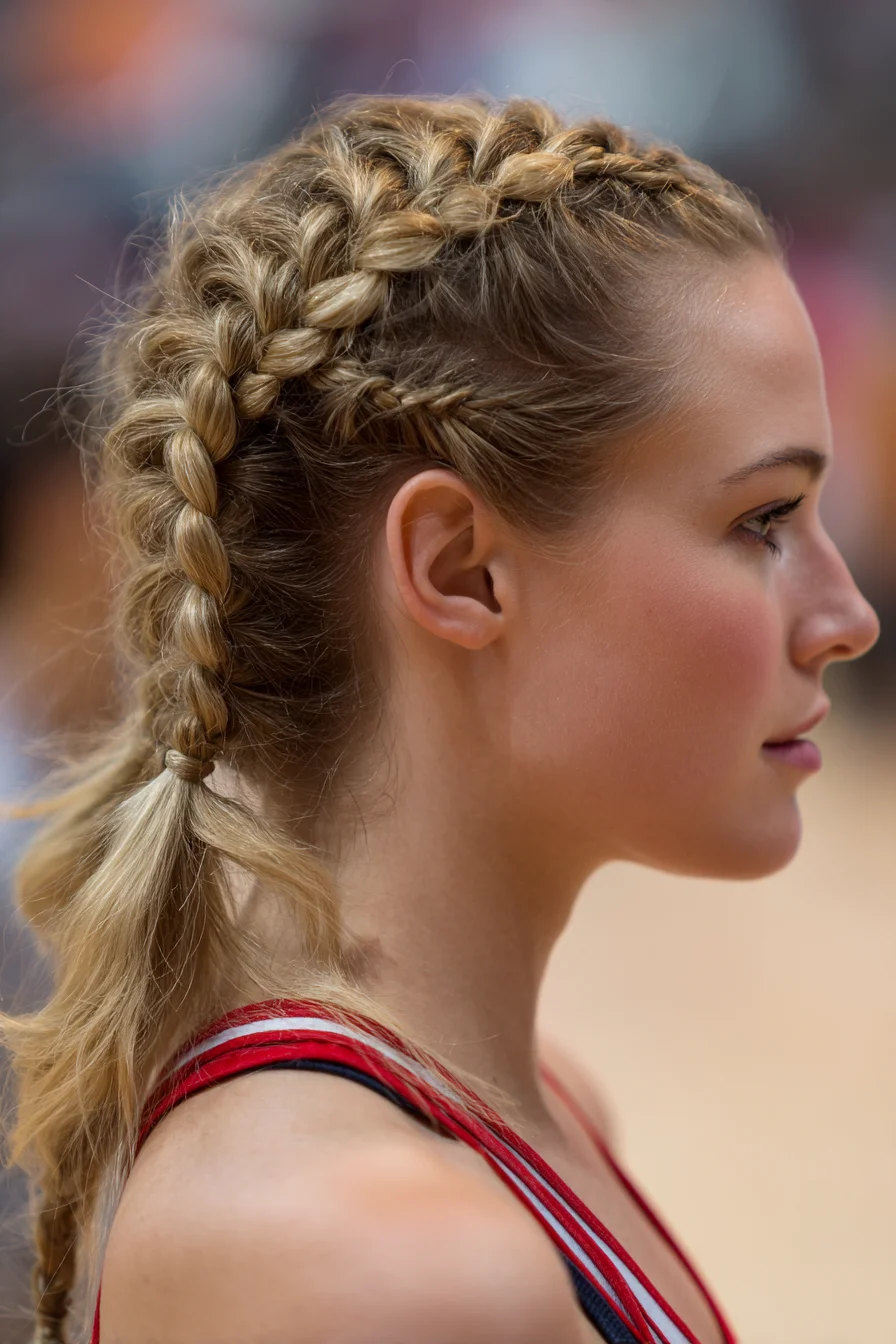
Suitable for medium to long lengths and best on medium–thick textures; fine hair can work with added texture spray or light backcombing for grip. Technique: create a clean center part and section two top panels, then braid each side using Dutch (reverse French) braids along the scalp, incorporating hair as you move toward the nape. Add one or two small accent micro-braids at the temple if desired, and either join both braids into a low pony or continue them as three-strand braids and secure with elastics. Keep tension firm but comfortable to avoid scalp stress. Tools: rat-tail comb, fine-tooth comb, sectioning clips, small clear elastics, and bobby pins. Products: texturizing or sea-salt spray for grip, light styling cream for flyaways, lightweight hairspray, and a smoothing oil for ends. Difficulty: intermediate — requires confident Dutch braiding and even tension (25–45 minutes). Maintenance tips: sleep with a silk scarf/pillowcase, refresh texture with dry shampoo or a light mist, retighten elastics as needed, and avoid daily rebraiding to minimize breakage.
Sleek Double Dutch Cornrows into Braided Pigtails
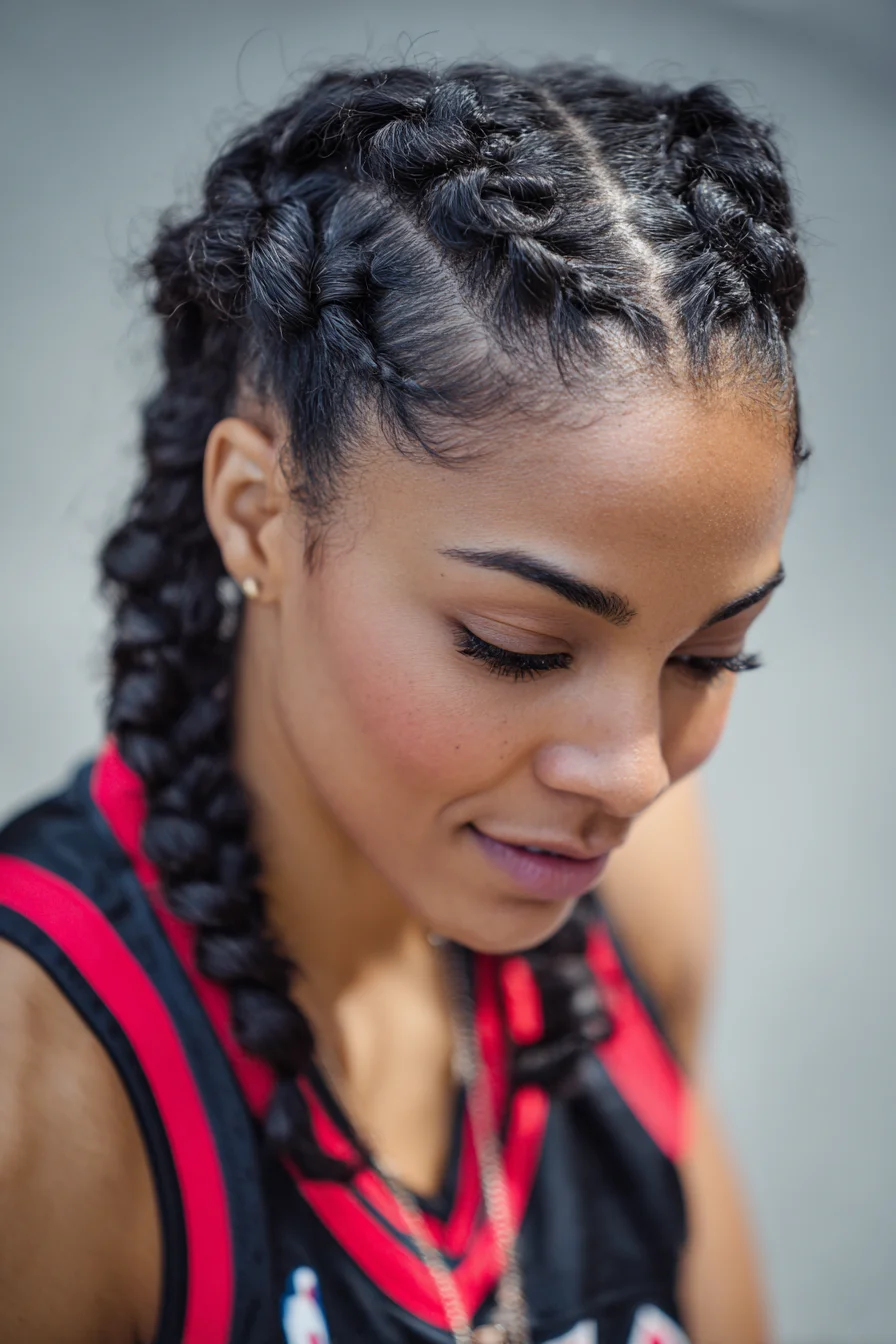
Sleek double Dutch cornrows into braided pigtails are a versatile protective look for naturally curly and coily hair. This style suits 3A–4C textures and medium-to-thick straight hair when prepped with texturizing products. Technique: create a clean center part, section into two panels, smooth with water or leave-in, then Dutch- or feed-in braid tightly from the hairline to the nape, finishing with a three-strand braid or extended synthetic for length. Tools needed: rat-tail comb, soft-bristle brush, sectioning clips, fine-tooth comb for edges, small elastics, and a spray bottle. Products required: lightweight leave-in detangler, styling gel or edge control for hold, a small amount of pomade for shine, and a lightweight oil or serum for scalp hydration. Difficulty: moderate — requires intermediate braiding skill and patience; expect 30–75 minutes depending on length and thickness. Maintenance tips: sleep on a silk scarf or bonnet, refresh edges with edge control, lightly mist and oil the scalp every few days, avoid overly tight tension to protect the hairline, and redo or tighten the braids after 2–3 weeks to maintain neatness.
Voluminous Textured Double Braids with Loose Face‑Framing Curls
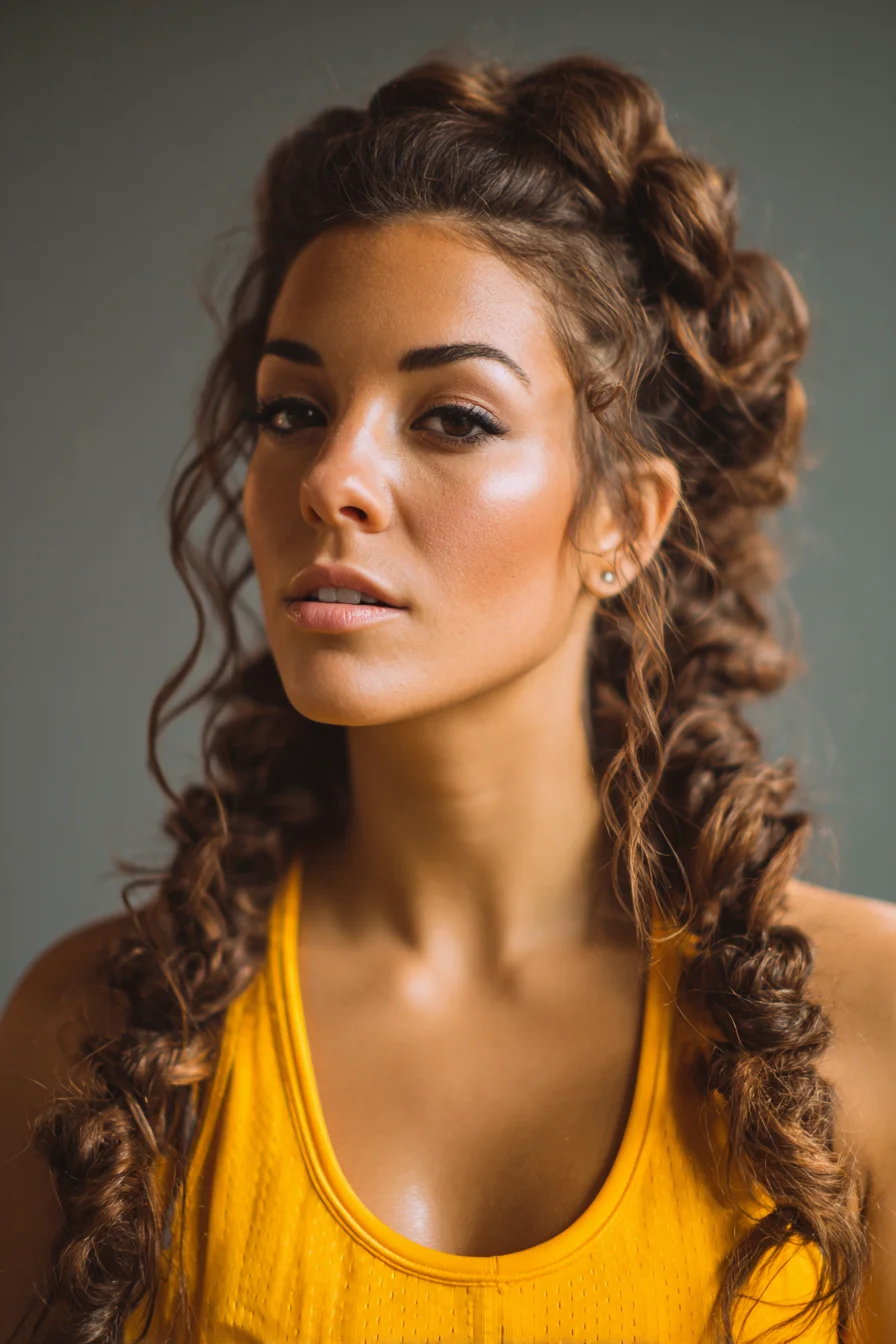
This look suits medium to thick hair and natural waves or curls best; fine hair can achieve the same effect with light teasing, texturizing powder or clip‑in extensions. Start on damp or towel‑dried hair: apply a curl cream or mousse for definition, then rough‑dry with a diffuser to build body. Create a deep center or slightly off‑center part and backcomb the crown lightly for lift. Section hair into two sides and form loose rope or Dutch braids from the temples down, keeping tension soft and pulling each braid apart (pancaking) as you go to enlarge the shape. Leave several face‑framing pieces out and gently curl any pieces that need extra definition. Tools: wide‑tooth comb, tail comb, sectioning clips, elastic bands, diffuser and a small curling wand for touchups. Products: curl cream or mousse, texturizing spray, small amount of lightweight oil, and a flexible‑hold hairspray. Difficulty: intermediate — basic braiding skill plus hands‑on texturizing required; allow 20–40 minutes. Maintenance: sleep with a silk scarf, refresh curls with a water + leave‑in spritz or diffuser, re‑pancake braids as needed, and avoid heavy oils that weigh down texture.
Tapered Curly Top with Faded Sides and Defined Ringlets
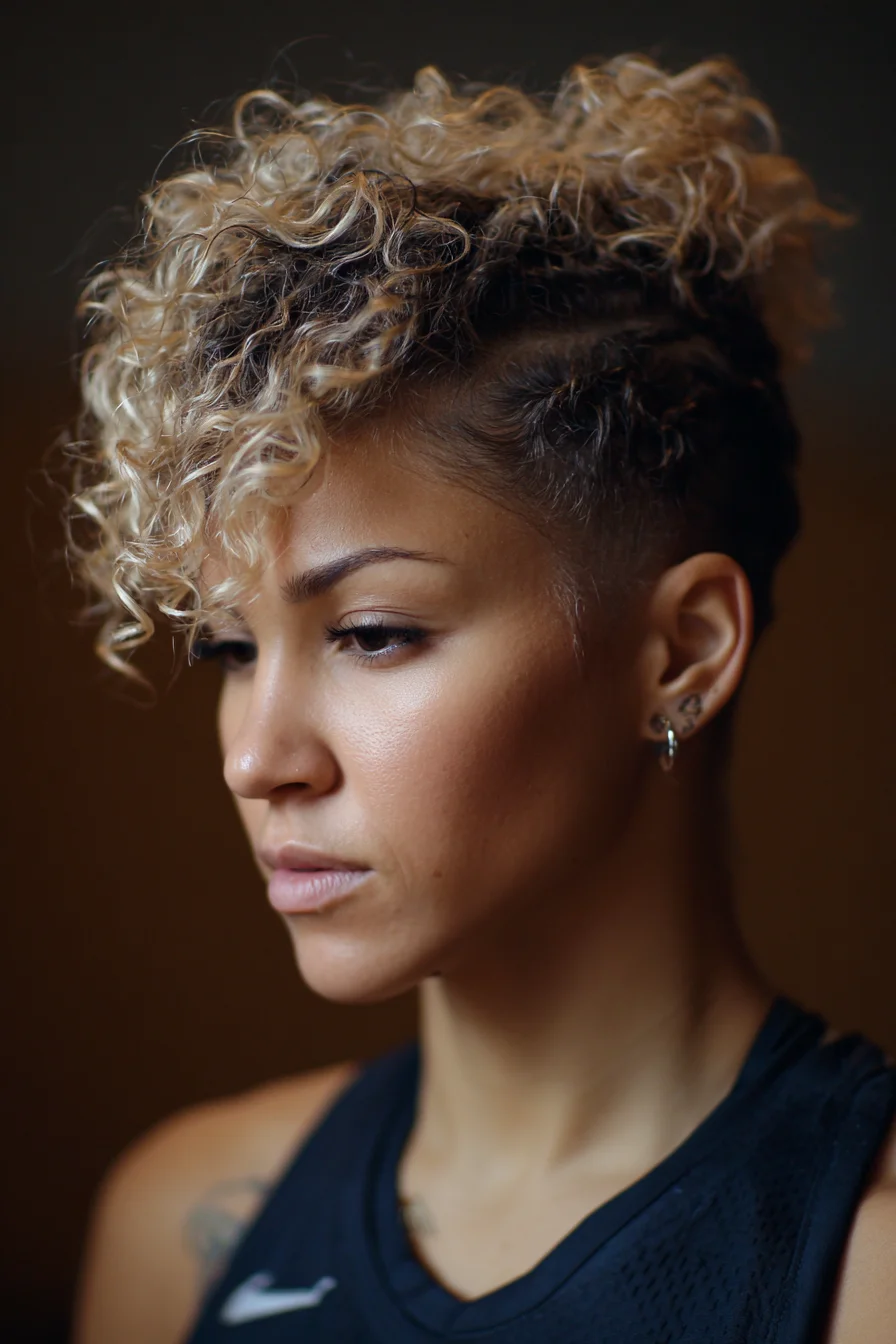
This tapered curly top with faded sides suits naturally wavy to curly hair (2B–4A). The look combines a short clipper fade or undercut on the sides with length left on top for defined ringlets or finger-coiled curls. In the salon, the technique begins with a precise clipper taper (0–2 guard) and clean neckline, then texturizing and point-cutting the top to remove bulk while preserving curl pattern. For home styling, work on damp hair: apply a lightweight leave-in, a curl-enhancing cream, then a medium-hold gel for definition and frizz control. Tools: clippers and trimmer for the fade, wide-tooth comb, denman or fingers for shaping, and a diffuser on low heat to set curls; a small comb or edge brush finishes the sides. Difficulty: intermediate — requires skilled clipper work and curl handling. Maintenance: trim the fade every 3–6 weeks, deep-condition weekly, refresh top curls with water + leave-in or a curl refresher spray, and sleep on a satin pillowcase or bonnet to reduce frizz and preserve shape.
Sleek Textured High Bun with Laid Edges — Curly/Coily Hair Updo
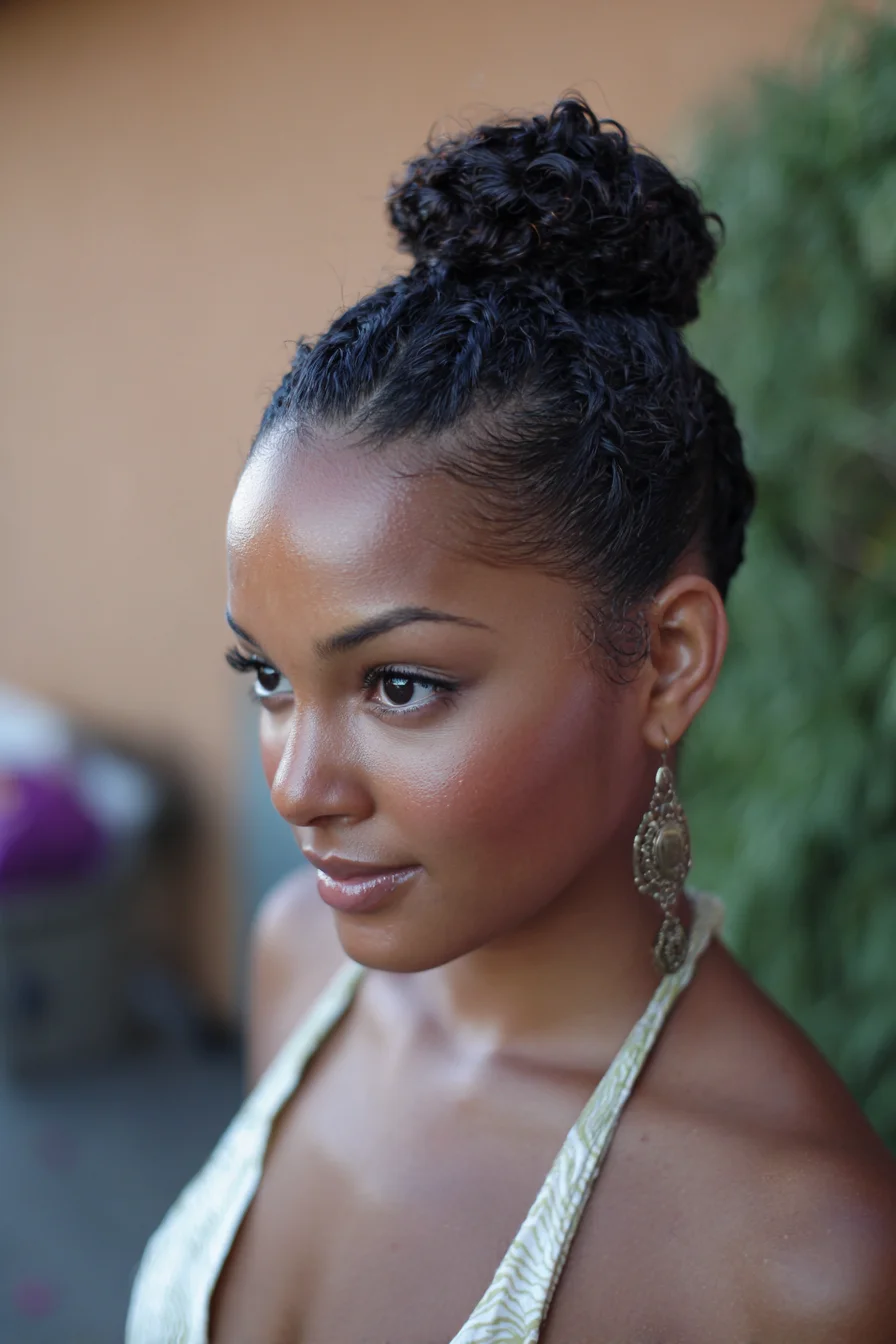
This high textured bun with smooth, laid edges is ideal for naturally curly, coily or thick wavy hair that needs controlled volume. Start on clean, conditioned hair: detangle with a wide-tooth comb, apply a lightweight leave-in and curl cream to define texture, then use a small amount of styling gel or edge control to smooth the perimeter. Create two-strand twists or small cornrows toward the crown if extra hold is needed, gather hair high and secure with a strong elastic, then form a loose bun preserving curl definition and secure with bobby pins. Tools: wide-tooth comb, rat-tail comb, soft bristle brush or edge brush, elastic bands, bobby pins, diffuser (optional). Products: leave-in conditioner, curl-defining cream, medium-hold gel/edge control, lightweight oil or serum, light hairspray. Difficulty: moderate — basic braiding/edge-smoothing skills help, but steps are approachable for most. Maintenance: sleep on a satin scarf/bonnet, refresh with a water-based mist and small amount of curl cream, re-smooth edges as needed, and avoid heavy product buildup at the scalp; style will last 3–5 days with gentle upkeep.
Textured High Ponytail for Curly and Wavy Hair — Defined Curls & Sleek Edges
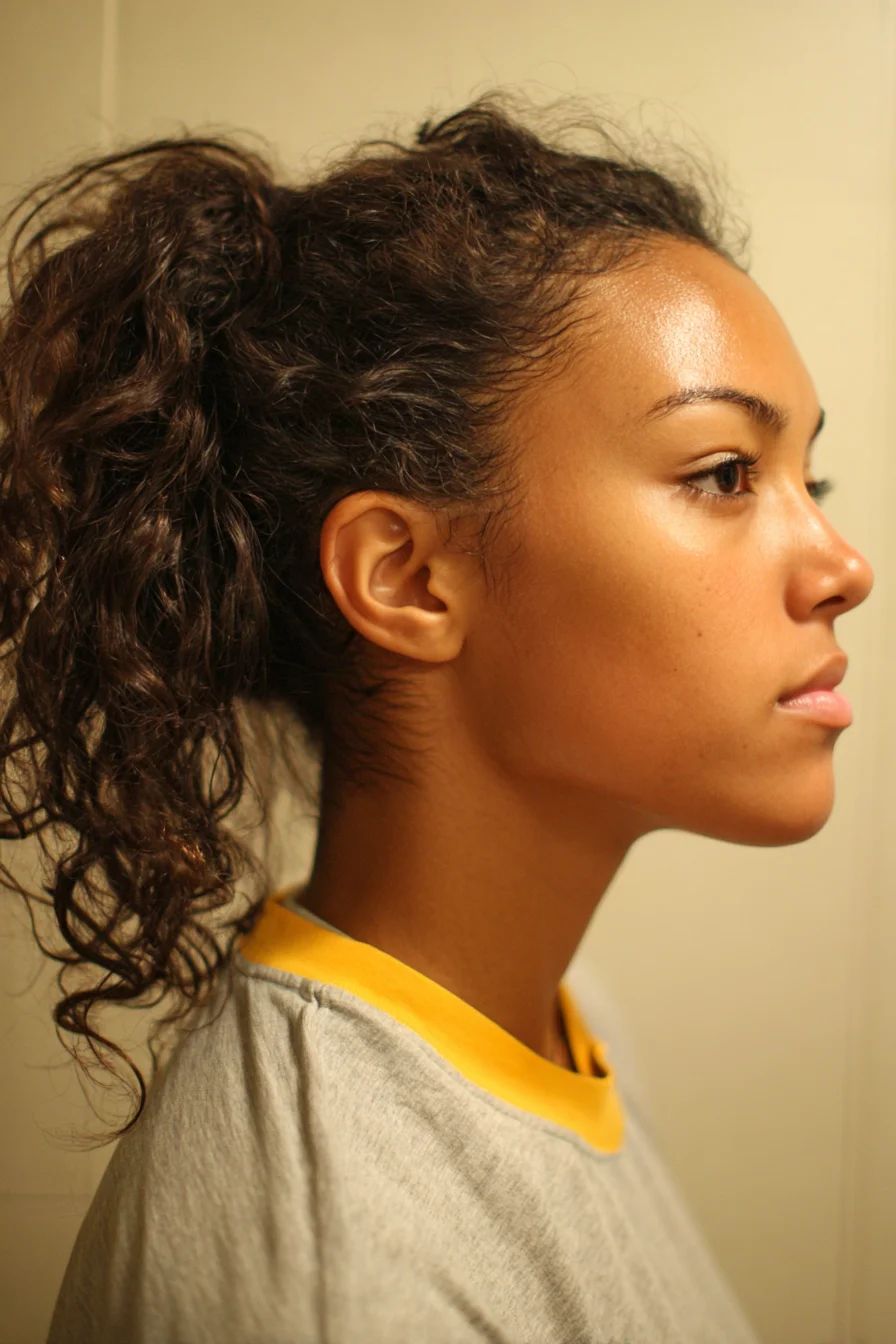
This textured high ponytail works best for 2B–4A hair types with medium to thick density and shoulder length or longer. Start on damp, detangled hair: apply a lightweight leave-in conditioner and a curl-defining cream through the mid-lengths to ends, then use a small amount of gel or edge control at the hairline for hold. Gather hair into a mid-to-high pony with a wide-tooth comb or a soft-bristle brush to smooth the crown without flattening the curl pattern; secure with a snag-free elastic and wrap the base with a satin scarf for 5–10 minutes to set. If you want extra volume, gently pull at the ponytail crown and use fingers to separate curls. Tools needed: wide-tooth comb, rat-tail comb, soft-bristle smoothing brush, elastic bands, satin scarf, diffuser (optional). Products required: leave-in conditioner, curl cream/gel, light oil or serum, edge control, flexible-hold hairspray. Difficulty: easy–medium — requires basic smoothing and curl definition. Maintenance: sleep on a satin pillowcase or pineapple wrap, refresh curls with a water/leave-in mist, reapply edge control as needed, and deep-condition weekly to maintain elasticity and shine.
High Cornrow Ponytail with Defined Curly Tail
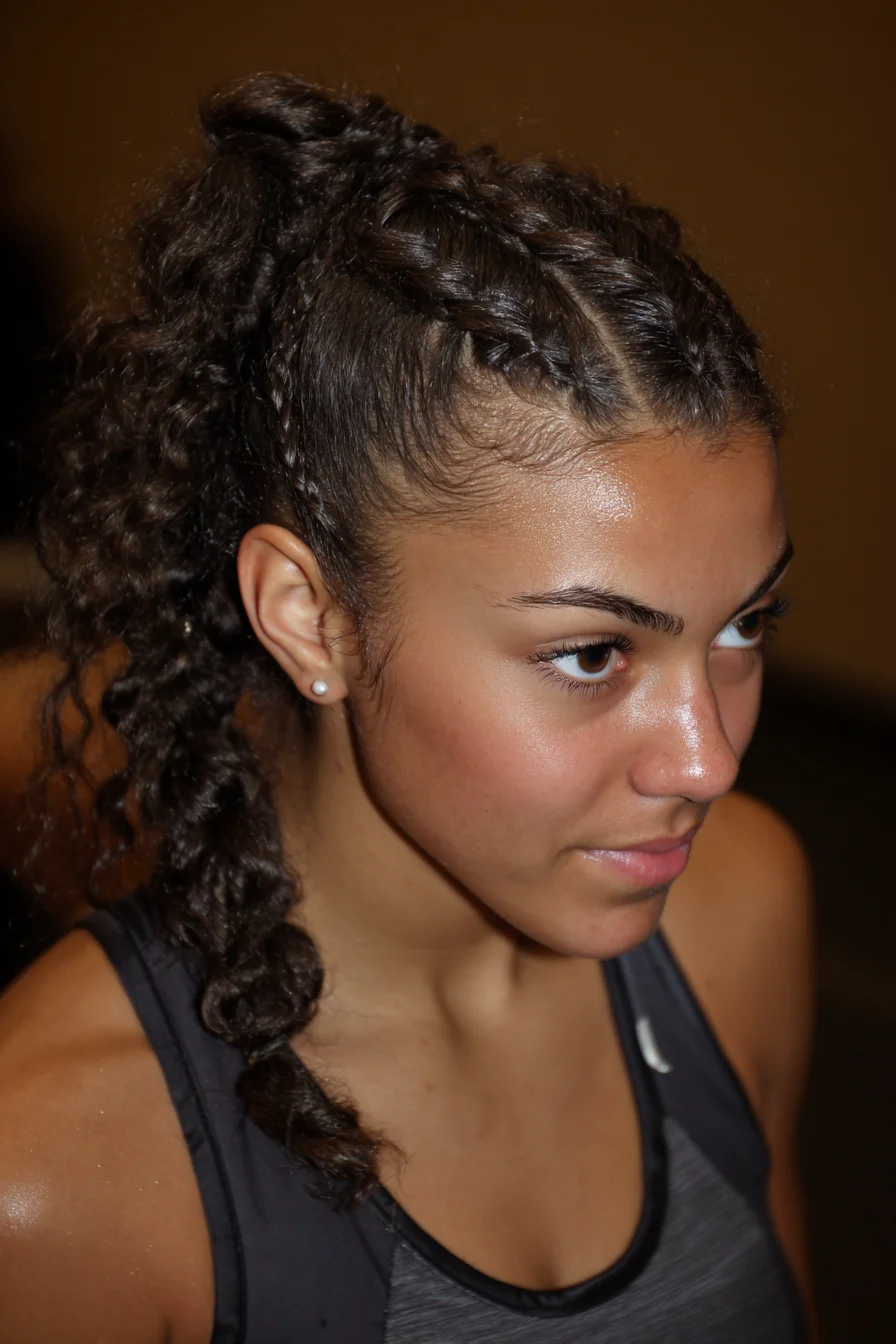
This sleek high cornrow ponytail with a textured curly tail suits medium to thick natural curls and coils best; fine hair can achieve the look with light padding or clip‑in curly extensions. Prep: detangle and lightly moisturize hair with a leave‑in conditioner, then blow dry on low or air‑dry until slightly damp. Technique: create a clean center or slightly off‑center part, section into two or three neat cornrows from the hairline to the crown, and secure into a high ponytail. Smooth edges with a firm‑hold gel and an edge brush, then define the tail’s curls with a curl cream or mousse; add a small accent braid wrapped around the pony base for a finished look. Tools: rat‑tail comb, wide‑tooth comb, small elastics, bobby pins, edge brush, diffuser (optional). Products: leave‑in conditioner, anti‑frizz styling cream, strong gel/edge control, lightweight oil, and braid spray for scalp hydration. Difficulty: intermediate — requires clean parting and braiding skills. Maintenance: sleep on a silk scarf/bonnet, refresh edges and curl definition with water‑based curl refresher, avoid excessive tension to prevent breakage, and redo cornrows every 1–2 weeks for scalp health.
Textured Cornrow-to-Chunk Braid — Tight Cornrows with Chunky Plaited Tails
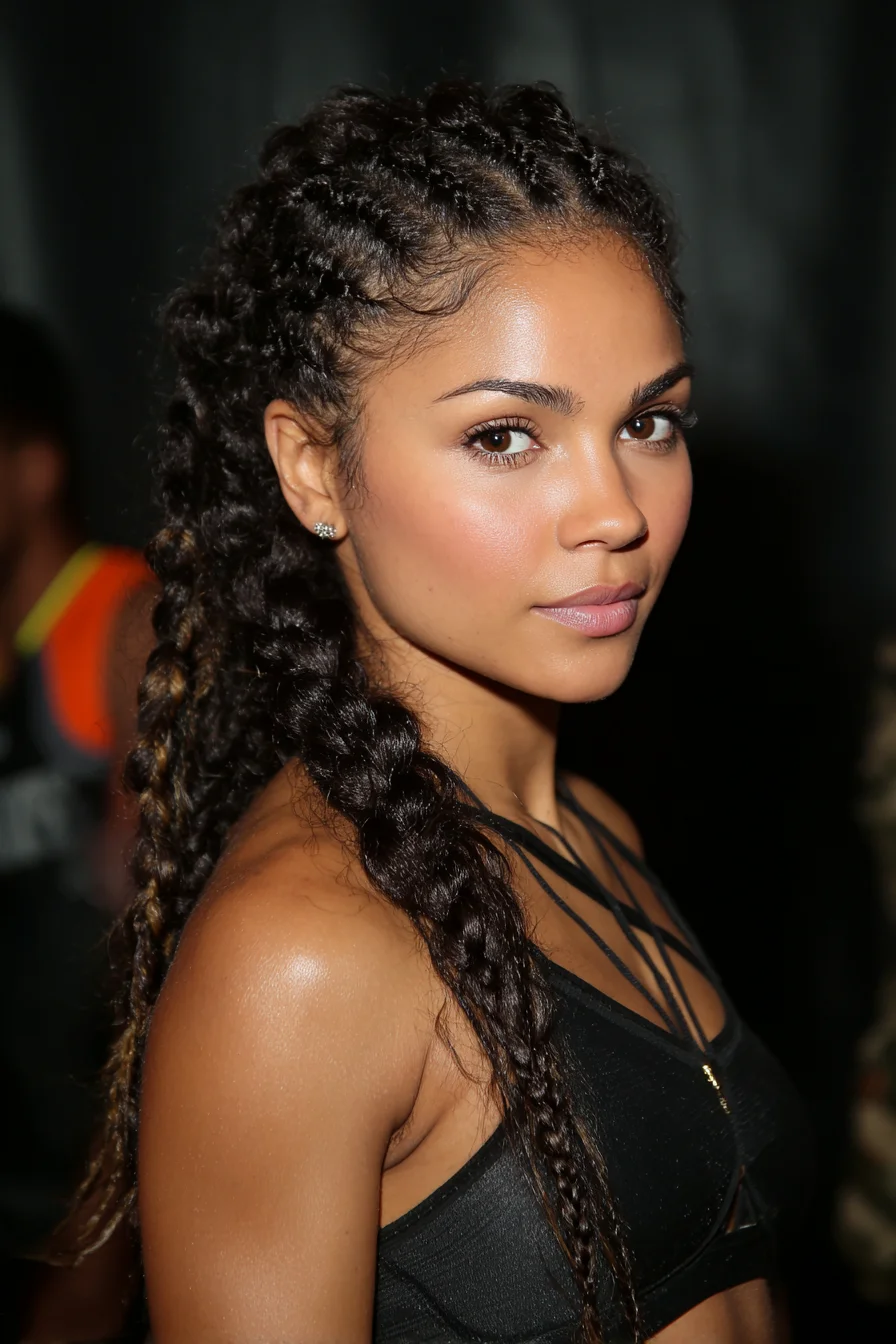
Suitable for textured, curly and coily hair, this cornrow-to-chunk braid style works best on medium to thick densities. For finer or straight hair, add lightweight braiding hair for grip and volume. Start with clean, detangled hair; section into parallel parts and create tight cornrows using a three-strand or feed-in technique along the scalp. Transition the rows into long, chunky three-strand braids, adding smaller accent braids for texture if desired. Tools: rat-tail comb, duckbill clips, small elastics, an edge brush, and a spray bottle. Products: leave-in conditioner, light-hold styling gel or edge control, a moisturizing scalp oil, and a light finishing spray. Difficulty: intermediate — requires basic cornrowing and braiding skills; expect 60–120 minutes depending on braid size and hair length. Maintenance tips: sleep on a satin pillow or wrap with a silk scarf, apply a light oil to the scalp every few days to prevent dryness, avoid heavy creams that cause buildup, and refresh edges sparingly with edge control. Rework or remove after 4–8 weeks to minimize tension and breakage.
As a stylist, my top priority is combining durability with hair health. For game-ready styles, always start with clean, slightly textured hair — a lightweight leave-in or dry shampoo gives grip without heaviness. Use soft, snag-free elastics and silicone-lined grips to minimize breakage; avoid super-tight ties that pull at the hairline. For wet-weather or heavy-sweat days, prefer braided styles or wrapped buns to keep moisture from loosening the look. Nightly care matters too: sleep on a satin pillowcase or use a satin bonnet, and refresh styles with light water or conditioning mist rather than overwashing. Rotate tight styles with looser protective options to prevent stress on the same sections. Practice a few of the 24 looks so you can style quickly before warmups. If you need a personalized adaptation for your hair texture or length, book a salon consult — I’ll tailor any of these game-ready styles to keep your hair strong and your look sharp.