
Hi, I’m Lena — a salon stylist with over a decade of experience crafting protective braided looks. Short Fulani braids are a favorite in my chair because they combine striking tribal detail with modern, wearable finishes. These styles work beautifully for women with short-to-medium natural hair, relaxed textures, or anyone who wants a low-maintenance protective option that still feels fresh and feminine. In the salon I customize each Fulani look by adjusting braid size, parting placement, and adornments like beads, cuffs, or subtle extensions so the style flatters your face shape and lifestyle. Styling tips from my experience: gently pre-stretch or blow-dry for smoother feed-ins, choose lightweight Kanekalon for shorter lengths, keep the scalp moisturized with a light oil, and avoid overly tight installation to protect your hairline. Sleep on a satin bonnet and refresh edges with a soft gel. Below are 28 images showcasing variations — from minimalist single-row looks to embellished statement finishes — with notes for both salon and at-home styling.
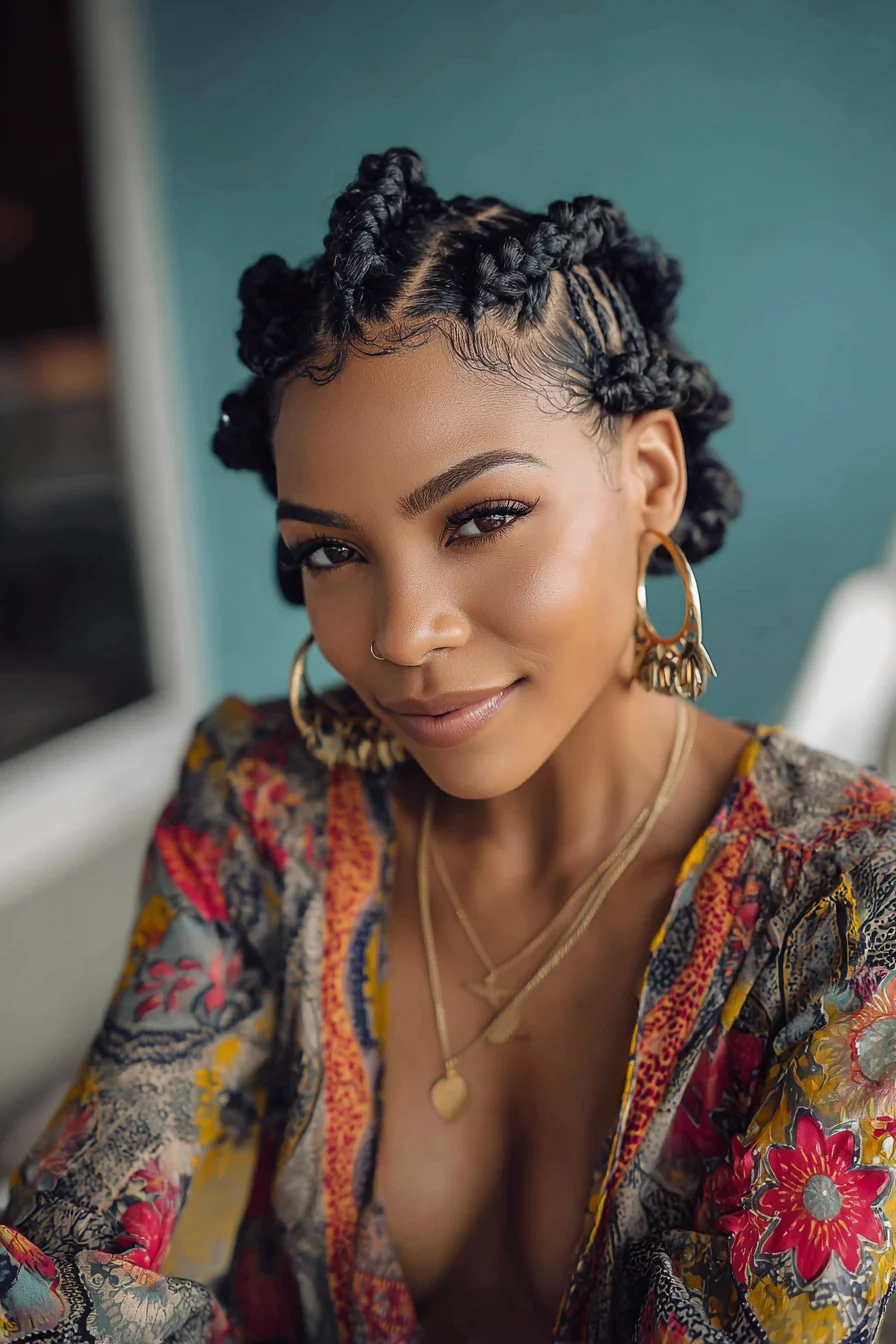
Bantu Knot Braids with Metallic Cuffs — Natural Textured Hair Styling

Suitable hair: Best for Type 3–4 natural texture or wavy hair with medium to thick density; can be adapted for finer hair with extensions for volume. Styling technique: Work on clean, detangled hair. Section into even square or triangular parts, apply a leave‑in and styling cream, then two‑strand twist or three‑strand braid each section and wrap the braid into a small Bantu knot, securing with an elastic or pin. Add metallic cuffs, thread or beads around selected braids for detail. Tools needed: rattail comb for precise parts, sectioning clips, small elastic bands, bobby pins, edge brush, and a crochet/needle if adding beads. Products required: moisturizing leave‑in conditioner, cream or butter for hold, light gel/edge control for smooth parts, lightweight oil (jojoba or argan) and a setting spray for shine. Difficulty level: Intermediate — expect 60–120 minutes depending on length and density. Maintenance tips: Sleep with a silk bonnet or scarf, refresh edges with light gel and oil, mist with water/leave‑in weekly, avoid heavy buildup, and redo knots after 2–4 weeks to protect the hairline and scalp health.
Arched Cornrows Into Chunky Feed‑In Braids with Gold Cuffs
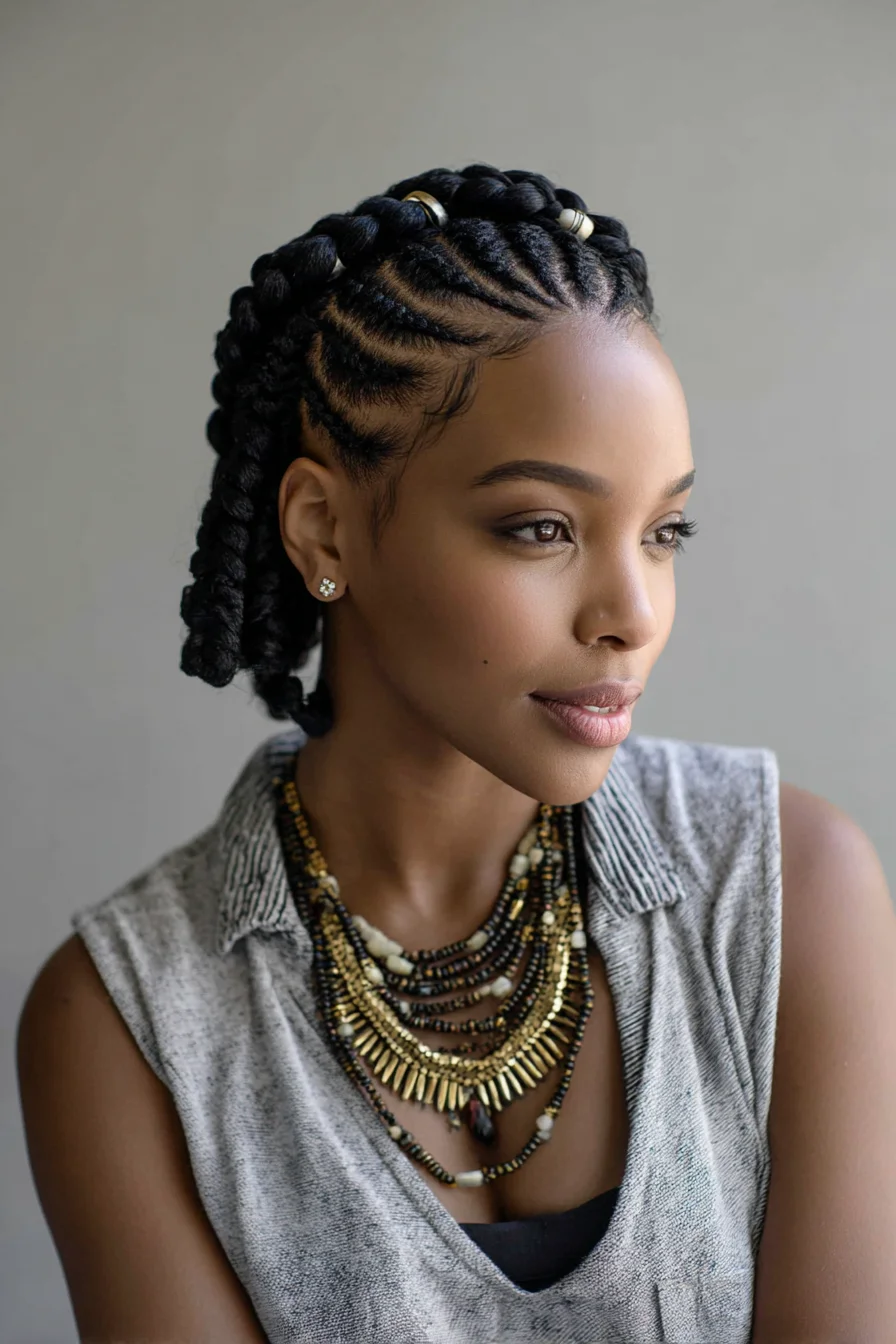
A polished protective style featuring arched cornrows that feed into chunky, oversized braids finished with metallic cuffs. Suitable for naturally textured hair (3A–4C) or relaxed hair with medium to high density; extensions (kanekalon or human hair) are recommended if you want extra length or uniform thickness. Technique: create clean arched partings with a rat-tail comb, apply a lightweight leave-in, then perform feed‑in braiding (adding small amounts of extension hair as you move along) to build the large rope-like braid. Smooth edges with a soft brush and edge control for a sleek hairline. Tools needed: rat-tail comb, sectioning clips, small elastics, edge brush, blunt scissors, hot water pot or steamer (if sealing synthetic ends). Products required: leave-in conditioner, braiding gel or pomade, strong edge control, lightweight oil or scalp serum, and a light-hold sheen spray or mousse to set. Difficulty: intermediate — requires neat parting and consistent tension; expect 2–4 hours depending on size and extensions. Maintenance: sleep in a satin bonnet, moisturize scalp weekly, refresh edges as needed, avoid overly tight braiding to prevent tension, and remove after 6–8 weeks to prevent breakage.
Curved Cornrow Updo with Low Braided Bun
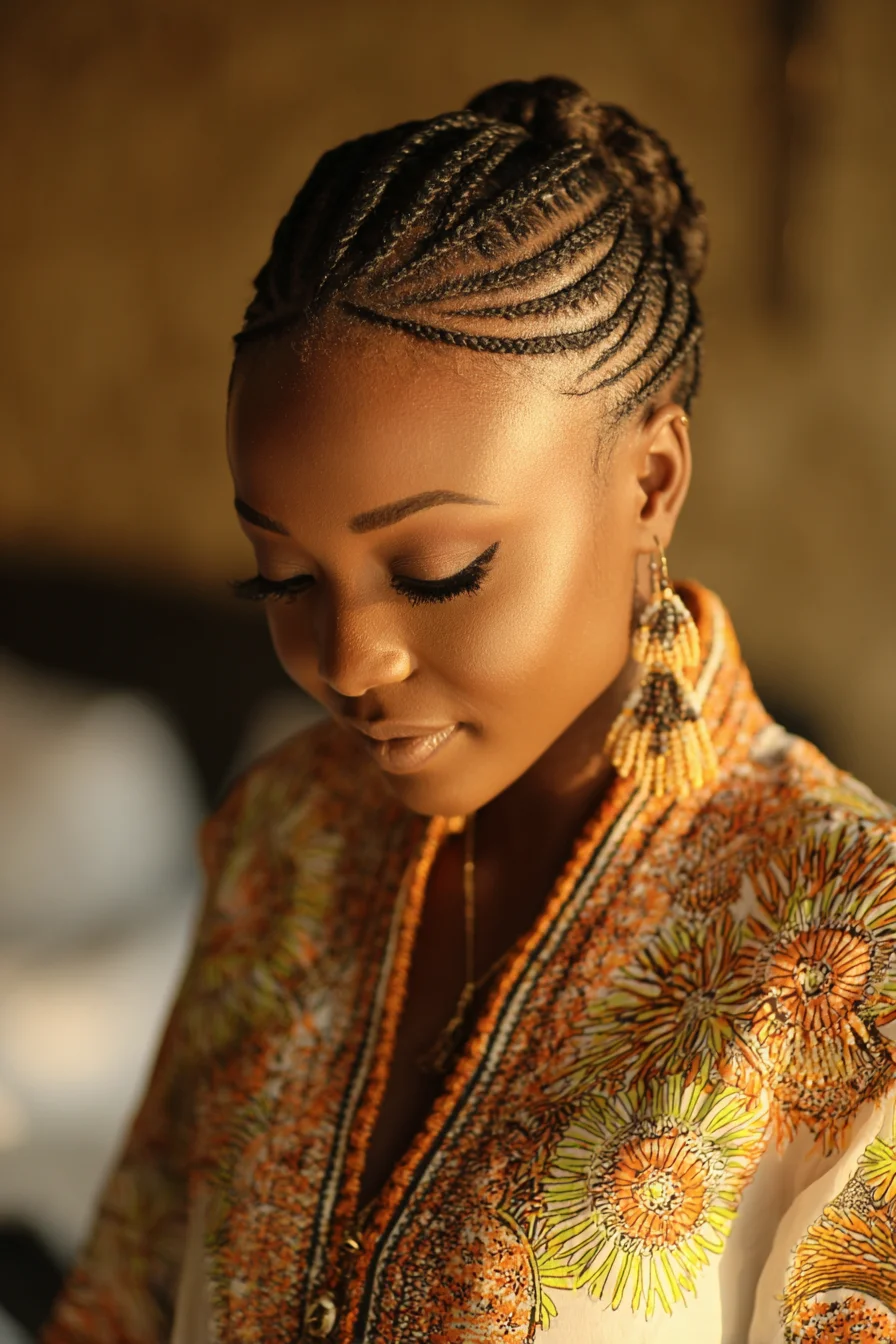
Suitable for Type 3–4 textured hair and anyone seeking a protective, polished updo. This look is created by parting clean, curved sections and braiding neat cornrows toward the crown, then gathering them into a low wrapped bun. Use the feed‑in braiding technique for uniform thickness and to blend added synthetic hair if extra length or volume is needed. Tools: rat‑tail comb, sectioning clips, small elastics, edge brush, blunt needle or crochet hook for tucking. Products: lightweight leave‑in detangler, edge control gel for smooth parts, light oil or scalp serum, and a gentle holding spray. Difficulty: intermediate — expect 2–4 hours depending on braid size and whether extensions are used; professional installation is recommended for precise curves. Maintenance tips: sleep on a silk scarf or bonnet, mist the braids weekly with a moisturizing spray, apply scalp oil twice weekly to prevent dryness, and refresh edges sparingly to avoid buildup. Keep the scalp clean with diluted shampoo or dry shampoo between washes and remove or redo the style after 6–8 weeks to protect hair health and the hairline.
Sleek Parallel Cornrows into Long Beaded Braids — Protective Style
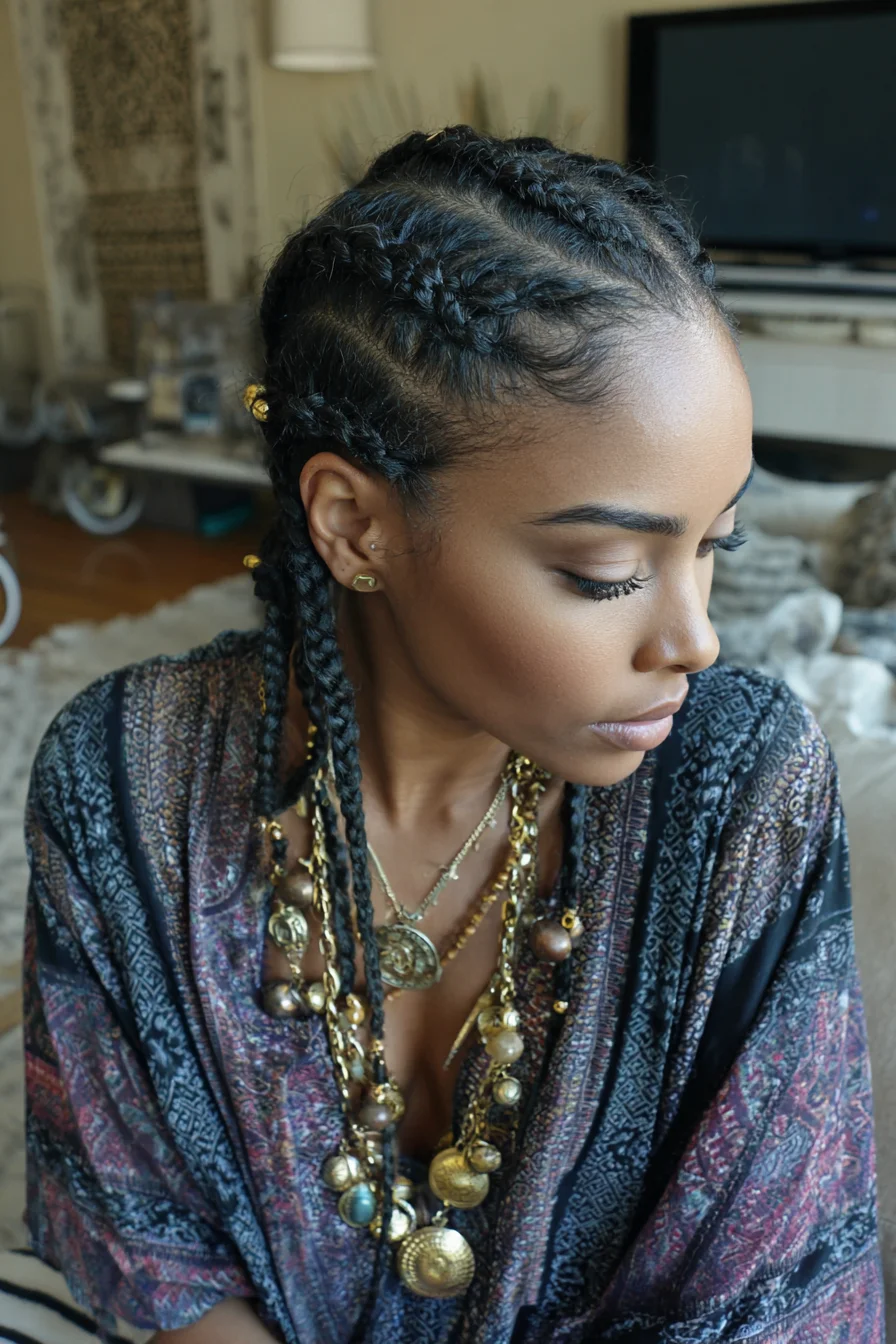
This look suits textured, curly or coily hair best — the natural grip helps the cornrows lay flat and hold beads — but can also be recreated on straighter hair using Kanekalon or human-hair feed‑in extensions. Technique: clean, straight parting into parallel sections, then three‑strand cornrow each section, using a feed‑in method near the crown to add length and keep a natural root. Finish by securing ends with small elastics and adding beads or charms with a beading tool. Tools needed: rat‑tail comb, sectioning clips, fine‑tooth comb, small elastics, beading tool, and a crochet/needle if adding extensions. Products required: leave‑in conditioner, braiding cream or gel for hold, lightweight oil or scalp serum, edge control for sleek baby hairs, and a water‑based mousse to set. Difficulty: intermediate — expect 1.5–3 hours depending on size and whether extensions are added. Maintenance tips: sleep on a silk/satin scarf or bonnet, mist with a water‑based leave‑in and light oil twice weekly, cleanse scalp with diluted shampoo or a scalp cleanser, avoid heavy creams to prevent build‑up, and refresh edges or redo roots after 4–6 weeks to protect hair health.
Textured Bantu Knots with Feed‑In Face‑Framing Braids — Protective Natural Updo
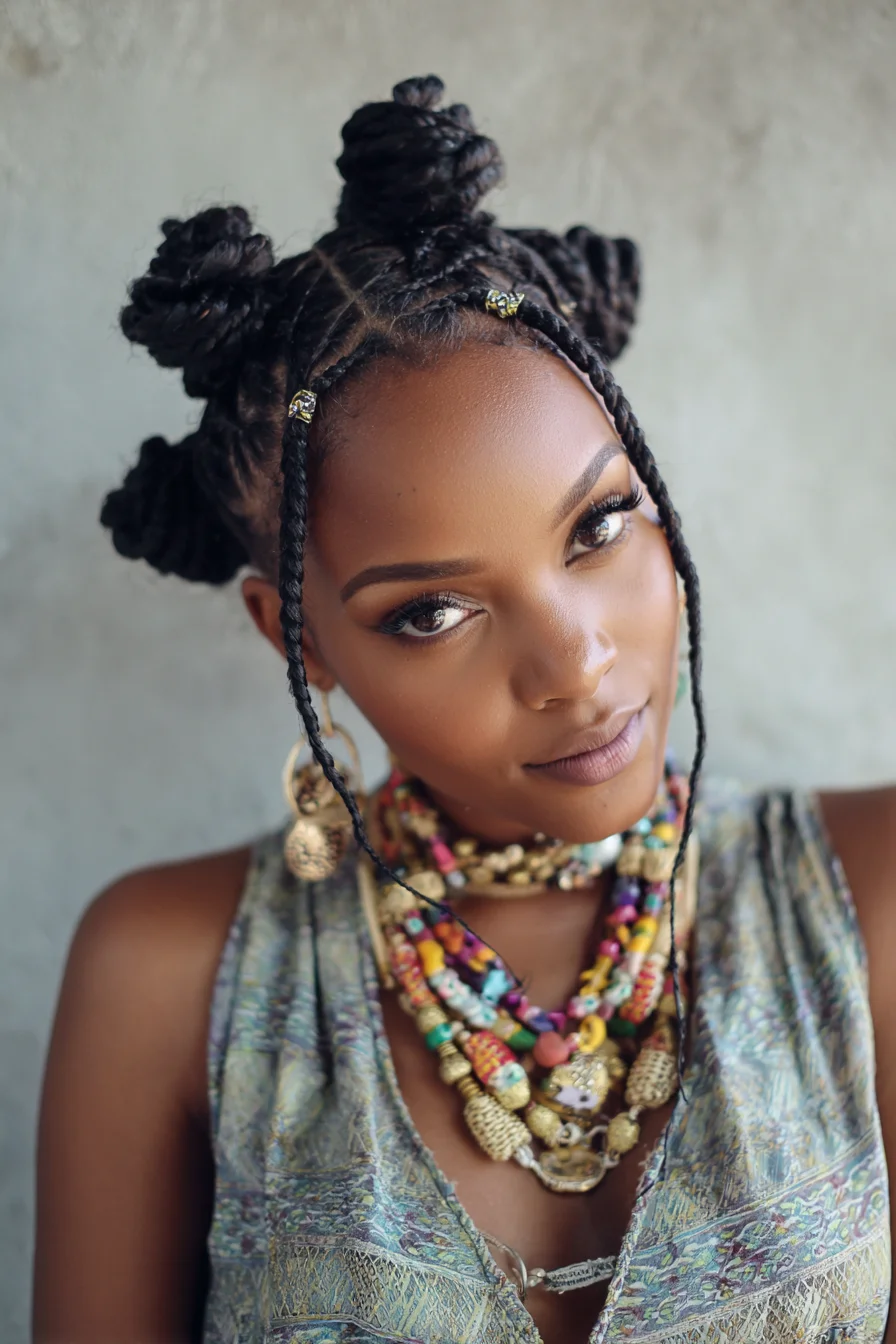
This look is a protective updo combining small Bantu knots at the crown with two feed‑in face‑framing braids. It’s best suited to Type 3–4 hair or textured hair that has medium to thick density; fine hair can achieve the shape with added braiding hair for bulk. Technique: section the hair into neat parts using a rat‑tail comb, create cornrows or feed‑in braids toward the crown, then coil each braided section into a small Bantu knot and secure with an elastic and a bobby pin or thread. Leave two longer feed‑in braids at the front for face framing and add beads or cuffs as desired. Tools: rat‑tail comb, sectioning clips, small elastics, bobby pins, crochet needle (for extensions), and an edge brush. Products: moisturizing leave‑in, lightweight braiding gel or edge control, setting mousse to reduce frizz, lightweight oil or scalp serum, and a light holding spray. Difficulty: intermediate — expect 1.5–3 hours depending on size and extensions. Maintenance: wrap with a silk/satin scarf at night, refresh edges with edge control, moisturize scalp weekly, avoid excessive tension, and redo or loosen knots after 4–6 weeks to prevent breakage.
Feed-In Side Cornrows with Twisted Low Bun Updo
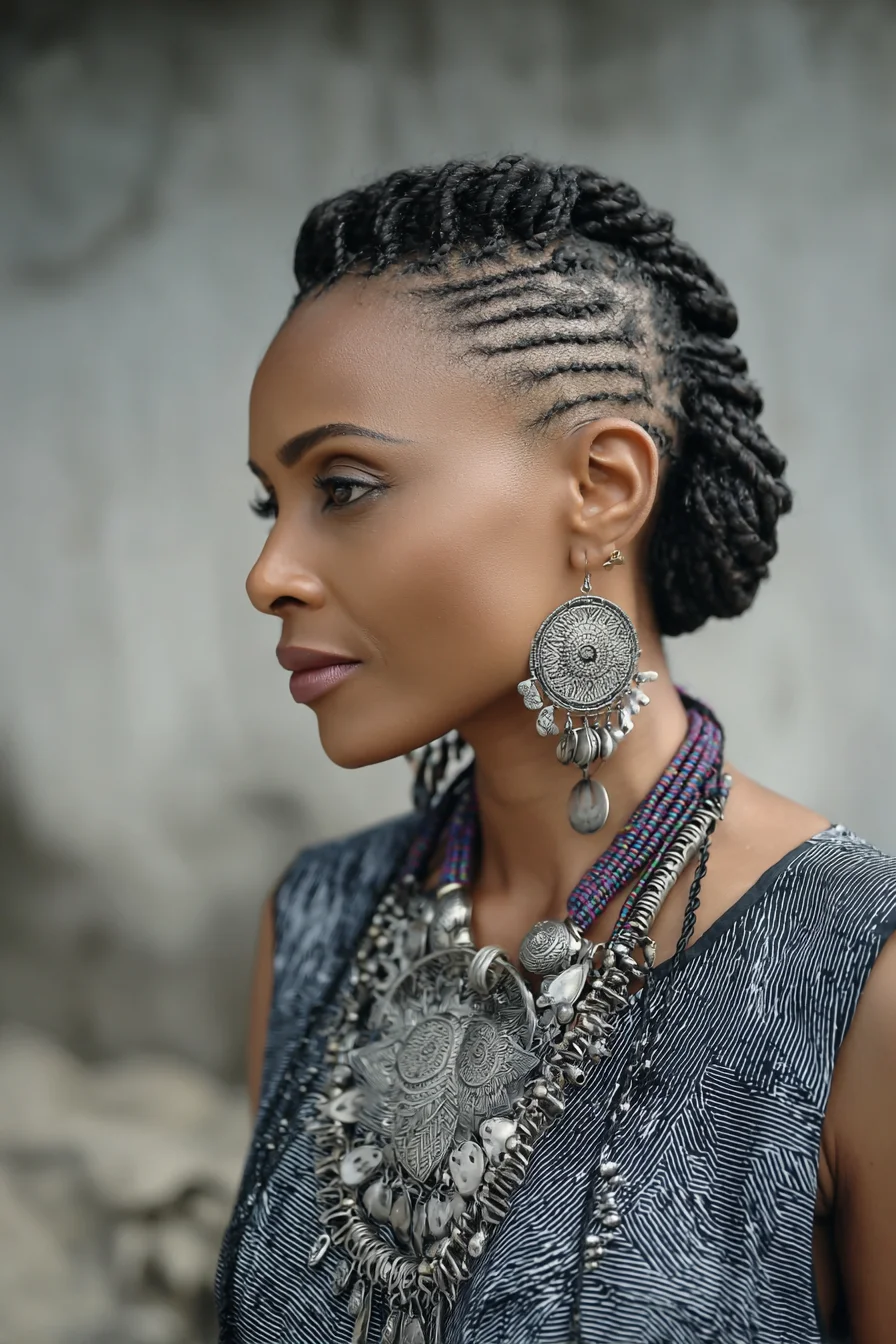
This polished updo pairs tight side feed-in cornrows with two-strand or Senegalese twists gathered into a low twisted bun. It suits Type 3 (curly) to Type 4 (coily/kinky) hair textures and works well on medium to thick density; fine hair can use lightweight Kanekalon or human-hair extensions for fullness. Technique: create parallel feed-in cornrows along the sides, gradually adding hair to build even, low-tension rows; transition the back into uniform twists and wrap them into a secure bun. Tools needed: rat-tail comb, sectioning clips, small-tooth comb, elastic bands, long-tail crochet needle (optional for extensions), and a fine edge brush. Products required: moisturizing leave-in conditioner, lightweight gel or braiding cream for grip, edge control, a holding spray or mousse to set, and finishing oil for shine. Difficulty level: intermediate to advanced — expect 2–4 hours depending on length and extensions. Maintenance tips: sleep on a satin bonnet or pillowcase, lightly oil the scalp weekly, refresh edges with edge control, avoid daily heavy manipulation, and retouch or redo cornrows every 4–6 weeks to prevent breakage and maintain neatness.
Cornrow-to-Bantu Knots with Face-Framing Braids — Natural Hair Styling

Suitable for natural 3A–4C textures and medium-to-thick hair; this look can also be created on finer hair using added braiding extensions for volume. Begin on clean, detangled hair: section with a rat-tail comb and clip away excess, then feed/cornrow each section toward the desired knot placement. Transition each cornrow into a small braid (two- or three-strand) and wrap into a tight Bantu knot, securing with a small elastic and a bobby pin. Leave a few braids down at the front for face-framing detail. Tools: rat-tail comb, fine-tooth comb, sectioning clips, small elastics, bobby pins, and an optional hooded dryer. Products: moisturizing leave-in, lightweight styling gel or edge control for crisp parts, a cream or butter for hold and shine, braid spray and a light oil for scalp hydration. Difficulty: intermediate — requires braiding skill and patience; plan 1.5–3 hours depending on section size and hair length. Maintenance: sleep on a satin bonnet or pillowcase, refresh edges with gel, mist scalp and braids twice weekly, and rewrap knots if they loosen. Keep the style 3–6 weeks and remove immediately if you feel excess tension or notice breakage.
Side-Swept Cornrows with Long Beaded Micro-Braids

This look pairs neat feed-in cornrows at the crown with long micro-braids finished with beads and hair jewelry. Best suited to naturally textured, coily or curly hair (types 3–4) because the texture holds the cornrows and micro-braids; straighter hair can achieve the style with added braiding extensions for grip. Technique: cleanse and condition, apply a leave-in and light heat-stretch or banding to allow clean parting. Use a rat-tail comb to create sections, then feed-in hair (or added kanekalon) to form tight cornrows that transition into small three-strand braids. Secure ends with small elastics or by sealing synthetic ends in hot water (exercise caution). Tools: rat-tail comb, fine-tooth comb, sectioning clips, small elastics, crochet needle (optional), and good lighting. Products: leave-in conditioner, edge-control gel, light holding gel or braiding wax, braid spray, and a light oil for shine. Difficulty: intermediate to advanced; expect 3–6 hours depending on size and length—professional installation recommended for best tension control. Maintenance: sleep with a silk bonnet, spray scalp weekly, avoid heavy products that cause buildup, refresh edges as needed, and remove after 6–8 weeks to prevent excess tension and breakage.
Beaded Short Twisted Bob with Metal Cuffs
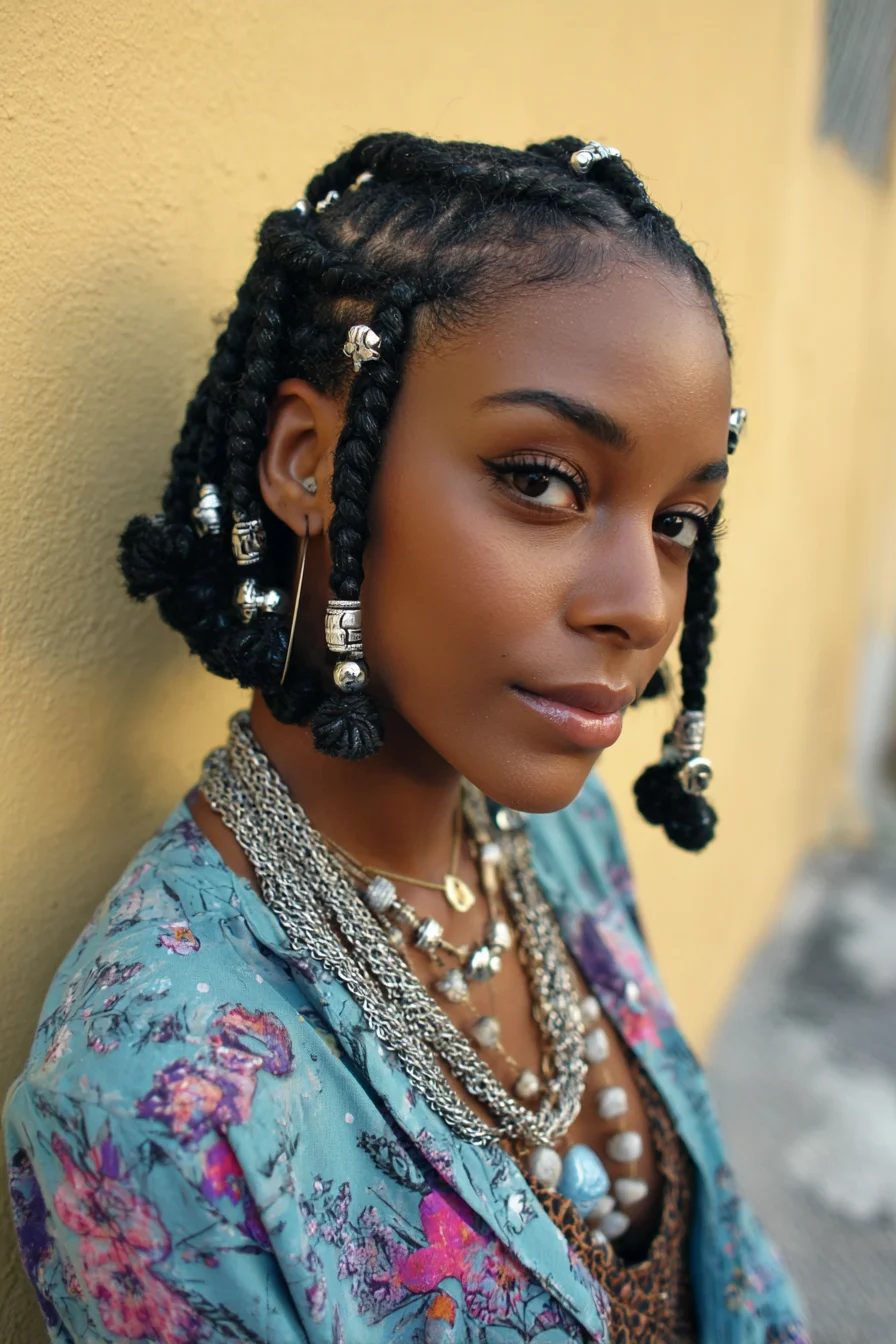
This cropped twisted bob suits natural kinky to coily textures (3A–4C) best, and can also be achieved on relaxed or heat-styled hair with added braiding hair for bulk. The salon technique uses neat rectangular partings and small two-strand twists secured into short knotted ends; metal cuffs and beads are threaded on each twist for a decorative finish. Tools needed: rat-tail comb, sectioning clips, small elastics, bead applicator/loop, scissors and a tail comb. Optional: added synthetic braiding hair for uniform thickness. Products required: moisturizing leave-in conditioner, cream-based twisting product or curl butter, light-hold gel for edge control, lightweight scalp oil, and a setting mousse or spray to reduce frizz. Difficulty: intermediate — expect 2–4 hours depending on size and whether added hair is used. Maintenance tips: sleep on a silk scarf or bonnet nightly, refresh with water + leave-in or mousse to redefine twists, oil the scalp weekly, and gently cleanse with a co-wash every 1–2 weeks. Remove or redo before 6–8 weeks to prevent tension damage and split ends.
Goddess Feed‑In Cornrows with Long Box Braids and Laid Edges

This polished feed‑in cornrow style flows into long, sleek box braids and features neatly laid edges — a protective look that reads elegant and modern. Hair type suitability: ideal for natural 3A–4C textures and medium to thick hair looking for long‑lasting protection; can also be achieved on straighter hair after proper texturizing and prepping. Styling technique: section into clean, even rows, create tight cornrows with the feed‑in method to gradually add extensions at the root, then braid down to the desired length and finish ends cleanly. Tools needed: rat‑tail comb, duckbill clips, wide‑tooth comb, soft bristle brush, edge brush, hair ties, and a crochet/feeding needle for extensions. Products required: hydrating leave‑in, lightweight braiding gel or pomade for control, edge control, styling mousse to set, and a braid shine or braid spray for hydration. Difficulty level: intermediate to advanced; expect 3–5 hours depending on density and length — recommend a skilled braider for consistent tension. Maintenance tips: sleep on a silk bonnet, refresh edges weekly, lightly mist scalp with braid spray, avoid heavy oils at the root, and remove within 6–8 weeks to prevent breakage.
Cornrows into Thick Feed‑In Braids — Protective Style for Curly/Coily Hair

This polished protective style pairs neat cornrows at the crown with two thick feed‑in (goddess) braids down the sides, ideal for natural curly and coily textures (3–4). It also works on looser curls or straight hair when textured with a light hold product. Technique: section the hair with a rat‑tail comb, create small, evenly spaced cornrows toward the back, then transition to feed‑in braiding to build volume—adding Kanekalon or human hair extensions for length and fullness. Tools needed: rat‑tail comb, duckbill clips, small elastics, edge brush, long rattail needle or crochet hook (optional), scissors. Products required: moisturizing leave‑in conditioner, braiding gel or edge control for sleek parts, lightweight oil (jojoba/argan), and a mousse or anti‑frizz spray to set the braids. Difficulty: intermediate — expect 2–4 hours depending on length and extensions; professional installation is recommended to control tension and ensure even feed‑ins. Maintenance tips: sleep on a silk/satin scarf or pillowcase, lightly oil the scalp weekly, cleanse with a diluted shampoo at the scalp, and refresh edges with a small amount of edge control. Reinstall or touch up cornrows every 3–6 weeks to prevent breakage.
Cornrows with Braided Top Knot and Long Three-Strand Braids with Hair Rings

This look suits medium to very textured hair (3A–4C) and can be adapted for straighter hair using kanekalon or human-hair extensions. Start on clean, detangled hair. Section into even parts with a rat-tail comb and secure sections with clips. Use a firm-hold gel or edge control at the scalp and a feed‑in technique to add extensions for length and uniform thickness. Braid three‑strand lengths down and gather the crown braids into a braided top knot, securing with small elastics and pins. Add metal rings or cuffs to finished braids for a polished accent. Tools: rat‑tail comb, sectioning clips, edge brush, small elastics, pins, crochet or latch hook (if needed) and extension hair. Products: sulfate‑free shampoo, leave‑in conditioner, braiding gel, setting mousse, lightweight oil or braid spray and anti‑frizz serum. Difficulty: moderate to advanced — expect 2–4 hours depending on extensions and parting precision. Maintenance: sleep on a silk bonnet, reapply braid spray or light oil to the scalp twice weekly, avoid heavy products that cause buildup, lightly mist and smooth edges as needed, and plan for touch‑ups or full removal after 6–8 weeks to protect hair health.
Sleek Cornrow Updo with Feed‑In Braids and Long Hanging Braids
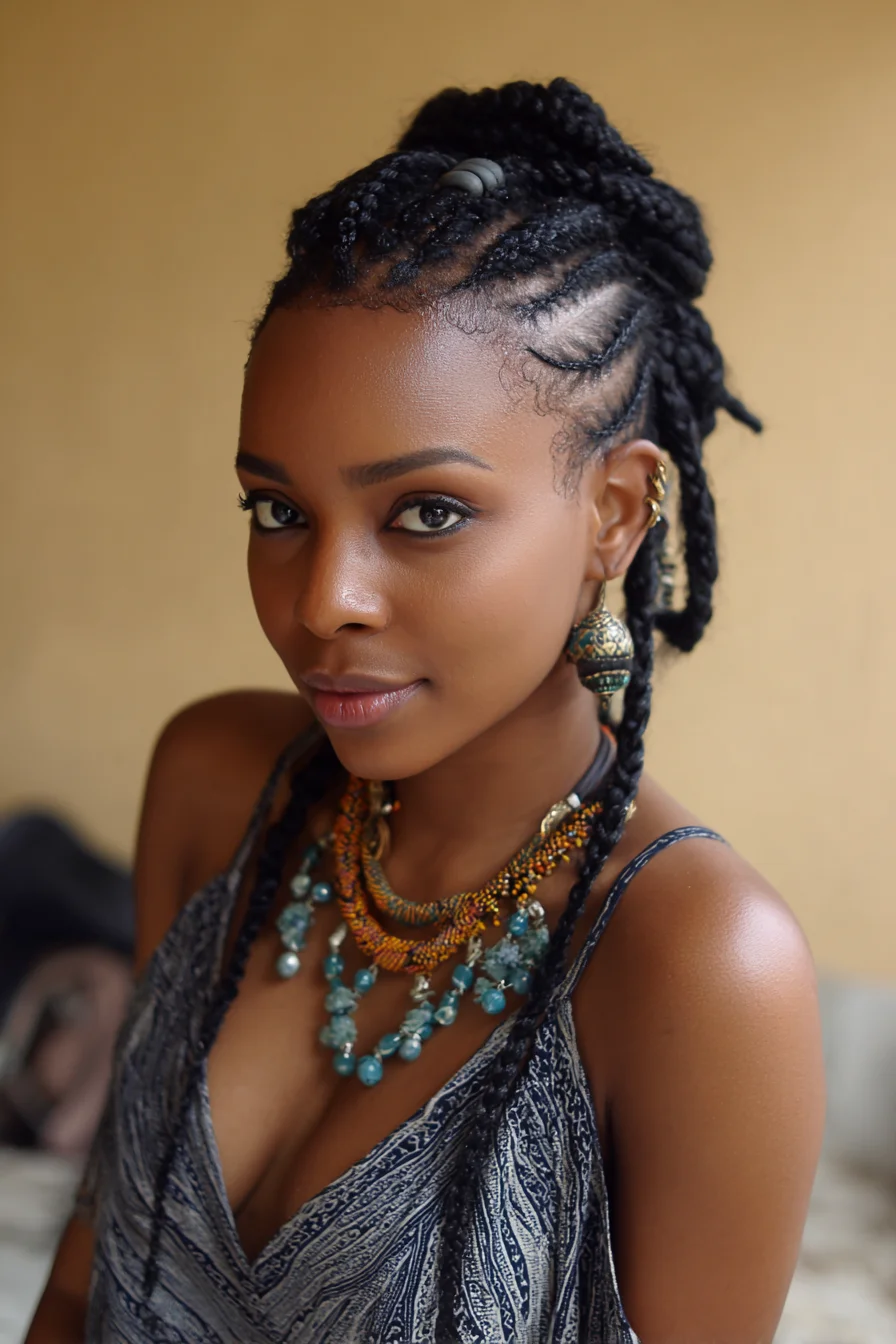
This polished cornrow updo with feed‑in braids and long hanging braids suits 3C–4C textured hair best but can be adapted for straighter textures using braiding extensions. Technique: section hair into clean parts with a tail comb, create small-to-medium cornrows along the scalp using a feed‑in method to build thickness toward the crown, gather the top rows into a low or mid bun, and leave several longer braids to hang or frame the face. Tools needed: rat‑tail comb, sectioning clips, fine tooth comb, edge brush, small elastic bands, hair clips, and optional braiding hair. Products required: lightweight leave‑in conditioner, styling gel or edge control for neat parts, a moisturizing butter or cream for braid sheen, lightweight oil (argan or jojoba), and a holding spray or mousse to set flyaways. Difficulty level: Intermediate — requires solid cornrowing/braiding skills and control over tension. Maintenance tips: sleep on a satin bonnet or pillowcase, oil the scalp every 7–10 days, refresh edges with a light gel as needed, avoid excessive tension at the hairline, and remove or redo within 6–8 weeks to prevent breakage and maintain healthy edges.
Sleek Cornrows Leading Into Two Long Chunky Braids

This polished cornrow-to-braid look pairs close-to-scalp cornrows with two chunky three-strand braids for a clean, defined finish. Suitability: ideal for natural textured hair (type 3–4) where the cornrows hold well; also adaptable for finer or relaxed hair when using feed-in extension hair for added thickness and length. Styling technique: section the hair into even panels with a rat-tail comb, create tight, straight-back cornrows using a three-strand or feed-in method, then gather the ends into two large, neatly plaited braids. Finish edges with a light edge-control for a smooth hairline. Tools needed: rat-tail comb, sectioning clips, fine-tooth comb, small elastics, edge brush, and optional extension/kanekalon hair plus a hood dryer for setting. Products required: leave-in conditioner, lightweight styling gel or edge control, braid-setting mousse, lightweight natural oil (jojoba or coconut) and a braid-refresh spray. Difficulty level: intermediate — requires clean parting and consistent tension; allow 1.5–3 hours depending on extension work. Maintenance tips: sleep in a silk bonnet, oil the scalp weekly, co-wash gently every 2–3 weeks, avoid heavy creams, and remove within 6–8 weeks or sooner if excessive tension or buildup appears.
Cornrow-to-Low Twisted Bun with Face‑Framing Braids

This look suits natural textured hair (3A–4C) or hair with added braiding extensions for extra length and volume. Start on clean, detangled hair: create even cornrow sections using a rat-tail comb and clip away sections. For a softer finish and reduced tension, use knotless/feed‑in cornrows beginning at the hairline, leaving two thinner braids at the temples for face‑framing. Gather the back braids into a low bun, twisting and tucking ends, and secure with small elastics and long bobby pins. Tools: rat‑tail comb, sectioning clips, small elastic bands, bobby pins, crochet needle (optional). Products: lightweight leave‑in moisturizer, cream styler or braid butter for grip, edge control for smooth hairline, light oil to seal, and an alcohol‑free holding spray. Difficulty: intermediate — expect 60–120 minutes depending on size and whether extensions are installed. Maintenance tips: sleep with a silk bonnet or scarf, lightly mist scalp with a hydrating spray, reapply edge control sparingly, and avoid over‑tightening to protect the hairline. Refresh or redo cornrows every 4–6 weeks to maintain scalp health.
Flat-Twist Mini Bantu Knots — Protective Updo with Sleek Edges
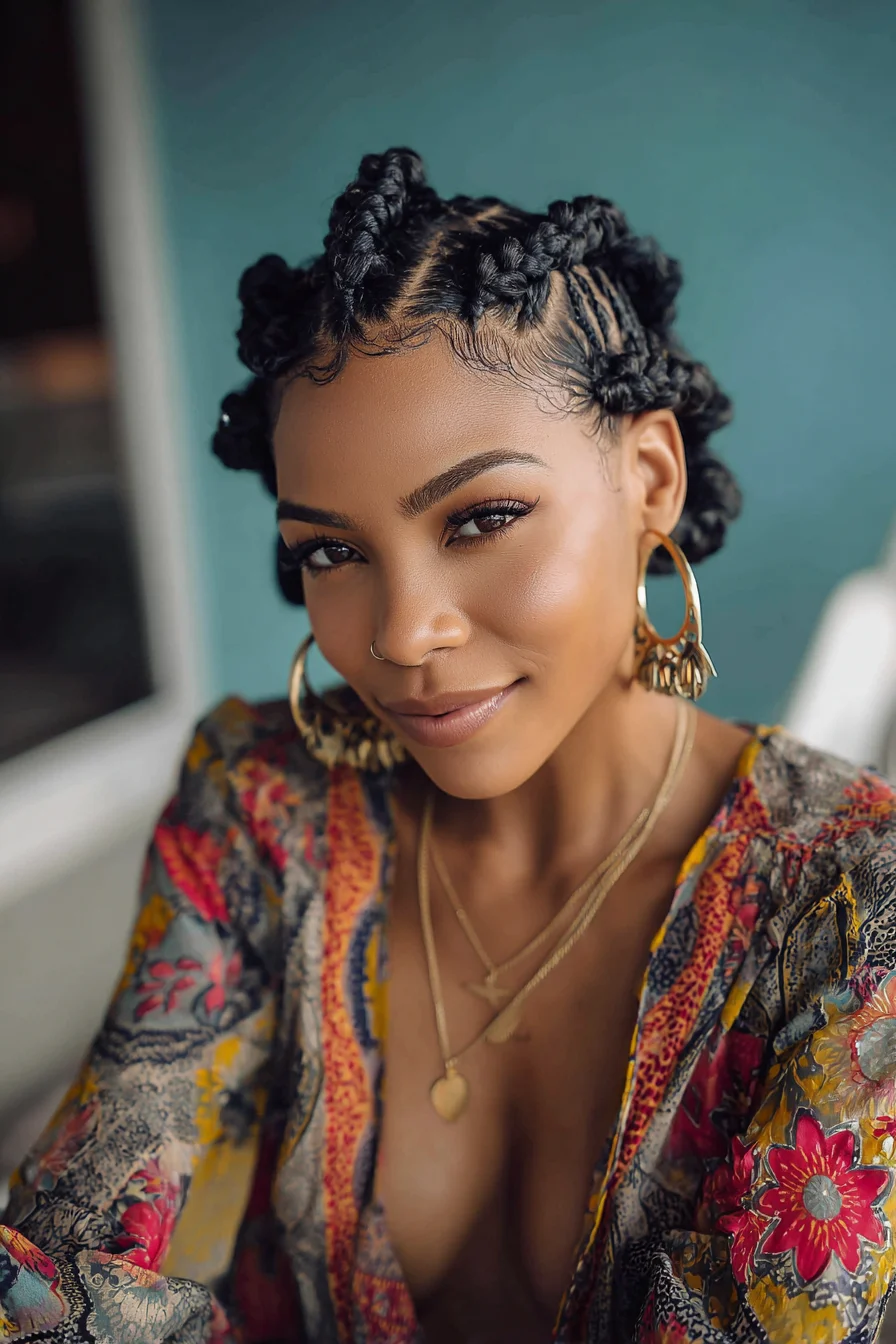
This flat-twist mini Bantu knot updo pairs neat flat twists with small coiled knots for a polished, protective style. Suitability: best for natural textures (3A–4C) and medium-to-thick density; fine hair can work with added braiding hair for volume and grip. Styling technique: section the hair into small-to-medium parts with a rat-tail comb, apply a lightweight leave-in, then flat-twist each section toward the crown. Twist the tail of each flat twist and coil into a mini Bantu knot, securing with a small elastic or hairpin. Smooth baby hairs with edge control for a finished look. Tools needed: rat-tail comb, duckbill clips, small elastics or pins, boar-bristle brush or toothbrush for edges, spray bottle for water. Products required: moisturizing leave-in or cream, medium-hold gel or edge control, lightweight oil or scalp serum, optional setting mousse or braid sheen and braiding hair if extra length/volume is desired. Difficulty level: moderate — requires experience with flat twists and tension control; expect 1.5–3 hours in salon. Maintenance tips: sleep with a satin bonnet, lightly mist and moisturize the scalp weekly, refresh edges as needed, avoid heavy buildup, and remove or redo after 4–6 weeks to prevent breakage.
Sleek Cornrow Low Bun — Protective Braided Updo for Natural Hair
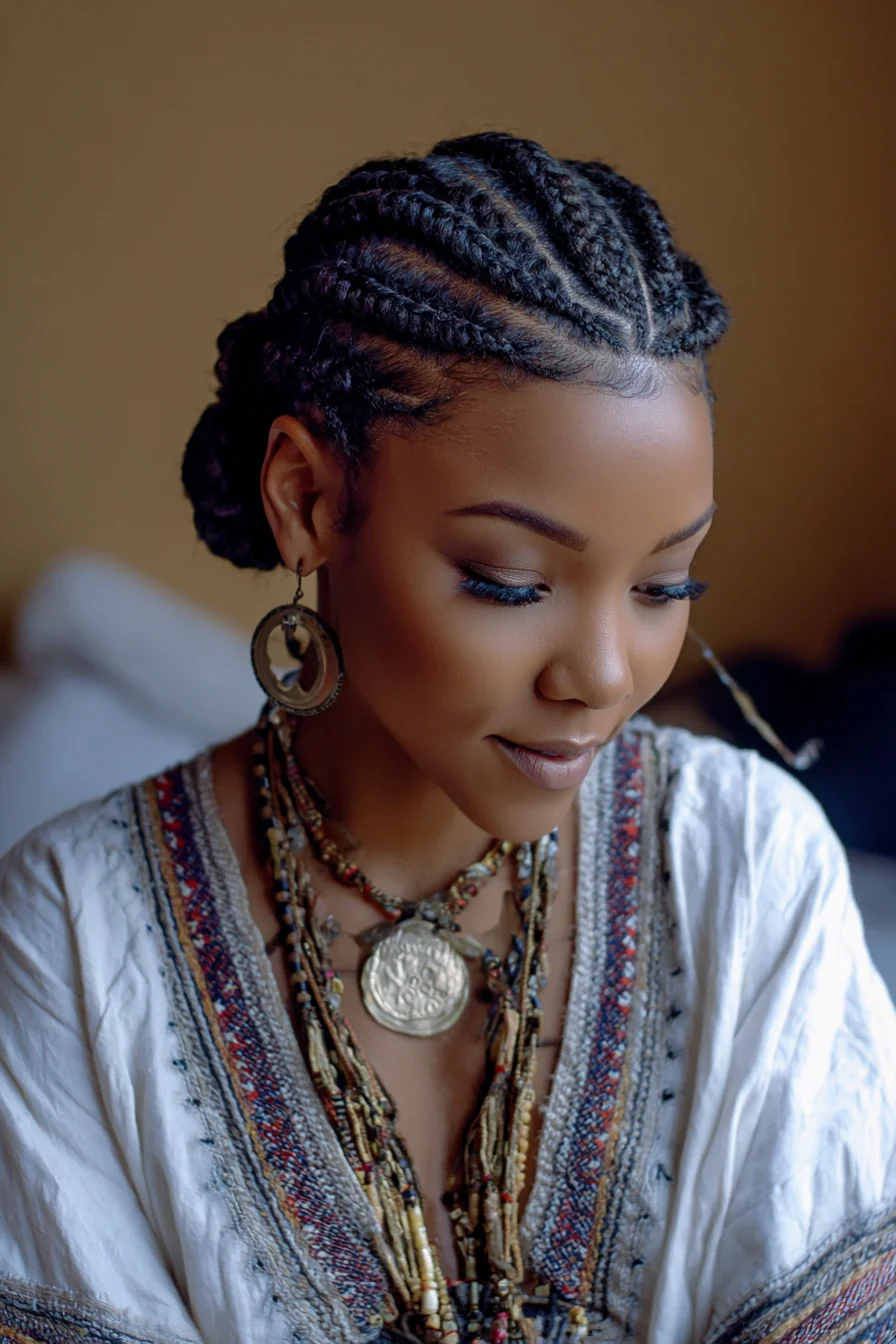
This polished cornrow low bun is a protective updo ideal for medium to coarse, curly and kinky hair textures but adaptable to relaxed or straighter hair with added grip. Technique: create clean, parallel partings and braid each section close to the scalp (flat cornrows) toward the nape, then gather the braid ends into a low braided bun or chignon. Tools: rat-tail comb, sectioning clips, fine-tooth tail comb, elastic bands, bobby pins, and an edge brush. Products: start with a leave-in conditioner or detangler, use a medium-hold styling gel or edge control for neat parts and sleek edges, a lightweight oil or scalp serum for moisture, and a braid spray or mousse to set and reduce frizz. Difficulty: moderate — requires braiding experience and good parting technique; salon time typically 1.5–3 hours depending on hair density and braid size. Maintenance tips: sleep on a silk scarf or bonnet, refresh edges with a light gel and soft brush, moisturize the scalp weekly with a lightweight oil or scalp mist, avoid excessive tension to prevent breakage, and schedule touch-ups every 2–6 weeks depending on growth and neatness.
Side Cornrows into Chunky Twisted Braid with Micro Braided Extensions
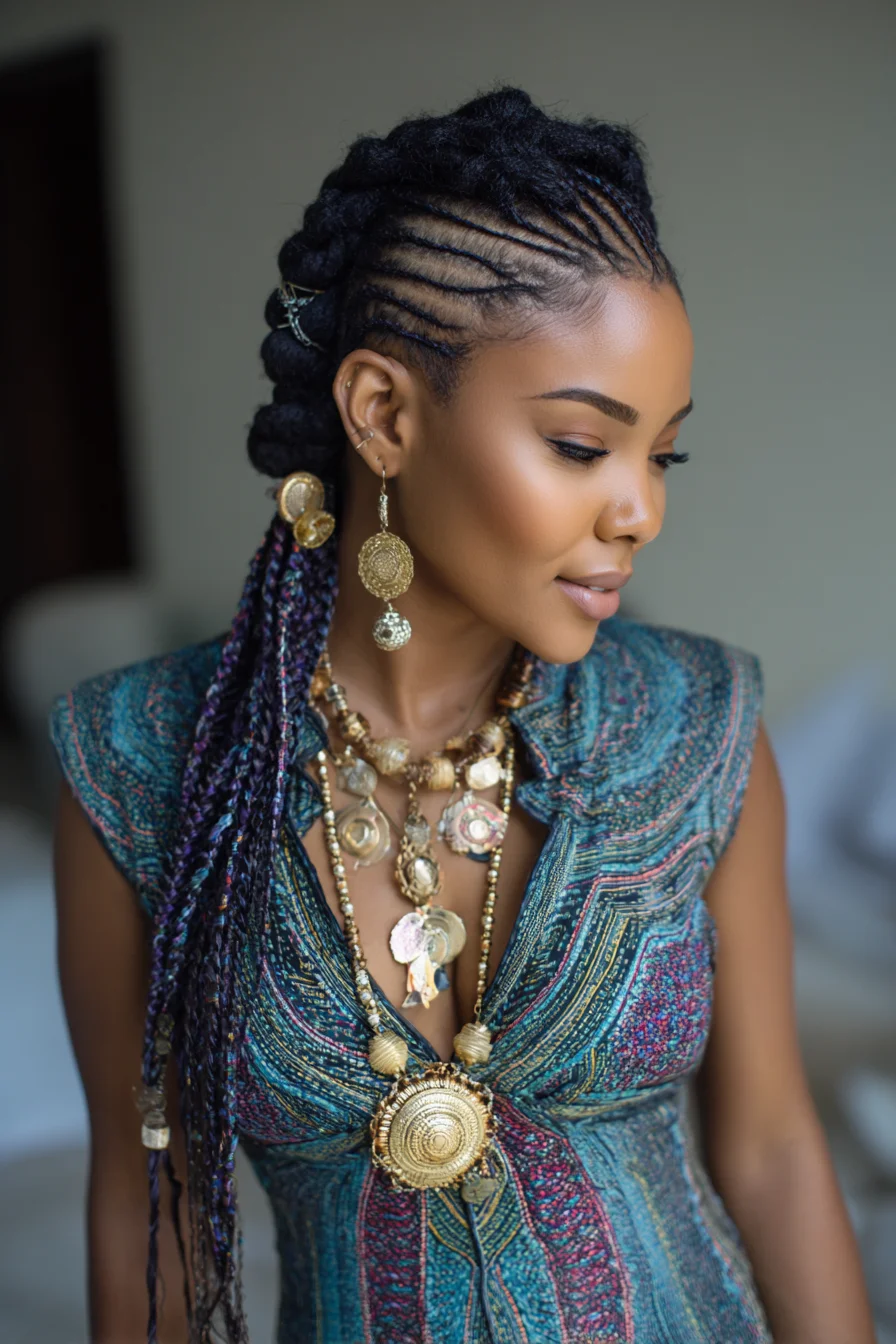
This look pairs neat side cornrows with feed‑in micro braids and a chunky twisted braid down the back—ideal for Type 3–4 natural hair and for textured relaxed hair with careful sectioning. Technique: part the hair into parallel side cornrows from the hairline toward the crown, using a feed‑in (knotless) method to add Kanekalon or premium synthetic hair for length and color; finish the gathered extension hair as a rope twist or large three‑strand braid and wrap smaller accent braids around it. Tools needed: rat‑tail comb, sectioning clips, fine tooth comb, long clips for added hair, hair elastics, and secure scissors. Products required: edge control gel, lightweight cream or butter for hold, braid spray or mousse to set, lightweight oil/serum for scalp, and a shine spray for finish. Difficulty: intermediate — expect 3–5 hours depending on thickness and added hair. Maintenance tips: sleep on a silk/satin scarf or pillowcase, mist scalp with diluted oil or braid spray weekly, avoid heavy products at the roots, refresh edges and loose parts every 4–6 weeks, and remove extensions if tension or breakage appears.
Bohemian Micro Braids with Beaded Forehead Net and Colorful Thread Wraps

Salon-ready bohemian micro/individual braids accented with a beaded forehead net and multicolored thread wraps. Suitability: best on natural curly/coily textures (Type 3–4) for grip and longevity; can be installed on straighter hair using braided extensions for added texture and volume. Styling technique: section small, even parts, feed-in or three-strand braid with pre-stretched synthetic or human hair; create tiny frontal braids arranged into a net then secure beads at each intersection. Tools needed: fine-tooth/rattail comb, sectioning clips, braiding hair, small elastics, beading tool/needle, crochet hook (optional), scissors. Products required: leave-in detangler, lightweight gel or edge control for smooth parts, braid spray or moisturizing oil (jojoba/coconut), dry-shampoo or sulfate-free cleanser for scalp. Difficulty level: advanced — expect 6–10+ hours depending on density; professional installation recommended for even tension and pattern symmetry. Maintenance tips: cleanse scalp every 2–3 weeks, mist with water + leave-in weekly, sleep on a silk scarf or bonnet, avoid heavy oils on roots, and remove after 8–12 weeks to prevent breakage and matting.
Cornrow Feed-In Updo with Twisted Mini-Buns and Beaded Braids

Suitable for Type 3–4 natural textures and medium-to-coarse hair, this cornrow feed-in updo combines neat cornrows at the sides, feed-in/braid extensions, a crown of twisted mini-buns and several long beaded braids. Begin on clean, detangled hair: part into neat sections, create feed-in cornrows toward the crown, secure ends and form 3–6 small twisted buns pinned into a stacked updo. Leave out and/or add long three-strand braids finished with beads or rings for decorative length. Tools: rat-tail comb, sectioning clips, fine-tooth comb, braided needle/crochet (if using extensions), small elastics and bobby pins. Products: moisturizing leave-in, lightweight gel or edge control for sleek parts, setting mousse to reduce frizz, lightweight oil or scalp serum, and a light holding spray. Difficulty: intermediate — requires solid cornrow/feed-in technique and patience; expect 2–4 hours depending on size and extensions. Maintenance: sleep with a silk/satin scarf, refresh edges weekly with edge control and light oil on the scalp, avoid excessive tension, keep the scalp clean with diluted shampoo or clarifying wipes, and remove or redo after 6–8 weeks to prevent breakage.
Neat Cornrows Transitioning to Short Individual Braids — Protective Style

This look suits textured hair types (3A–4C) and medium-to-thick fine hair when there’s 3–6 inches of length to braid. Start with clean, detangled hair and a lightweight leave-in conditioner. Section the hair with a rat-tail comb and clip away portions; use small, even parts to create neat cornrows close to the scalp, either with a traditional three-strand or feed-in technique to build smooth, flat rows. Transition each cornrow into short individual braids and secure ends with small elastics or thread. Tools: rat-tail comb, alligator clips, edge brush, small elastics or braiding thread, spray bottle, and a hooded dryer (optional). Products: leave-in conditioner, light holding gel or edge control for sleek parts, braid mousse or setting foam for frizz control, lightweight oil or scalp serum, and a braid-refresh spray. Difficulty: moderate — requires practiced braiding technique and takes roughly 45–120 minutes depending on row size. Maintenance tips: sleep with a silk/satin scarf or bonnet, apply oil to the scalp weekly, refresh edges sparingly, co-wash or dilute-shampoo scalp as needed, and avoid excessive tension; expect to refresh or remove after 4–6 weeks to protect hair health.
Sleek Side Cornrows into Low Braided Bun with Face‑Framing Braid
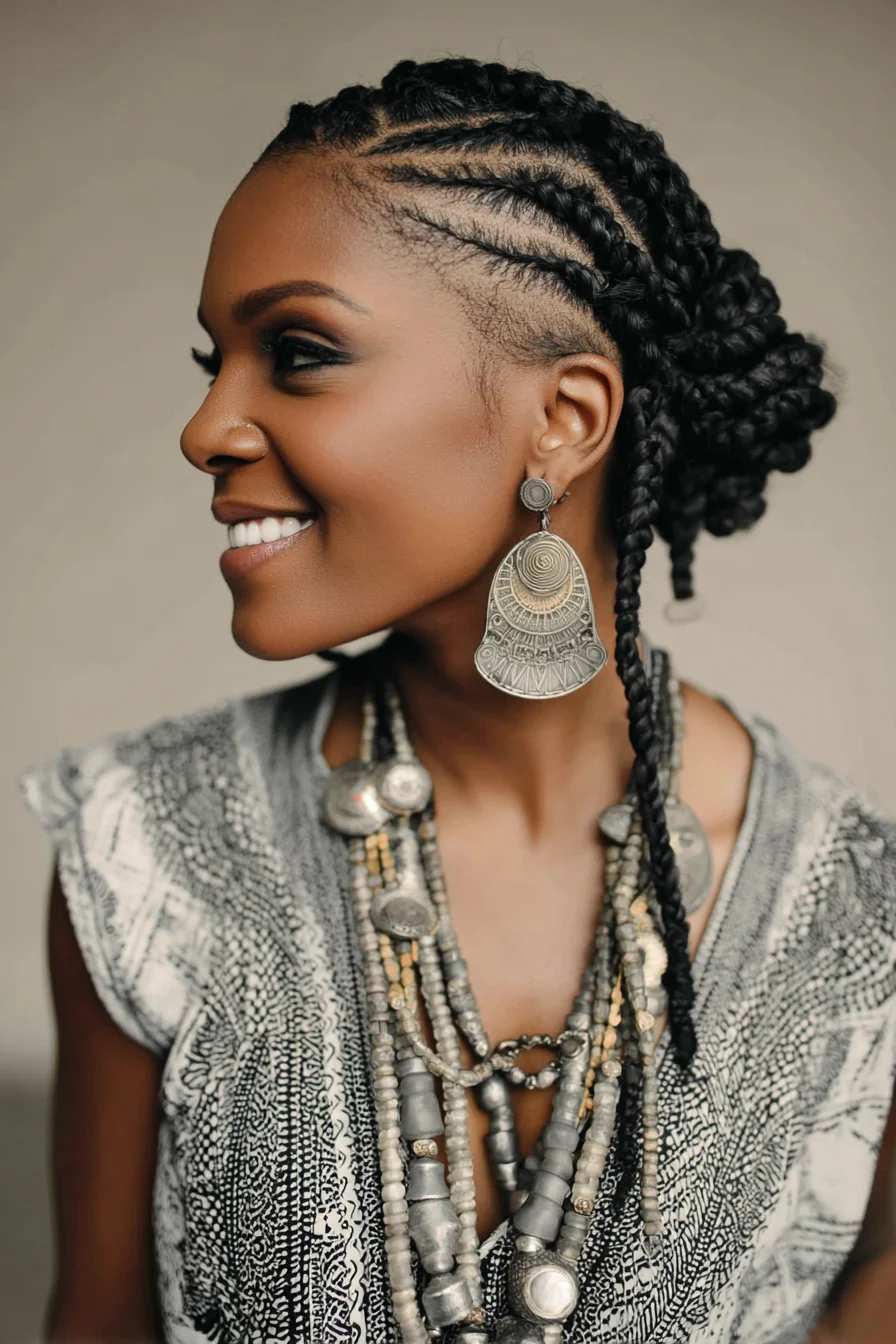
This look suits textured natural hair (Type 3–4) or relaxed hair with added braiding hair for length and volume. Technique: start with clean, detangled hair and define neat side parts using a rattail comb. Apply a lightweight leave‑in conditioner and a water‑based braiding gel for grip. Create parallel cornrows along the scalp, feed additional hair as needed so rows remain smooth, then continue each row into three‑strand braids. Gather the ends into a low bun at the nape, twisting and pinning with elastic bands and bobby pins; leave one braid out as a face‑framing detail. Tools needed: rattail comb, sectioning clips, small elastics, bobby pins, and a fine‑tooth brush for edges. Products required: leave‑in conditioner, braiding gel/edge control, holding mousse or light spray, and a lightweight oil or scalp serum. Difficulty: intermediate — requires clean parting and consistent braiding tension; expect 1.5–3 hours depending on density. Maintenance tips: sleep on a silk scarf/bonnet, refresh edges with light gel, mist scalp weekly with a hydrating spray, avoid excessive tension to protect the hairline, and plan a redo every 4–6 weeks or sooner if you use daily products.
Cornrow-to-Stacked-Bun Braids — Protective Style for Natural Textures

This polished protective look suits medium to very thick textured hair (3A–4C) and can be adapted for straighter hair with added braiding hair for texture and volume. Technique: section clean, detangled hair into neat horizontal/sweep-back parts; feed-in or traditional cornrows from the hairline toward the crown; two longer side braids are left or added with extensions. Gather crown braids and wrap them into stacked braided buns, securing with elastics and bobby pins for a sculpted finish. Tools needed: rat-tail comb, sectioning clips, small elastics, bobby pins, crochet needle (optional for extensions) and a fine edge brush. Products required: sulfate-free cleanser, moisturizing leave-in conditioner, styling cream or pomade for grip, edge control for baby hairs, holding mousse or braid spray, and a light oil for the scalp. Difficulty: intermediate — expect 2–4 hours in a salon depending on size and extensions. Maintenance tips: sleep with a silk scarf/bonnet, refresh edges with a light gel, mist scalp weekly and oil lightly, avoid excessive tension, and retouch or redo cornrows after 3–6 weeks to protect edges and hair health.
Feed-In Cornrows with Long Braids — Protective Style for Type 3–4 Hair
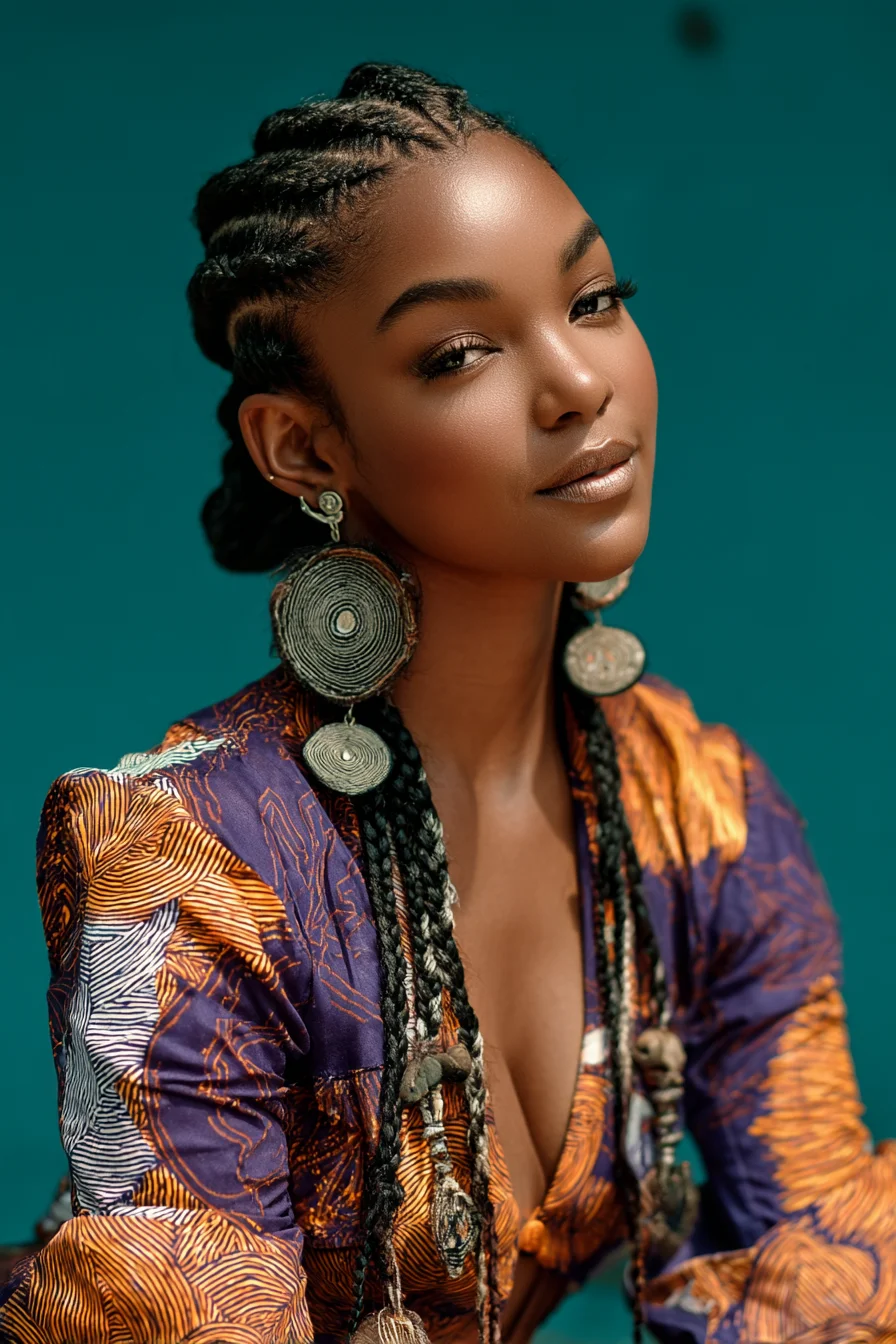
This sleek feed-in cornrow style works best on Type 3–4 natural textures but can be adapted for straighter or finer hair with proper stretching and prep. Technique: section clean, even parts and use feed‑in braiding to add Kanekalon or premium synthetic hair for length and consistent thickness; braid snugly at the roots without excessive tension and finish ends with small bands or tuck methods for a neat finish. Tools needed: rat‑tail comb, wide‑tooth detangler, sectioning clips, synthetic braiding hair, elastic bands, edge brush, tail comb and shears. Products required: moisturizing leave‑in conditioner, lightweight scalp oil, firm non‑flaky edge control or styling gel, braid mousse and a braid refresher spray. Difficulty level: intermediate — expect 3–5 hours depending on braid size; first‑timers or intricate parting should book a professional. Maintenance tips: sleep with a silk bonnet or scarf, refresh edges weekly, mist scalp and braids with a lightweight moisturizer or braid spray, avoid heavy oils that attract build‑up, and remove after 6–8 weeks to minimize breakage.
High Twisted Bun with Face‑Framing Two‑Strand Twists
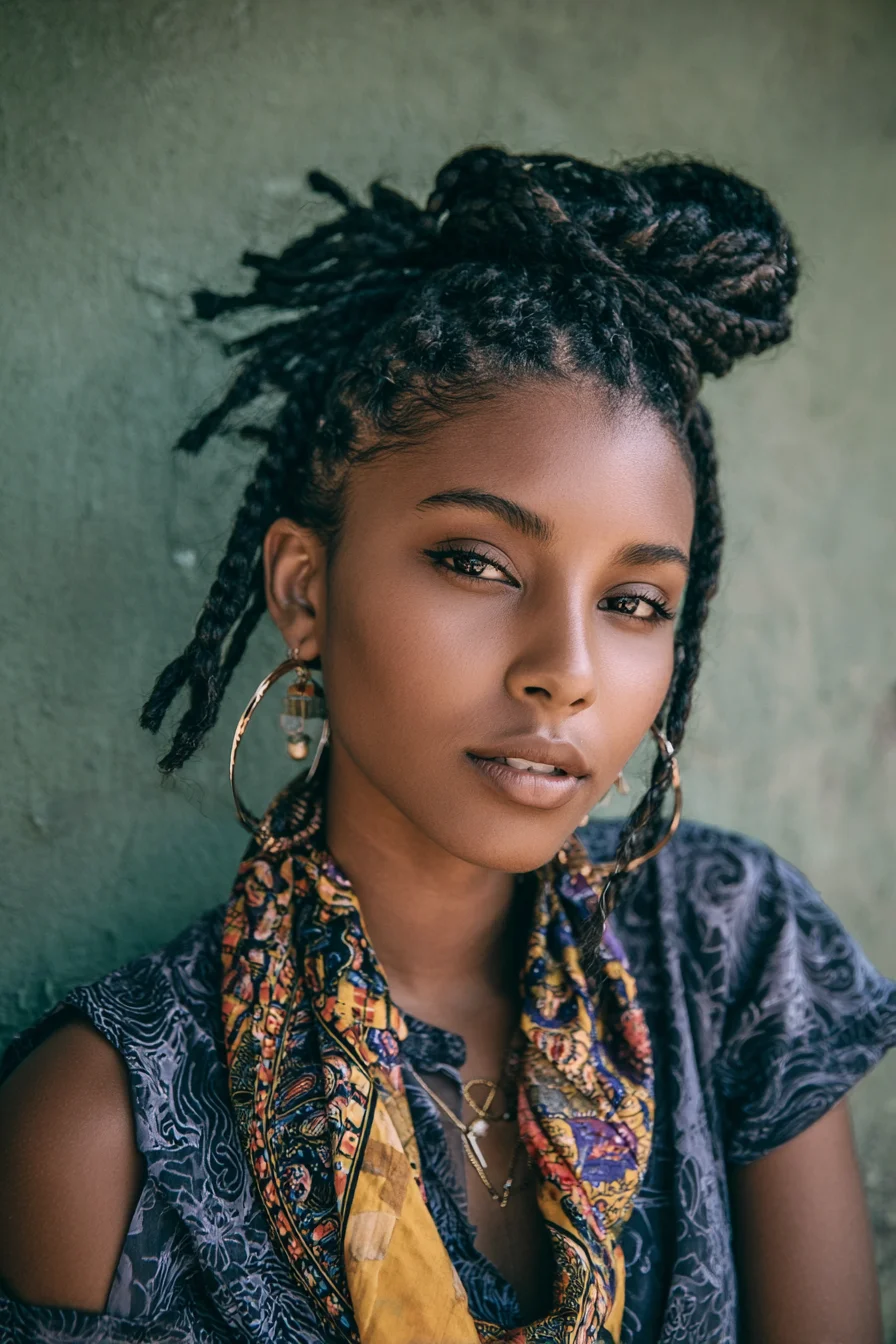
This textured updo is built from two‑strand twists gathered into a high, slightly messy bun with a few loose twists left to frame the face. Its best suited to type 3–4 natural hair or relaxed hair and works equally well with pre‑twisted extensions for added length and thickness. Technique: section hair into uniform parts, apply leave‑in and twist cream, then two‑strand twist each section toward the ends; gather twists at the crown, secure with a strong elastic and pin ends into a bun, leaving chosen front pieces loose. Tools needed: rat‑tail comb, sectioning clips, small elastic bands, bobby pins, and (optional) a crochet needle for installed extensions. Products required: moisturizing leave‑in, twist or curl defining cream, light holding gel or edge control for smooth parts, and a lightweight oil for shine. Difficulty level: moderate — 45–120 minutes depending on size/length and whether extensions are used. Maintenance tips: sleep on a silk bonnet or scarf, moisturize the scalp and twists weekly, refresh edges with gel, and avoid excessive tension to prevent breakage; retwist or redo after 4–6 weeks as needed.
Double Dutch Cornrows into Long Thick Braids — Protective Style
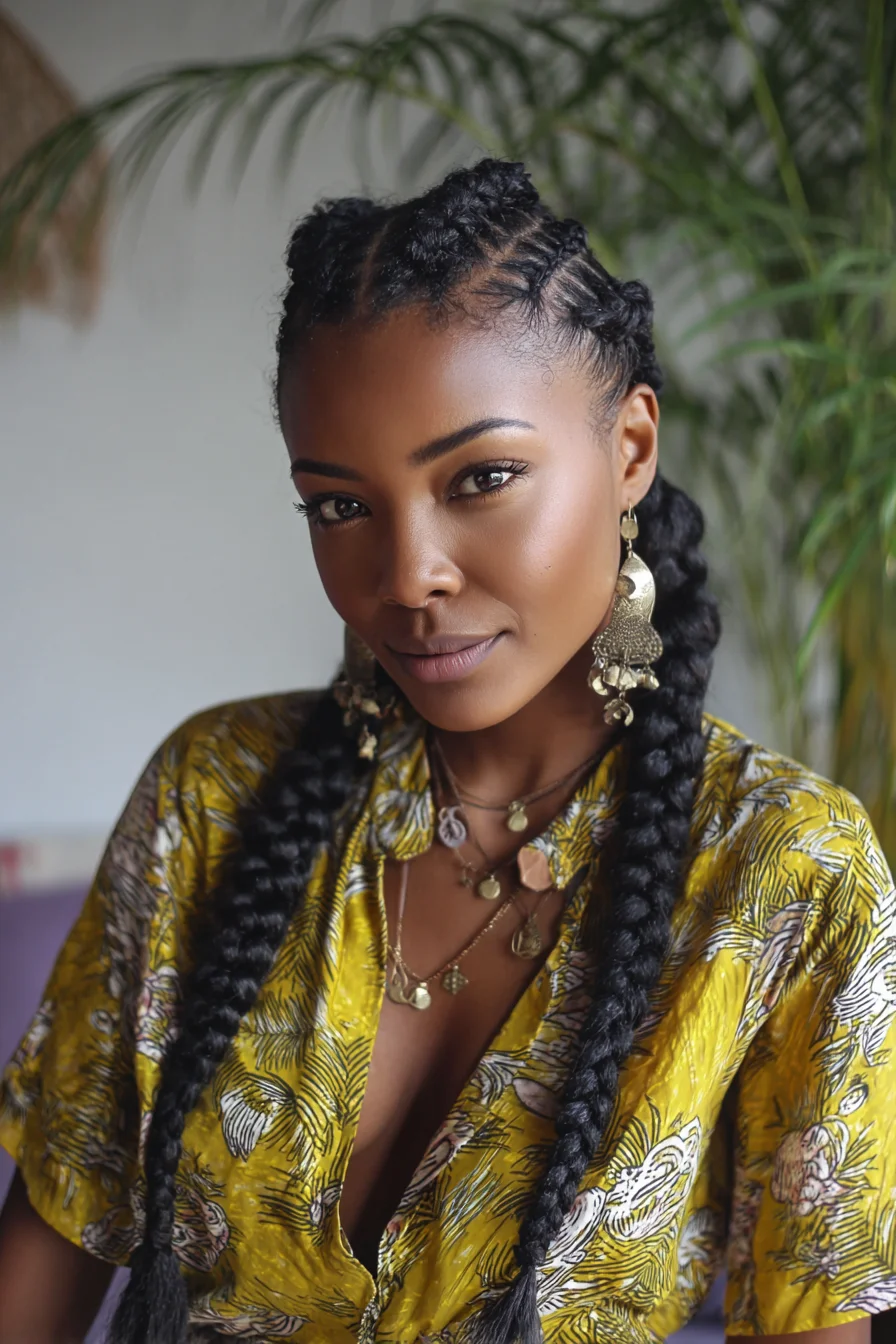
This polished double Dutch cornrow style transitions into two long, chunky three‑strand braids — a classic protective look that suits medium to coarse curl patterns (3A–4C). Fine hair can also wear it when blended with lightweight braiding extensions for added thickness and length. Technique: section the front into two wide panels with a clean center part, Dutch‑cornrow each panel (braiding under) from hairline to nape, then continue as three‑strand braids to the ends. Tools needed: rat‑tail comb, sectioning clips, small elastic bands, edge brush, wide‑tooth detangler, and optional synthetic braiding hair or crochet hook. Products required: leave‑in conditioner, cream styler or braiding gel for hold, lightweight scalp oil, and a braid‑refresh mousse or braid spray. Difficulty level: intermediate — requires steady tension and neat parting; book a stylist if you’re new to cornrowing. Maintenance tips: sleep on a silk/satin scarf or bonnet, mist braids weekly with a moisturizing spray, oil the scalp every 7–10 days, avoid over‑manipulation, and refresh edges with a small amount of edge control. Plan for touch‑ups or a redo every 4–8 weeks depending on hair growth and tension.
Micro/Box Braids Half-Up Top Knot with Sleek Laid Baby Hairs

This style pairs micro/box braids with a half-up top knot and sleek laid baby hairs — a versatile protective look best suited to textured hair types (3A–4C) or relaxed hair with added synthetic extensions. Technique: part and section the hair into small, even boxes or feed-in cornrows at the crown, braid to desired length, then gather the top section into a compact bun secured with an elastic and a few bobby pins while leaving the lower braids loose. Smooth edges with an edge-control product and a small boar-bristle brush. Tools needed: rat-tail comb, sectioning clips, small elastics, bobby pins, fine toothbrush/edge brush, and a latch hook or extension hair if adding length. Products required: moisturizing pre-shampoo, leave-in conditioner, braid spray or lightweight oil, edge control or gel, and a light-hold mousse for flyaways. Difficulty level: moderate–high — micro braids and precise edges are time-consuming and often best done by an experienced braider. Maintenance tips: sleep in a silk/satin bonnet, refresh edges weekly, lightly oil the scalp every 7–10 days, cleanse with diluted shampoo every 2–3 weeks, and remove or redo within 6–8 weeks to prevent tangling and tension on the hairline.
Neat Straight-Back Cornrows into Low Braided Ponytails
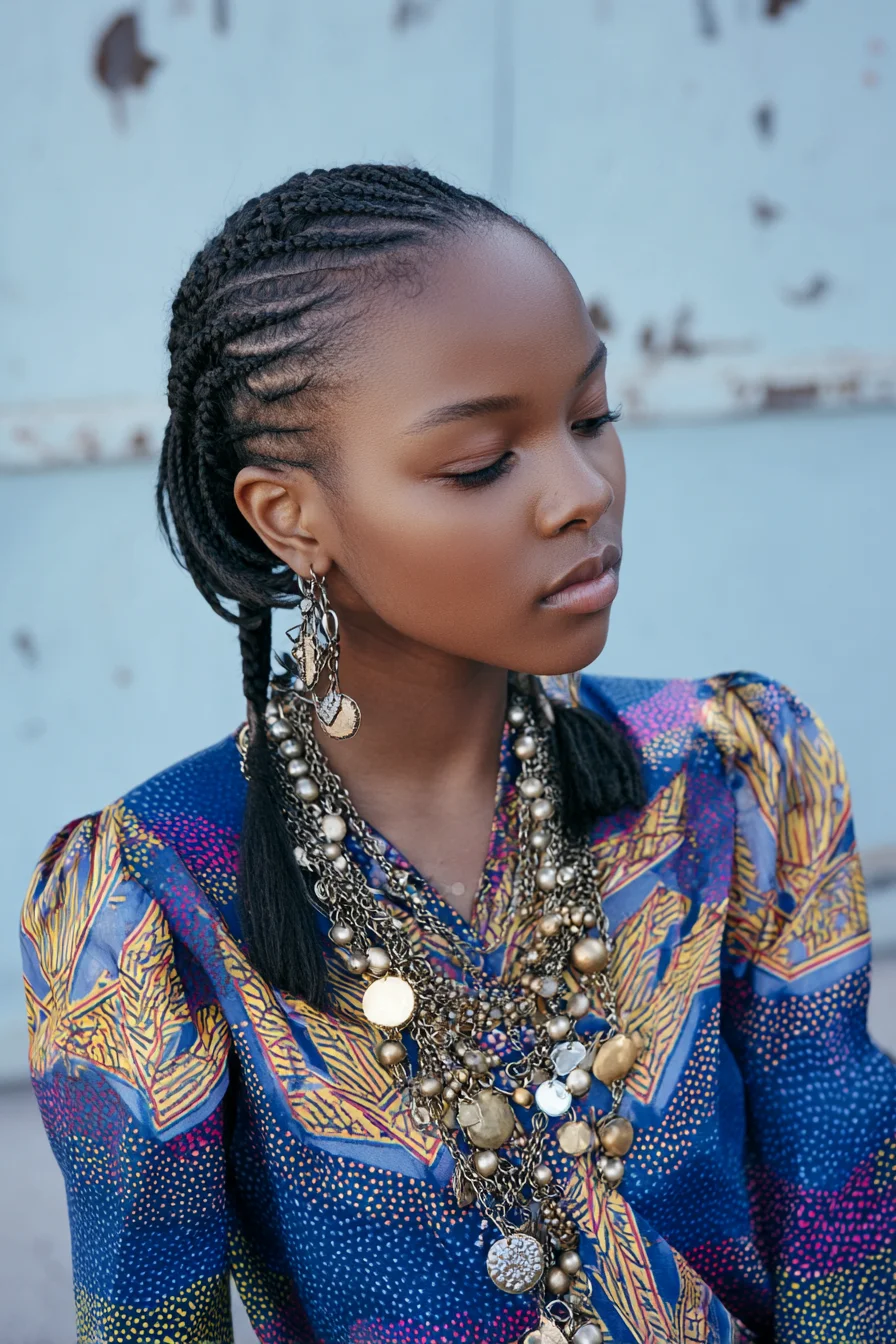
This look is ideal for textured hair (Type 3–4) and anyone with medium to coarse density who wants a low-maintenance protective style. The technique uses clean, straight-back cornrows that feed into two or more low braided ponytails — extensions can be added for length or fullness. Start on freshly washed, deeply conditioned hair: detangle, apply a leave-in and light gel or edge control, then section with a rat-tail comb and secure parts with clips. Using a three-strand cornrow technique, braid tight to the scalp and gather the ends into low ponytails, finishing with small elastics and sealing with mousse or a hot water dip if using synthetic hair. Tools: rat-tail comb, sectioning clips, fine-tooth/edge brush, hair bands, extension hair (optional). Products: leave-in conditioner, holding gel or edge control, lightweight oil for scalp, braid sheen/mousse, sulfate-free shampoo. Difficulty: intermediate — neat parting and even tension take practice; expect 2–3 hours in salon. Maintenance tips: sleep on satin, moisturize scalp twice weekly with light oil, avoid excessive tension at the edges, cleanse gently every 2 weeks, and remove after 6–8 weeks to prevent breakage.
My practical advice for short Fulani braids is to prioritize hair health while enjoying the style. A professionally installed short Fulani set can last 4–8 weeks depending on braid size and routine. Cleanse the scalp every 1–2 weeks with a diluted sulfate-free shampoo, follow with a light leave-in or oil (jojoba or grapeseed), and mist with a hydration spray between washes. Protect your edges by avoiding excessive tension and heavy gels; use a silk or satin wrap at night and a soft edge brush when styling. Remove beads or cuffs before washing to prevent tangling, and book a touch-up or professional refresh if you notice tension, breakage, or thinning. Swap accessories, change the parting, or add subtle color to refresh the look without a full redo. Bring one of the 28 images to your appointment and I’ll tailor the braid size, placement, and adornments to your hair, face shape, and lifestyle.