
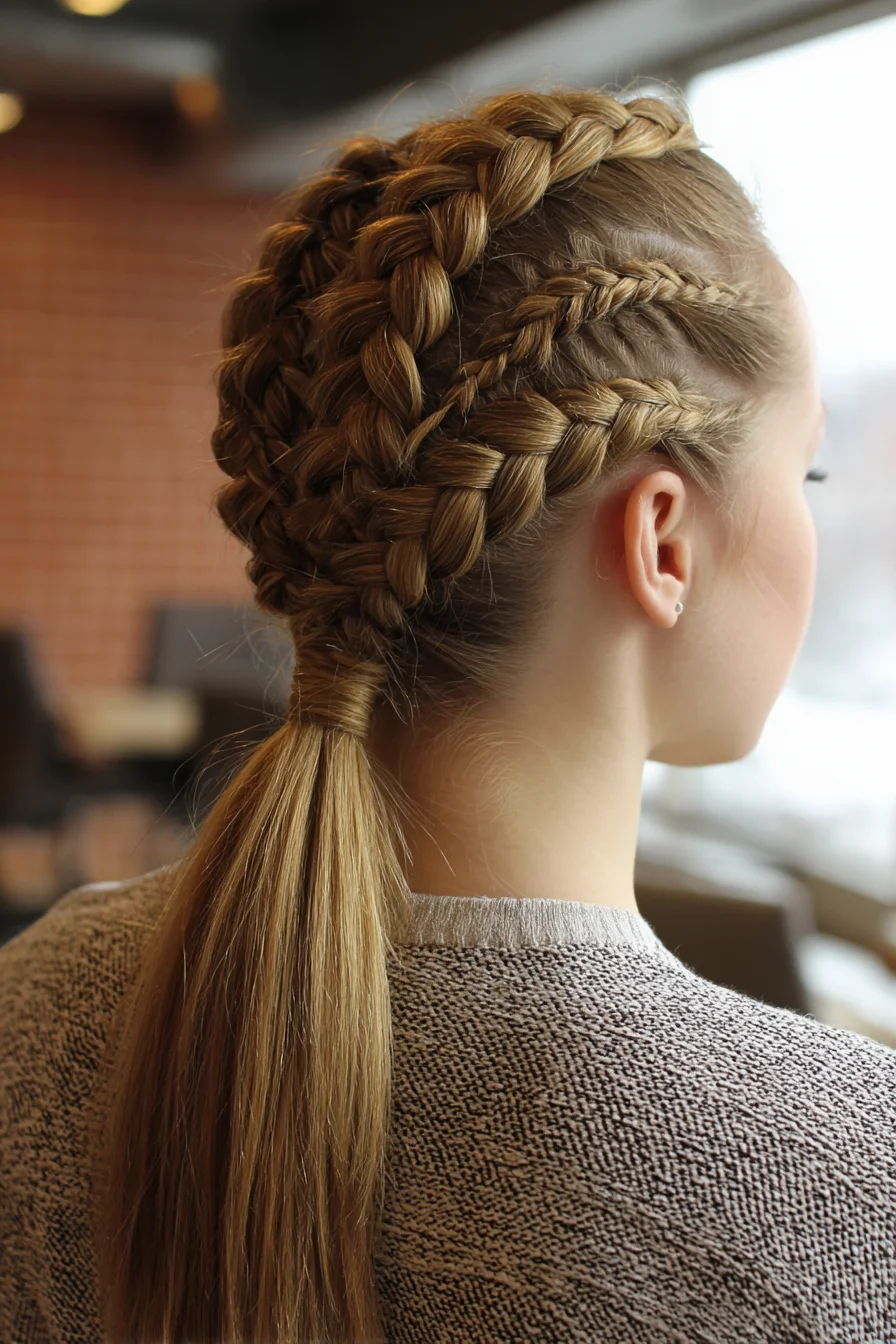
Hi, I’m Lena — a salon stylist with 10+ years of hands-on experience creating wearable looks for real life. Two-braided ponytail styles are some of my favorite go-to options because they combine structure, longevity, and instant style. In this post I share 21 two-braided ponytail hairstyles for women, ranging from sleek low-ponytail braid combos and sporty double Dutch braids to romantic side-braided ponytails and textured pulled-through variations. These looks suit medium to long lengths, work beautifully on thick, fine, or textured hair (with a few adjustments), and can be adapted with extensions or padding for extra volume. I’ll include practical styling tips — which products give hold without crunch, how to prep for smooth sections, and quick finishing touches like face-framing baby hairs and discreet pins. Use the 21 images as visual steps and inspiration to recreate salon-level results at home or in your next appointment.
Voluminous Double Dutch Braids into Chunky Rope Braids
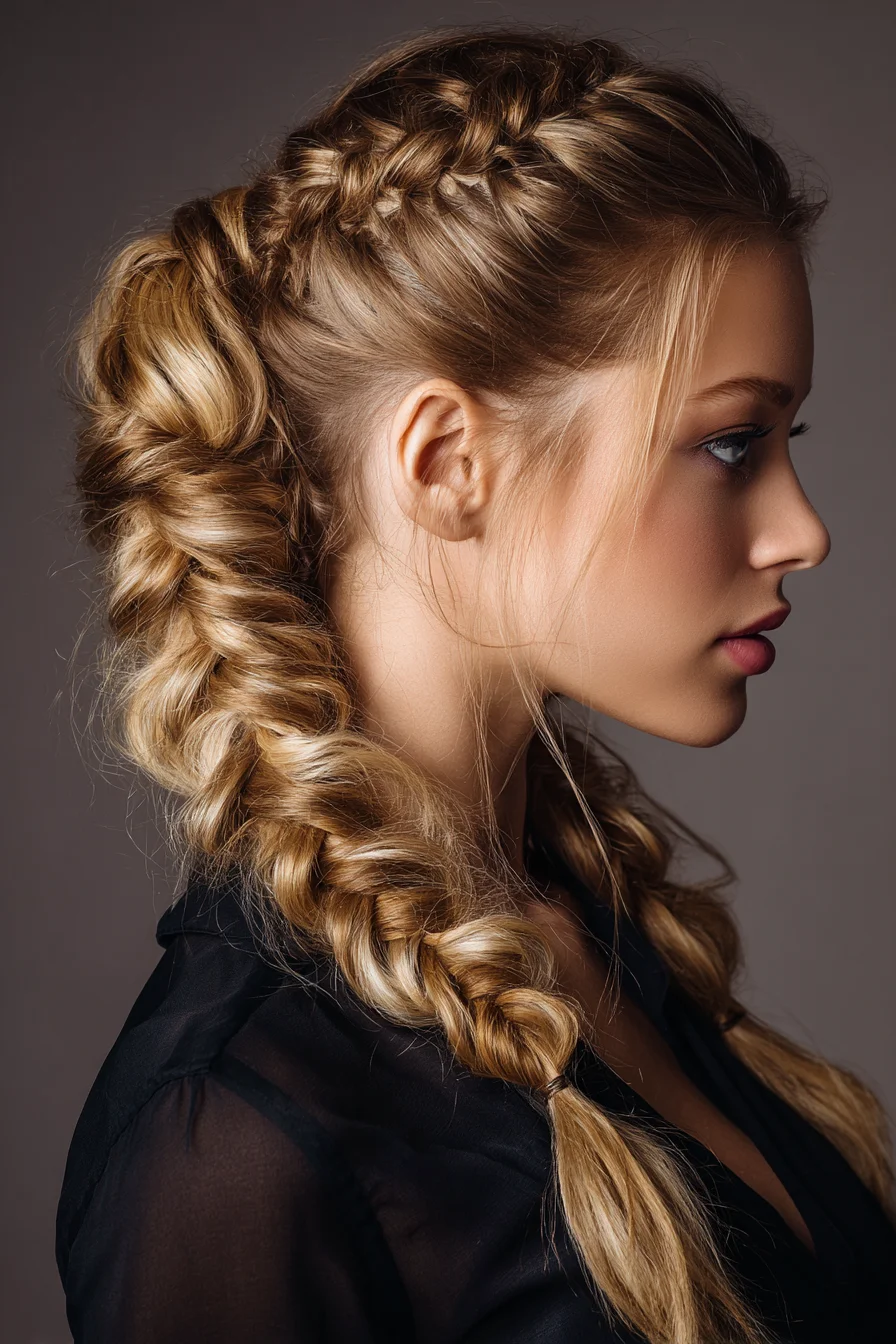
This polished, textured look pairs two Dutch (inside-out) braids at the crown that transition into oversized, pancaked rope-style braids — ideal for medium to thick, long hair. Fine hair works with volumizing products or clip-in extensions. Start on second-day or lightly damped hair: section into two, create tight Dutch braids along the scalp, then convert each braid into a two-strand rope or loose fishtail and secure with small elastics. Pancake (gently pull) each braid to create width and soft texture. Essential tools: fine tail comb, hair clips, clear elastics, bobby pins, and a wide-tooth comb. Recommended products: texturizing or salt spray for grip, lightweight smoothing serum for flyaways, flexible-hold hairspray to set shape, and dry shampoo to add body on day two. Difficulty: intermediate — requires confident braiding and pancaking technique; allow 25–45 minutes. Maintenance tips: sleep with a silk scarf to reduce frizz, refresh shape with a mist of texturizer and light reshaping, re-tighten elastics as needed, and avoid heavy oils that will weigh the braid down. Perfect for events or everyday elevated styling.
Textured Dutch (Inside-Out) Crown Braid into Low Ponytail
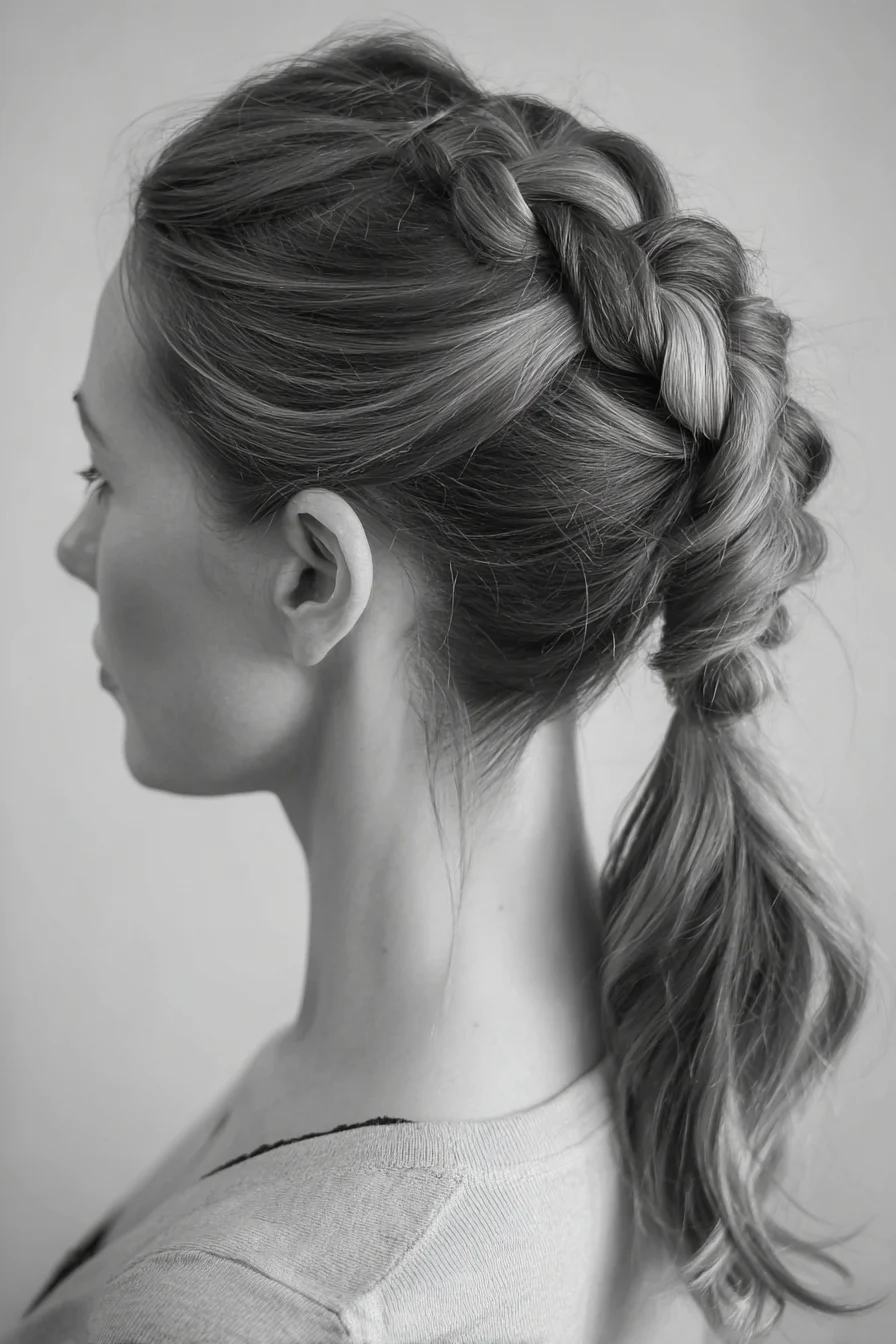
This look suits medium-to-long hair and works well on straight, wavy, or slightly textured hair. Thick hair gives the braid strong volume; fine hair benefits from light teasing or clip-in piece for fullness. Start on second-day (slightly dirty) hair for grip: smooth a section at the hairline and begin an inside-out (Dutch) braid along the crown, adding hair with each pass. Continue the braid to the nape, secure with a small elastic, then gather remaining lengths into a low ponytail. Pancake the braid (gently pull outer loops) for width and a relaxed finish. Tools: paddle brush, tail comb, small clear elastics, bobby pins, and a few duckbill clips. Products: lightweight mousse or root-lift spray before blow-drying, texturizing spray or powder for grip, heat protectant if styling ends, and a flexible-hold hairspray to set. Difficulty: moderate — requires basic Dutch-braiding skill and some practice (10–25 minutes). Maintenance tips: refresh with dry shampoo and texture spray, re-pancake as needed, hide the elastic with a wrapped hair piece pinned underneath, and sleep on a silk pillowcase or loosely re-tie to preserve shape.
Double Dutch Braids into Wrapped Low Ponytail
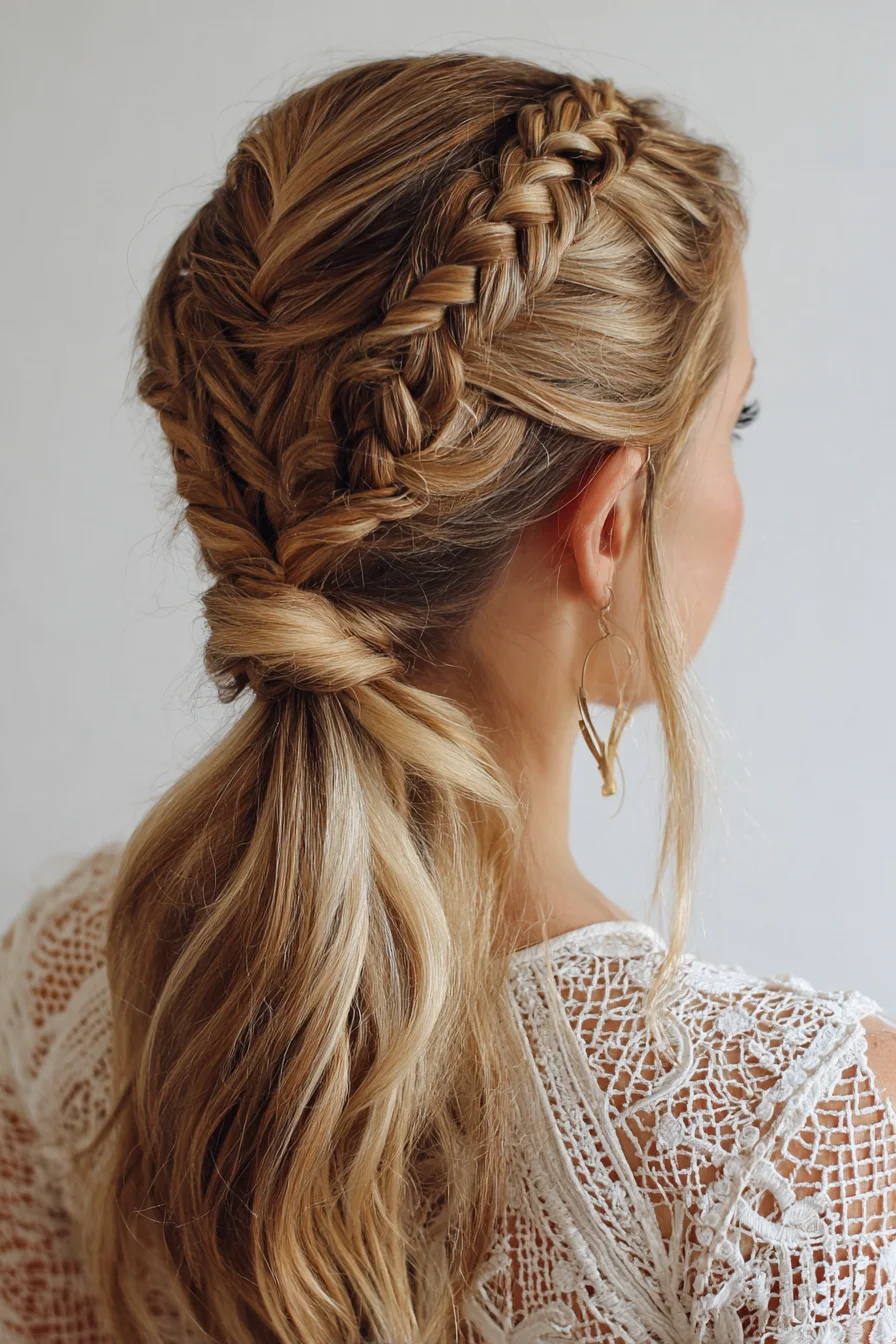
Best on medium to long hair and medium-to-thick textures, this style also works on fine hair when prepped with texture and light padding. Start with clean, towel-dried or second-day hair for best grip. Create two Dutch (reverse French) braids from the front hairline down the sides, adding hair as you go and keeping the braids snug to the scalp. Secure both braids at the nape, gather remaining hair into a low ponytail, and wrap a small section of hair around the elastic to conceal it. Loosen braid strands for a softer, romantic finish and pull two face-framing pieces if desired. Tools: rat-tail comb, small clear elastics, bobby pins, hair tie, and a curling wand (optional) for ends. Products: sea-salt or texturizing spray for hold, light mousse or root-lifting spray for volume, smoothing serum on ends, and a flexible-hold hairspray. Difficulty: intermediate — 20–40 minutes depending on braiding skill. Maintenance: refresh with dry shampoo, tighten or re-secure the wrap with a pin if needed, sleep on a silk pillowcase or re-braid loosely to preserve shape, and avoid heavy oils near the roots to keep braid definition.
Double Dutch Braids to Textured Low Ponytail
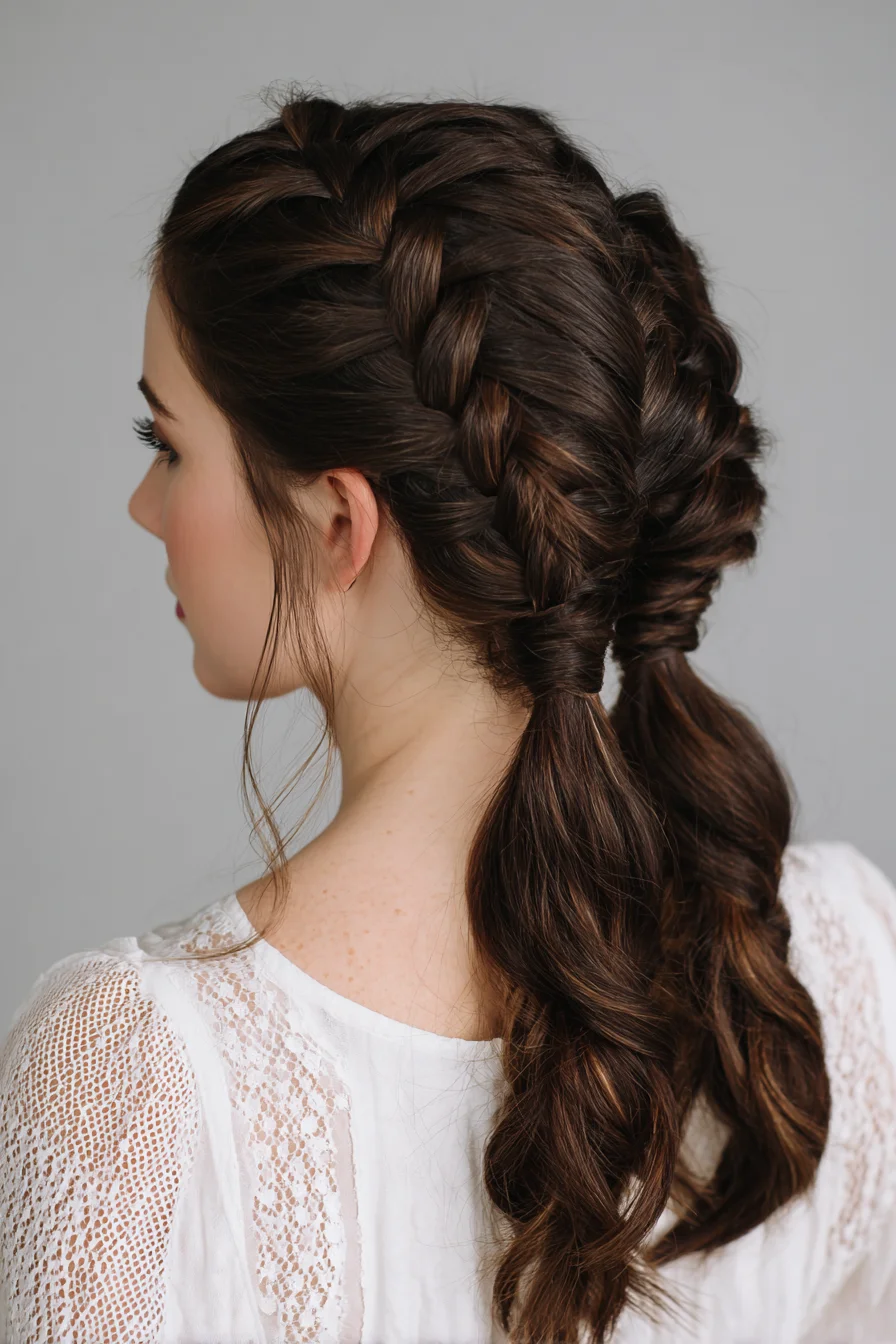
This polished-yet-relaxed style suits medium to long hair and works especially well on medium to thick densities and naturally straight or wavy textures. Fine hair can wear it with light padding or clip-in extensions for volume. Start on second-day hair or apply a dry shampoo and texturizing mousse for grip. Create two Dutch braids from the hairline toward the nape, securing each with small elastics; pancake the braid sections gently to widen them for a fuller look. Combine the two braids into a single low ponytail and wrap a small section of hair around the elastic for a clean finish. Tools needed: rat-tail comb, sectioning clips, small clear elastics, bobby pins, curling wand (optional) and a paddle brush. Products required: heat protectant, texturizing spray or mousse, lightweight serum for ends, and a flexible-hold hairspray. Difficulty: Moderate — allow 20–40 minutes. Maintenance tips: sleep on a silk pillowcase or loosely braid the ponytail, refresh texture with dry shampoo or a salt spray, and touch up waves with a quick wand pass. Secure stray pieces with pins as needed for longevity.
Double Dutch (Boxer) Braids for Long, Straight to Wavy Hair
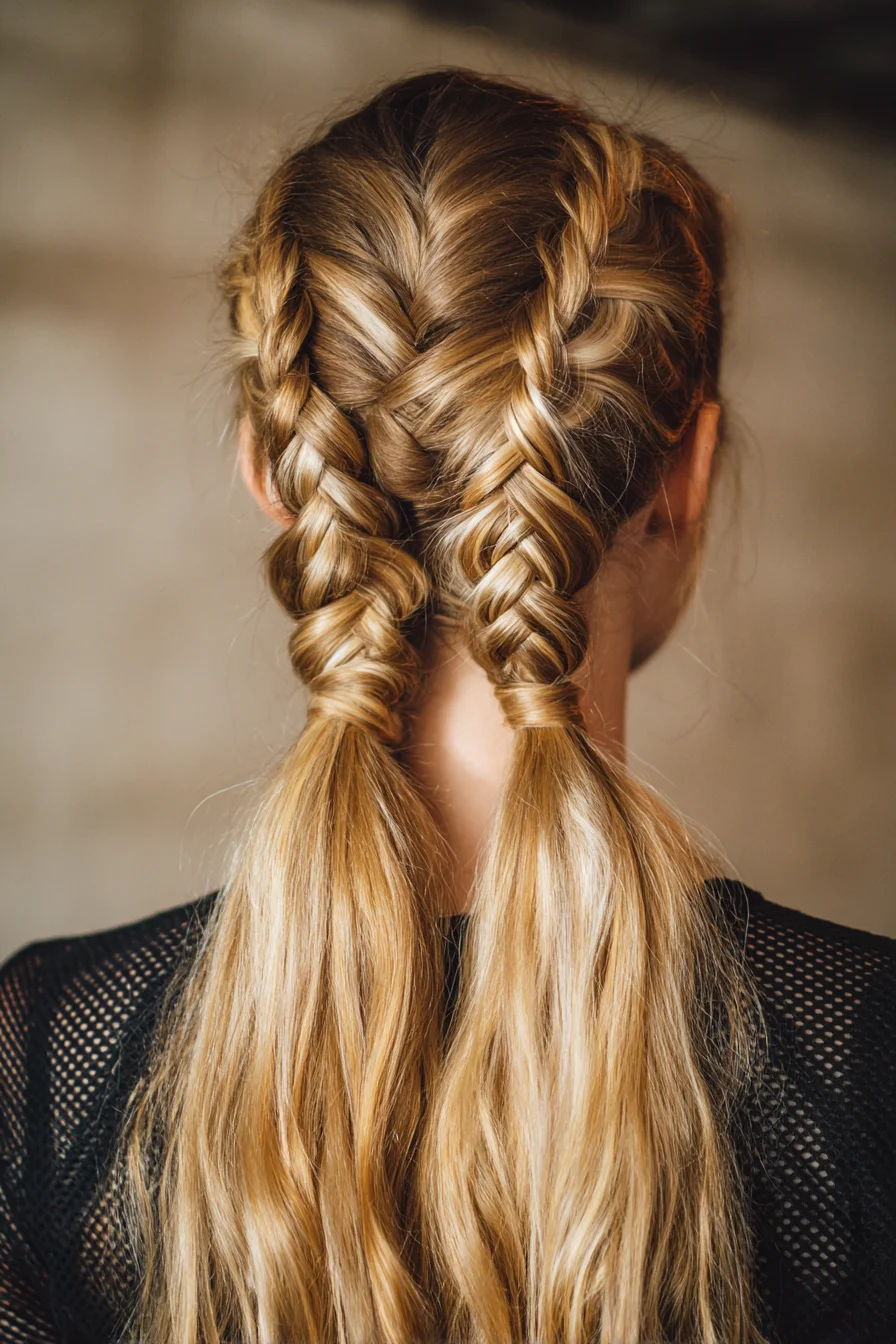
This classic double Dutch braid (boxer braid) works best on long, medium-to-thick hair but can be adapted for fine or curly textures with the right prep. Start with a clean, detangled base: create a precise center part, apply a light leave-in conditioner and a texturizing spray at the roots to add grip. Using a tail comb, begin a Dutch braid close to the hairline on one side, crossing sections under (not over) and picking up additional hair as you move toward the nape; repeat on the other side. Secure each braid with a small elastic and gently pancake the braid with your fingers for fullness. Tools: tail/rat-tail comb, boar-bristle or detangling brush, small elastics, sectioning clips. Products: leave-in detangler, texturizing spray or mousse, smoothing serum for ends, light-hold hairspray and dry shampoo for refreshes. Difficulty: intermediate — expect 15–30 minutes once practiced. Maintenance tips: sleep on a silk pillowcase or tie with a silk scarf, refresh roots with dry shampoo, smooth flyaways with a dab of serum or pomade, and avoid overly tight braids to reduce tension at the hairline.
Textured Pulled-Through Braid Ponytail with Face‑Framing Tendrils
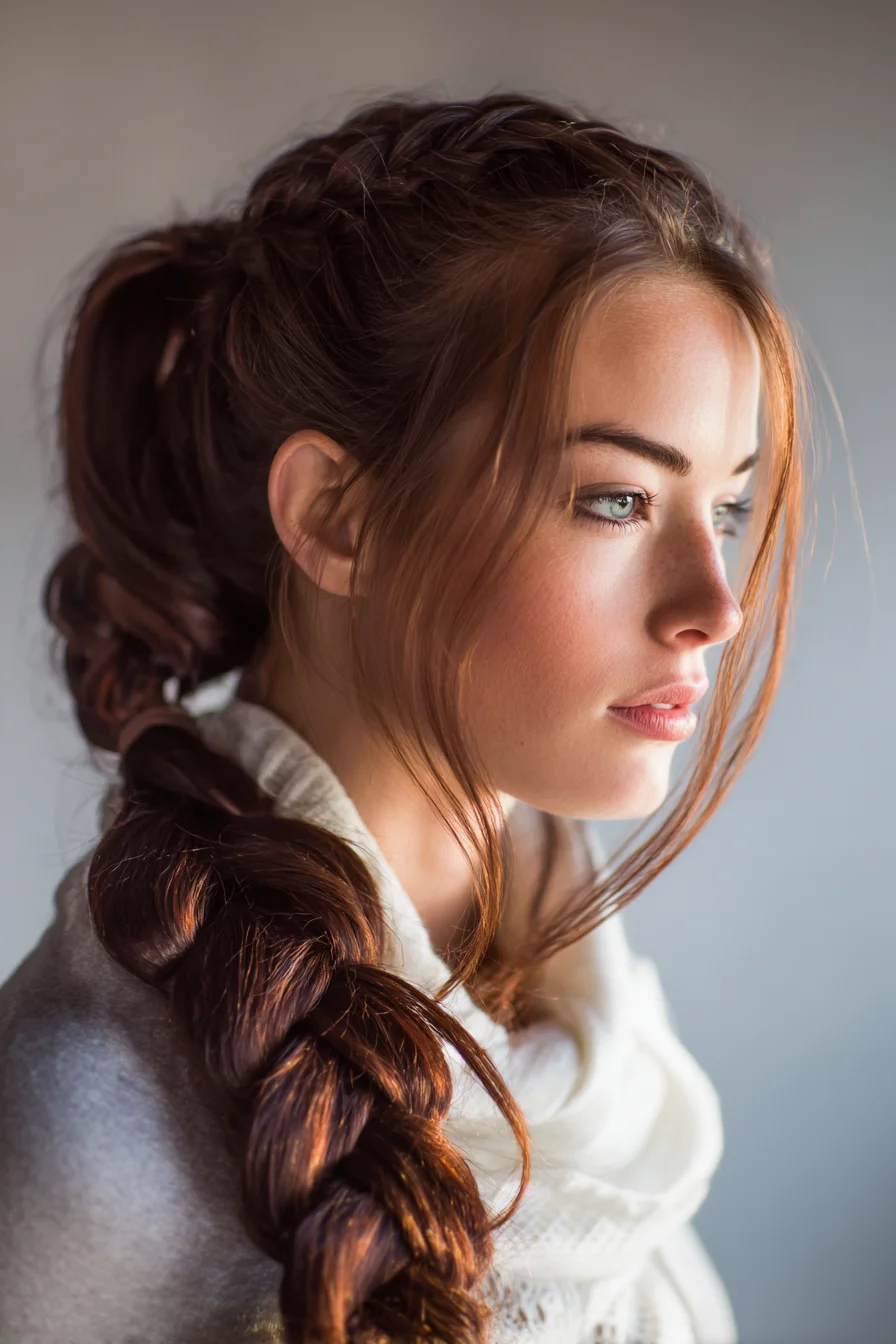
This look suits medium to very thick long hair and adapts well to wavy or straight textures; fine hair benefits from clip-in wefts or volumizing products for the same fullness. Start on second-day hair for grip: apply a root-lifting mousse and a texturizing spray through lengths. Create a loose high-to-mid ponytail, then use a series of small elastics down the length and pull each section to pancake it, forming a pulled-through/chunky braid effect. Leave soft face-framing tendrils and lightly tease the crown for lift. Tools: tail comb, sectioning clips, several small clear elastics and one matching elastic, bobby pins. Products: dry shampoo, texturizing spray or sea-salt spray, light smoothing serum for flyaways, flexible-hold hairspray, optional heat protector if you curl pieces first. Difficulty: intermediate — about 20–30 minutes depending on thickness. Maintenance tips: sleep with a loose silk wrap to preserve shape, refresh texture with dry shampoo and light mist of salt spray, gently re-pancake sections and re-secure elastics as needed to restore volume.
Textured Side Dutch Braid into Voluminous Curled Ponytail
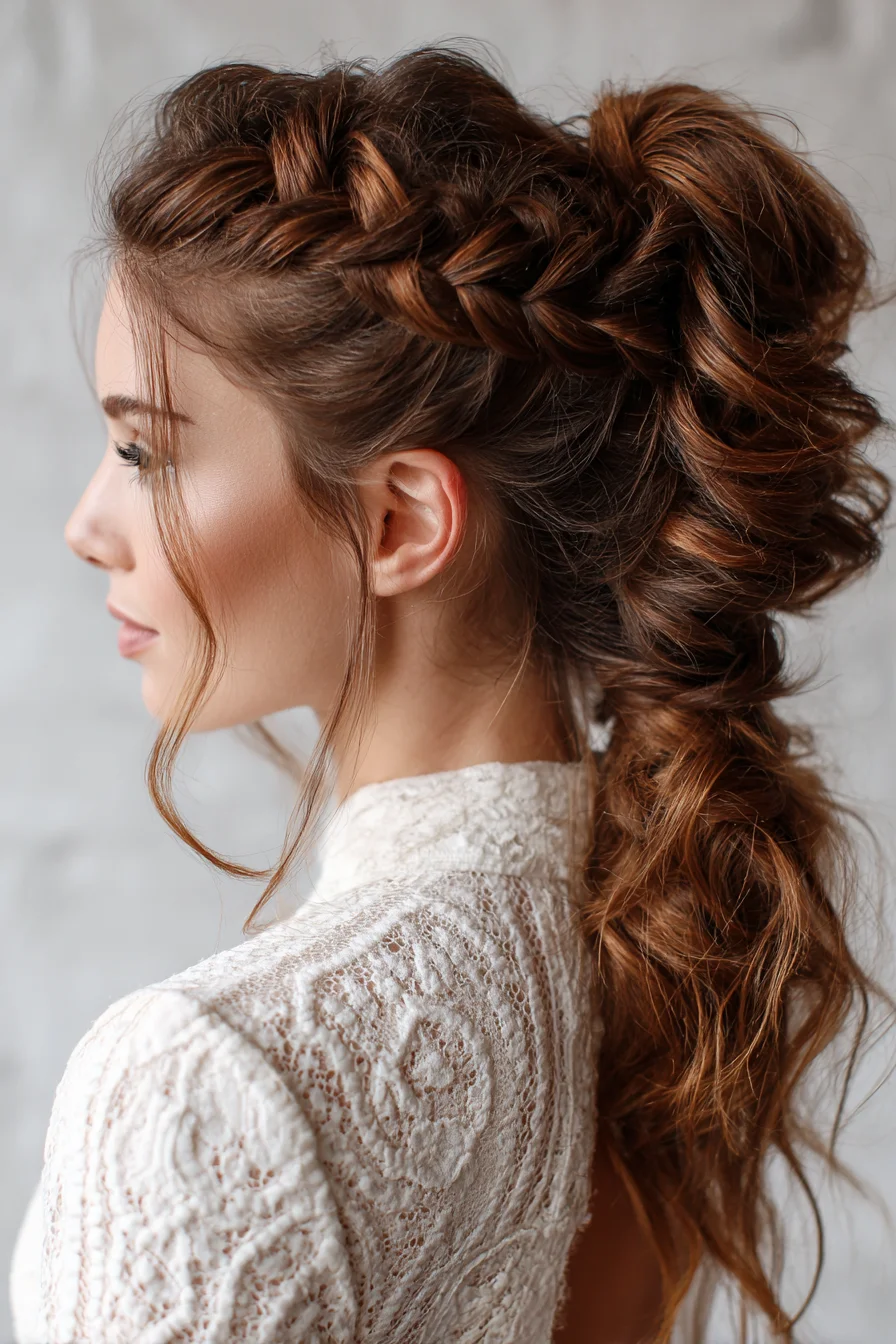
A romantic, textured side Dutch braid that feeds into a low, voluminous curled ponytail. Best suited for medium to long hair and medium-to-thick textures; fine hair can achieve the look with volumizing products or clip-in extensions. Technique: create a deep side part, Dutch-braid along the crown toward the nape, secure with an elastic, then gather remaining hair into a low ponytail. Use a curling iron to add loose spiral waves, gently pancake the braid and backcomb the ponytail for fullness, and pull a few face-framing tendrils free. Tools needed: tail comb, sectioning clips, 1
Triple Dutch Braided Ponytail — Sleek Braids for Medium to Long Hair
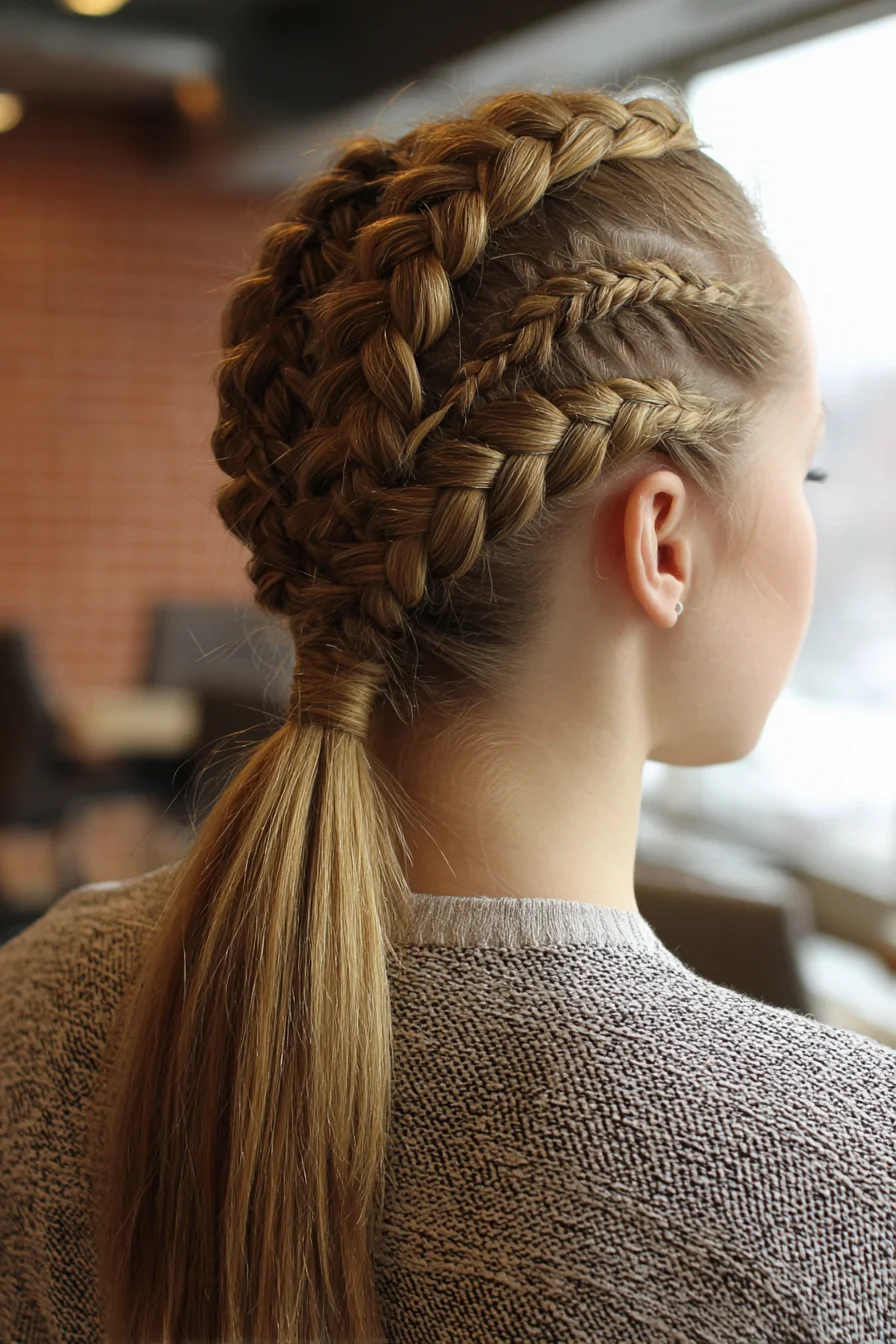
This polished triple Dutch braided ponytail works best on medium to long lengths and medium to thick densities; straight to slightly wavy hair gives the clean, defined braid pattern shown. Start on towel-dried or detangled dry hair: create three parallel sections from the hairline to the nape, then Dutch-braid each section (weave under and add hair as you go) converging them into a low ponytail. Wrap a small section of hair around the elastic for a finished look. Tools: rat-tail comb for parting, sectioning clips, fine-tooth comb, small clear elastics, bobby pins and a paddle brush. Products: lightweight texturizing spray or powder for grip, smoothing cream to tame flyaways, light-hold hairspray and a shine serum for finish. Difficulty: intermediate — requires consistent tension and braiding practice; expect 25–45 minutes. Maintenance tips: sleep on a silk pillowcase or wrap with a satin scarf, refresh with dry shampoo at the roots, smooth edges with a tiny bit of edge control, and avoid overtightening to prevent discomfort or stress on the hairline. Re-braid after 3–5 days for longevity.
Voluminous Dutch/French Braid Crown with Two Low Wrapped Ponytails
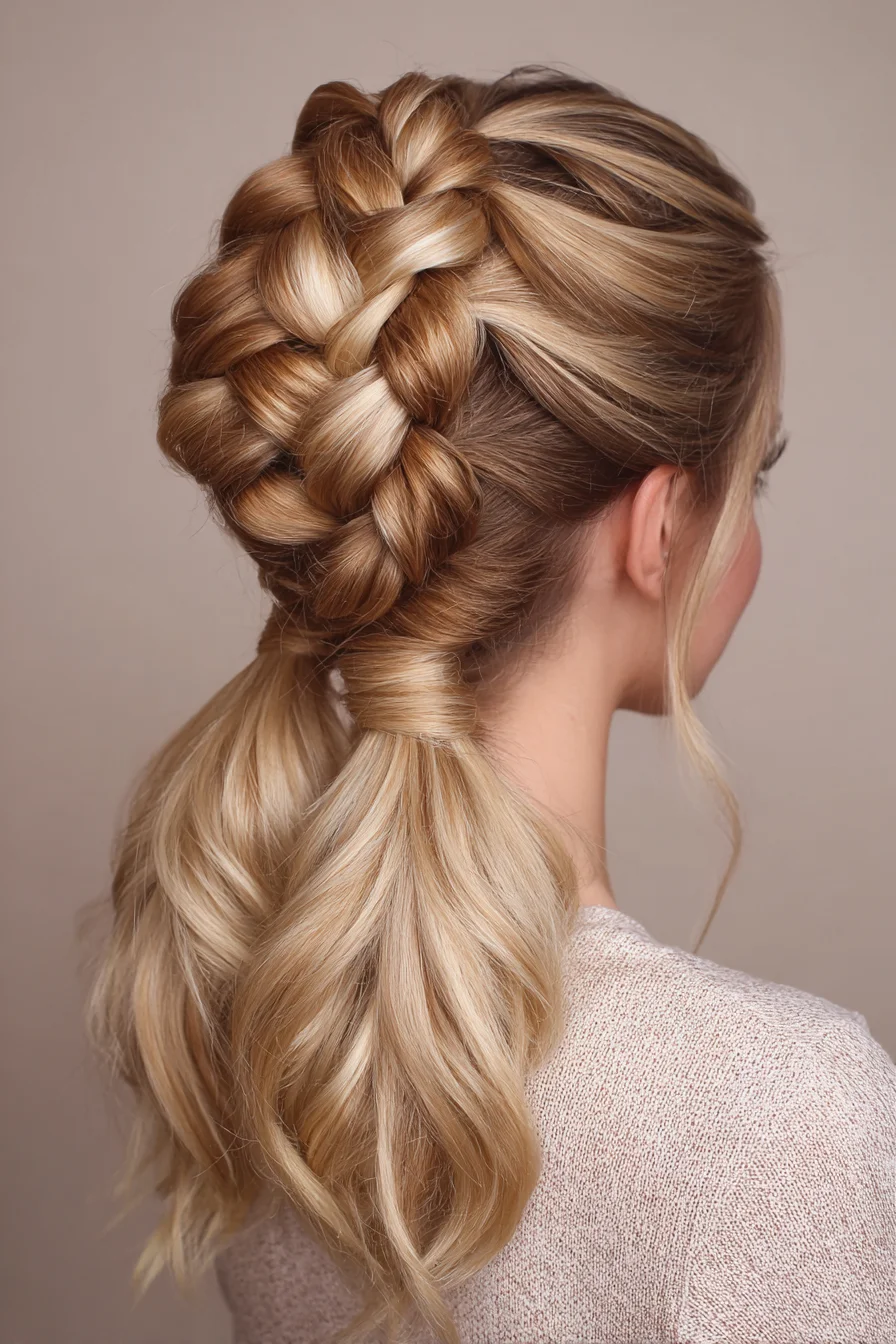
This polished style pairs a raised Dutch/French braid down the center back with two low, wrapped ponytails for a modern textured finish. Hair type suitability: ideal for medium to long lengths and medium-to-thick density; fine hair will gain fullness with texturizing spray or clip-in extensions, while very curly hair works best when smoothed slightly before braiding. Styling technique: prep with a light blow-dry and heat protectant, mist roots with texturizer for grip, then create a centered Dutch (underhand) or French (overhand) braid from the crown to the nape. Secure with a small elastic, split remaining hair into two low ponytails, wrap a small section around each elastic and pin underneath. Gently pancake the braid for volume and curl/twist the ponytail lengths for soft movement. Tools needed: tail comb, paddle brush, sectioning clips, small clear elastics, bobby pins, curling iron. Products required: heat protectant, texturizing spray or dry shampoo, light smoothing serum, and a flexible-hold hairspray. Difficulty: intermediate — requires controlled braiding and finishing. Maintenance tips: sleep on silk, refresh texture with dry shampoo, re-pancake the braid to revive volume, and retighten elastics as needed.
Textured Dutch Braided Ponytail with Pancake Finish
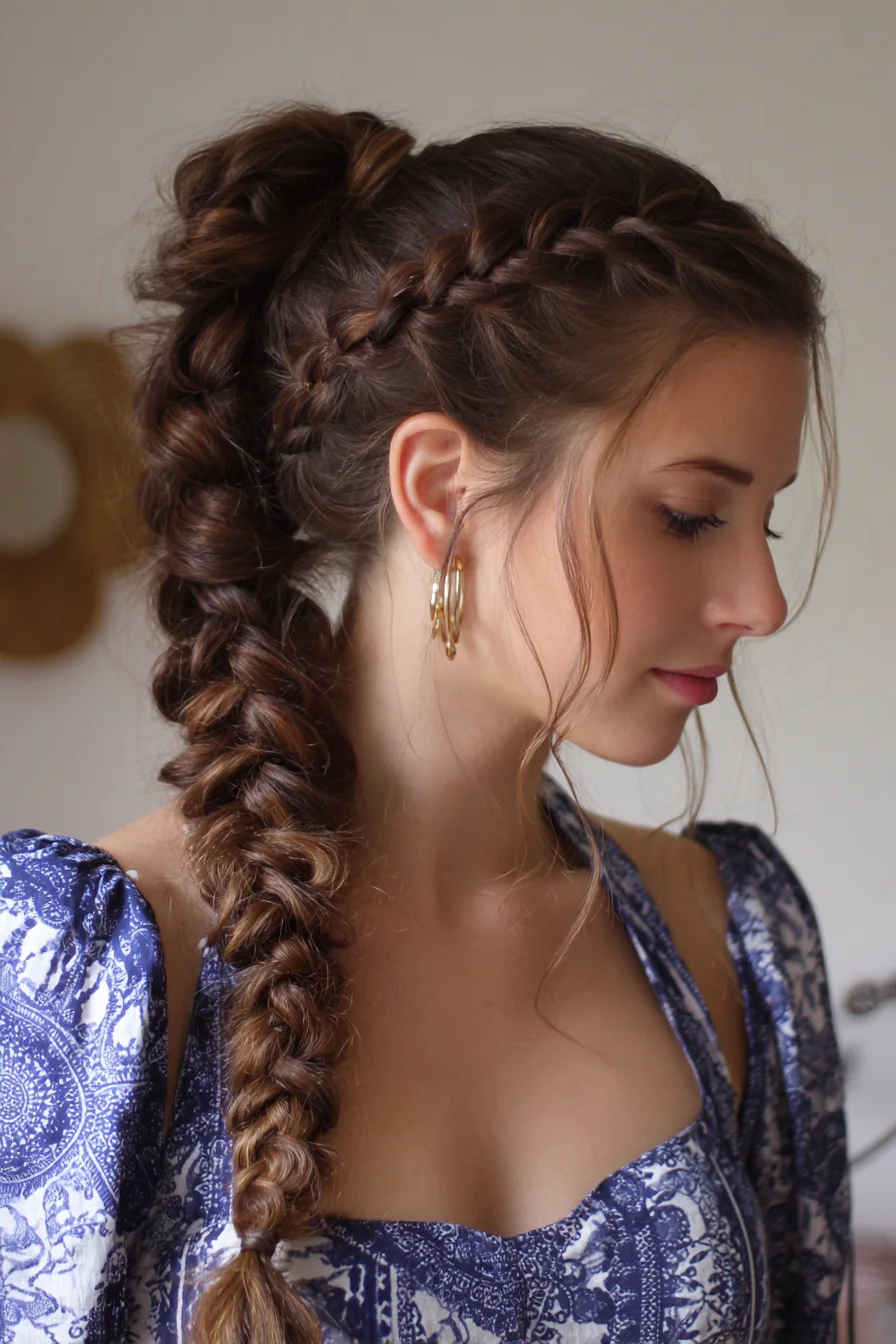
Suitable for medium to long hair and most textures (medium–thick hair gives the fullest result). Fine hair can replicate the look with clip‑in extensions or light teasing; naturally curly hair benefits from a quick smooth blow‑dry to control frizz before braiding. Technique: create a deep side part and pick a front section to Dutch‑braid along the hairline back into a high ponytail; secure with an elastic. Add the remaining hair into the pony and continue a three‑strand or Dutch braid down the length. Pancake the braid by gently pulling at each braid loop to widen and add volume, and tug slightly at the crown for lift. Tools: tail comb, small clear elastics, bobby pins, sectioning clips, and a bristle brush. Products: dry shampoo or texturizing spray for grip, lightweight smoothing serum for flyaways, and a medium‑hold hairspray to set. Difficulty: intermediate — requires confident braiding and pancake technique; allow 20–35 minutes. Maintenance: refresh grip with dry shampoo, retighten the elastic and re‑pancake areas as needed, sleep on a silk scarf to reduce frizz, and avoid heavy conditioners near the roots to keep texture.
Sleek Cornrow-Fed Jumbo Braids for Natural 3C–4C Hair
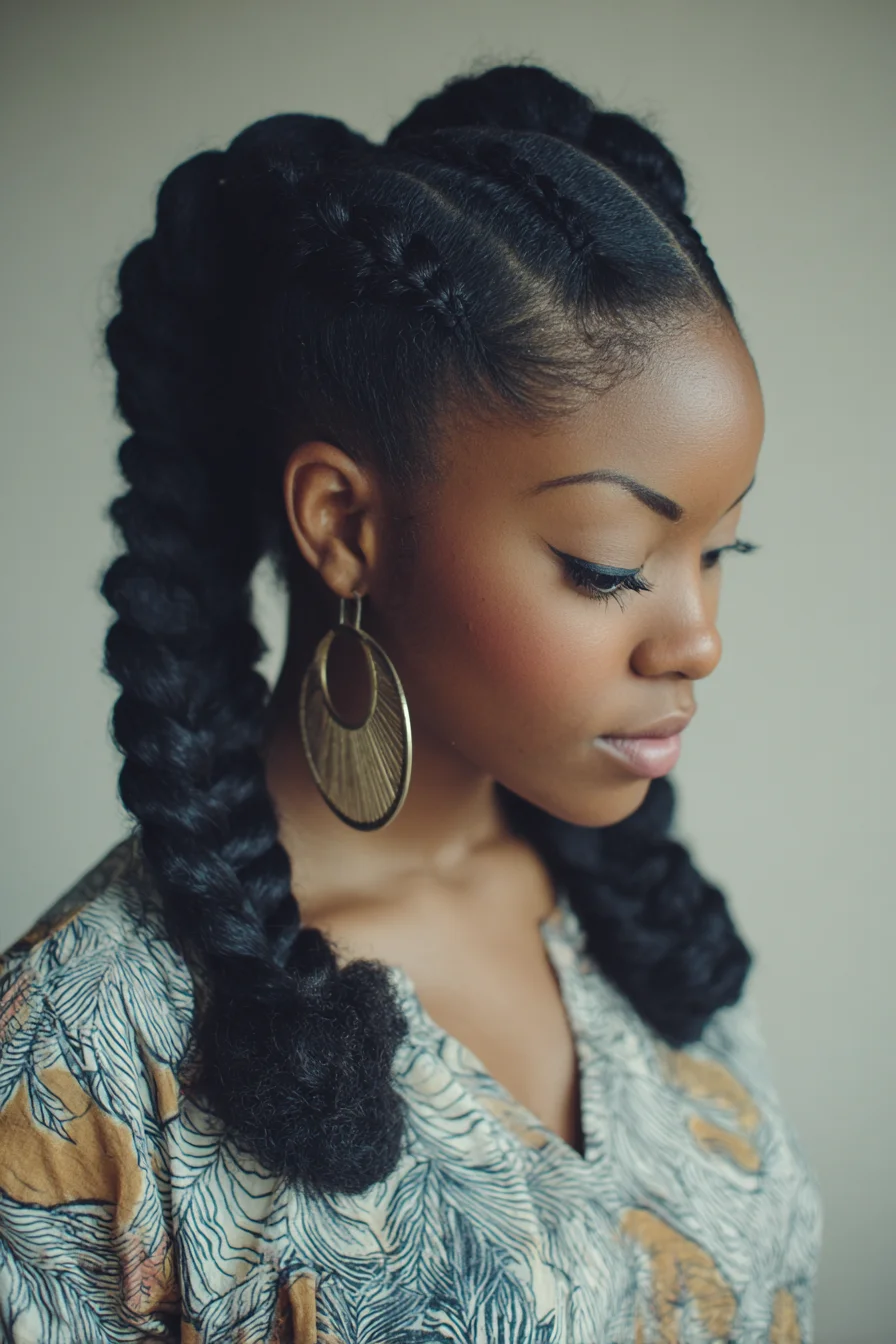
This polished double braid look is ideal for natural 3C–4C textures or anyone with thick, dense hair who wants a protective, low-manipulation style. Technique: create a clean center part, smooth each side with a firm-edge control, then cornrow (or feed-in) the top section into two large, chunky braids that continue down the length. Extensions can be added for extra length or uniform thickness. Tools needed: rattail comb for parting, wide-tooth comb for detangling, sectioning clips, small elastic bands, an edge brush, and optional extension hair. Products required: moisturizing leave-in conditioner, lightweight cream or butter to hydrate the length, strong-hold edge control or gel for sleek parts, and a light hair oil or serum for shine. Difficulty: moderate — basic cornrowing and feed-in braiding skills are recommended; book a stylist if you’re not confident with neat parts or tension control. Maintenance tips: sleep on a satin bonnet or scarf, refresh edges weekly with edge control, lightly oil the scalp every 4–7 days, avoid excessive tension to prevent breakage, and remove/re-do after 4–6 weeks depending on new growth and hair health.
Double Dutch (Boxer) Braids — Chunky Pancaked Braids for Medium–Long Hair
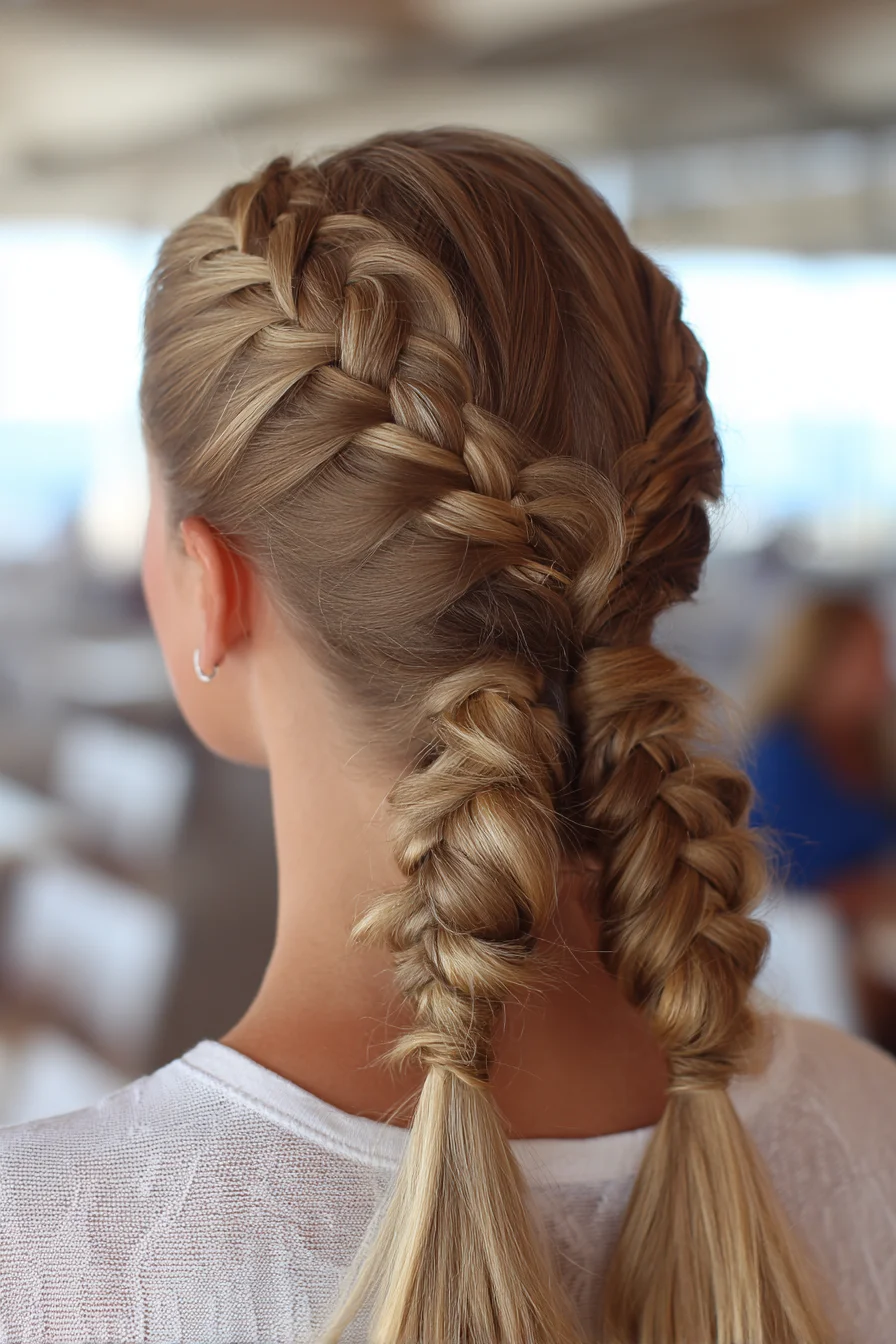
This look features two Dutch (boxer) braids that are pancaked for a chunky, textured finish — ideal for medium to long hair. Works well on straight or slightly wavy hair; fine hair benefits from a texturizing spray or light teasing at the roots for grip, while very thick or curly hair may need smoothing with a blow‑dry before braiding. Technique: create a precise center part, clip each side away, then Dutch‑braid from the hairline down toward the nape, adding hair each pass. Once braided, gently pull apart each braid’s outer edges (pancaking) to widen the sections and create volume; finish with small elastics and hide ends with a wrap of hair or pins if desired. Tools: rat‑tail comb, sectioning clips, small clear elastics, tail comb and a few bobby pins. Products: prepped with dry shampoo or texturizing spray, smoothing serum for flyaways, and a flexible‑hold hairspray to set. Difficulty: intermediate (20–35 minutes). Maintenance tips: sleep on a silk pillowcase, refresh with dry shampoo and a light mist of hairspray, and re‑pancake or re‑tighten braids the next day as needed.
Double Dutch Braids with Voluminous Wrapped Ponytail — Textured Bridal Look
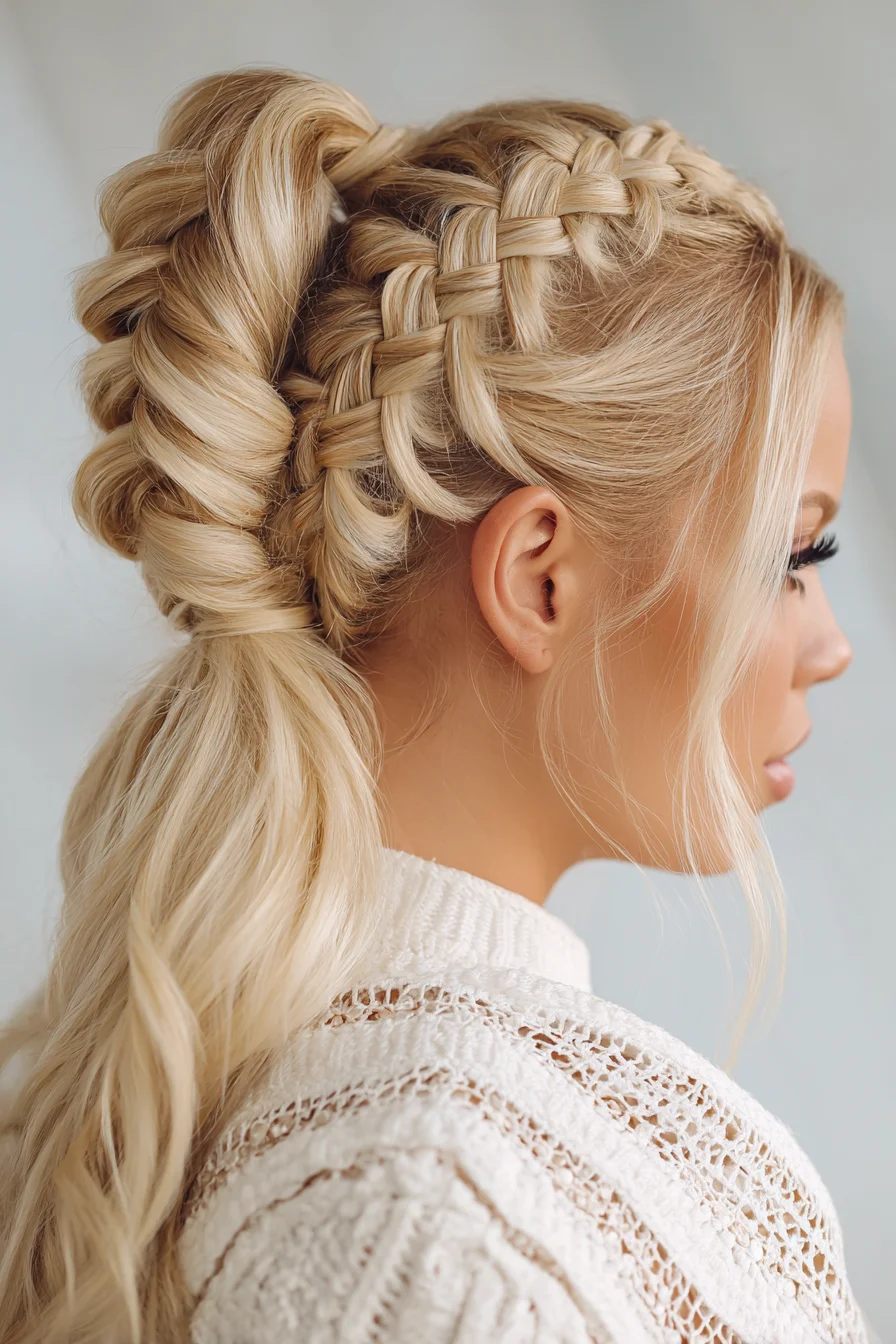
This polished style pairs two Dutch/inside-out braids along the crown that feed into a voluminous wrapped ponytail — ideal for medium to long lengths and medium-to-thick hair. Fine hair will work with lightweight clip‑in extensions or strategic backcombing for body. Technique: section the top into two ladder-style Dutch braids, braiding close to the hairline and adding hair as you go. Pancake each braid gently to widen and soften the lines, then gather remaining hair into a low-to-mid pony. Create a relaxed rope or bubble effect on the ponytail and wrap a small braid or a hair section around the elastic to finish. Tools needed: tail comb, sectioning clips, small clear elastics, bobby pins, medium round brush. Products required: texturizing spray or dry shampoo for grip, light heat protectant (if curling tail), smoothing serum on lengths, and a medium-hold hairspray. Difficulty: intermediate — expect 30–45 minutes in-salon. Maintenance tips: sleep on a silk pillowcase, refresh texture with dry shampoo, tighten the elastic and re-pancake braids daily as needed, and avoid heavy oils at the roots to preserve hold.
Textured Side Fishtail Braid with Face‑Framing Tendrils for Long Wavy Hair

Suitable for long, medium-to-thick hair with natural wave or loose curls. This romantic, textured side-fishtail/dutch-influenced braid combines volume at the crown with soft face-framing tendrils. Begin on towel-dried hair: apply heat protectant and a volumizing mousse, blow-dry with a round brush for lift. Create loose waves with a 1–1.25 curling wand, roughen with a texturizing spray, then gather hair to one side. For the braid, use a loose fishtail (or rope) technique—take small outer sections and cross over, pulling slightly after each pass to pancake the braid for fullness. Secure with a small elastic and conceal with a wrapped strand pinned underneath. Finish with light-hold hairspray and a shine serum on ends. Tools: curling wand, round brush, tail comb, sectioning clips, elastic bands, bobby pins. Products: heat protectant, volumizing mousse, texturizing spray or dry shampoo, light-hold hairspray, lightweight serum. Difficulty: intermediate—requires basic braiding and shaping skills. Maintenance: refresh texture with dry shampoo and re-pancaking, sleep on a silk pillowcase or loose satin scarf to reduce friction, and touch up face-framing pieces with a curling iron as needed. Avoid heavy oils at the roots to maintain lift.
Textured Low Double Fishtail Braids with Wrapped Crown
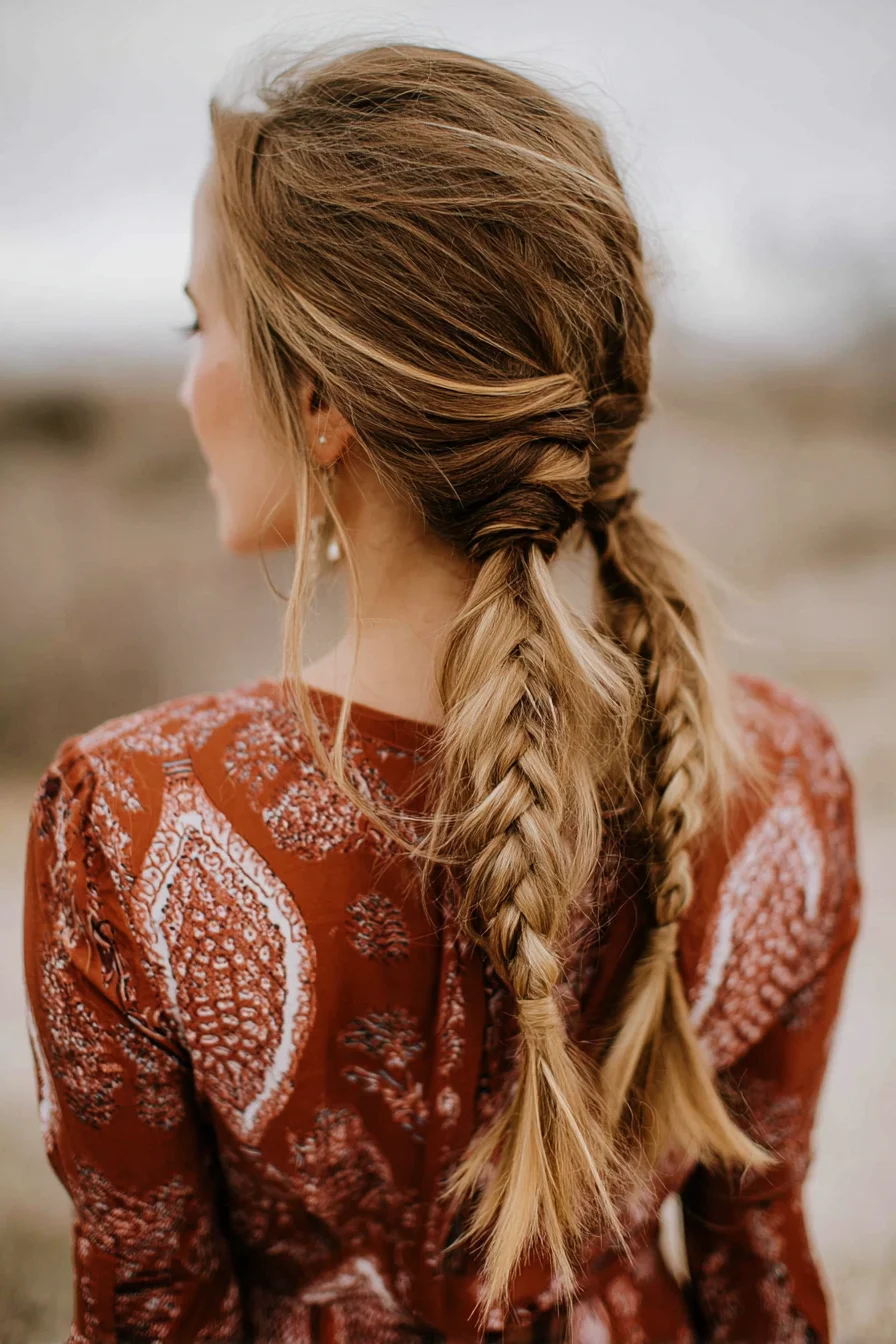
Suitable hair: Best on medium to long hair with slight natural texture or layered cuts. Works well for fine hair when pre-texturized and for thick hair when smoothed at the roots. Styling technique: Start on towel-dried or second-day hair. Apply a texturizing or sea-salt spray from mid-length to ends, part down the middle, and separate into two low sections. Create loose fishtail braids (use small sections and cross outer pieces inward) and finish with clear elastics. Gently pancake each braid by pulling at the edges to widen and soften the look, then wrap a small strand of hair around each elastic and pin underneath to conceal. Tools needed: tail comb, sectioning clips, small clear elastics, bobby pins, boar-bristle brush (optional). Products required: texturizing/sea-salt spray, light smoothing serum for flyaways, dry shampoo for grip, and a light-hold hairspray to set. Difficulty level: Easy–Medium; about 10–25 minutes depending on hair length and experience. Maintenance tips: sleep on a silk pillowcase or loosely braid again, refresh texture with dry shampoo or mist, tighten elastics as needed, and trim ends regularly to avoid fraying.
Dutch Crown Braid into Textured Low Ponytail — Braided Pony Hairstyle
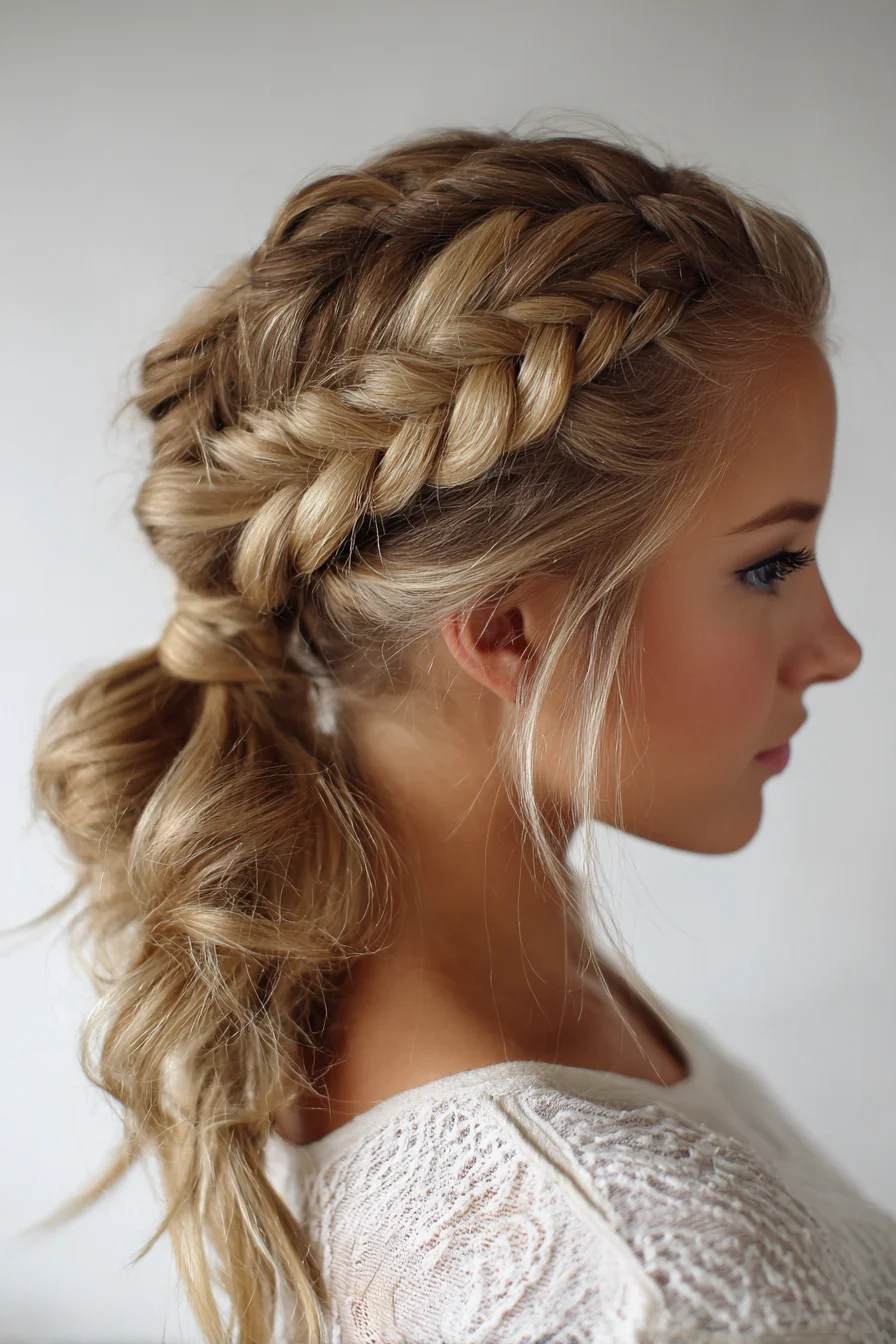
This look works best on medium‑to‑long hair and suits straight, wavy or relaxed-curly textures; medium-thick hair will hold the shape most naturally, while fine hair benefits from texturizing products or lightweight clip‑in extensions. Start with towel‑dried hair blown dry for body or rough‑dried for natural texture. Create a deep Dutch (inside‑out) braid along the hairline across the crown, adding hair as you go and securing at the nape. Pancake (gently widen) the braid for a fuller appearance, then gather the braid and remaining lengths into a low pony. Add 2–3 small elastics spaced down the ponytail and lightly pull each section to create a segmented, relaxed “bubble” with soft waves at the ends. Tools: tail comb, sectioning clips, small clear elastics, bobby pins and a 1
Textured Double Dutch Braids with Soft Face‑Framing Tendrils
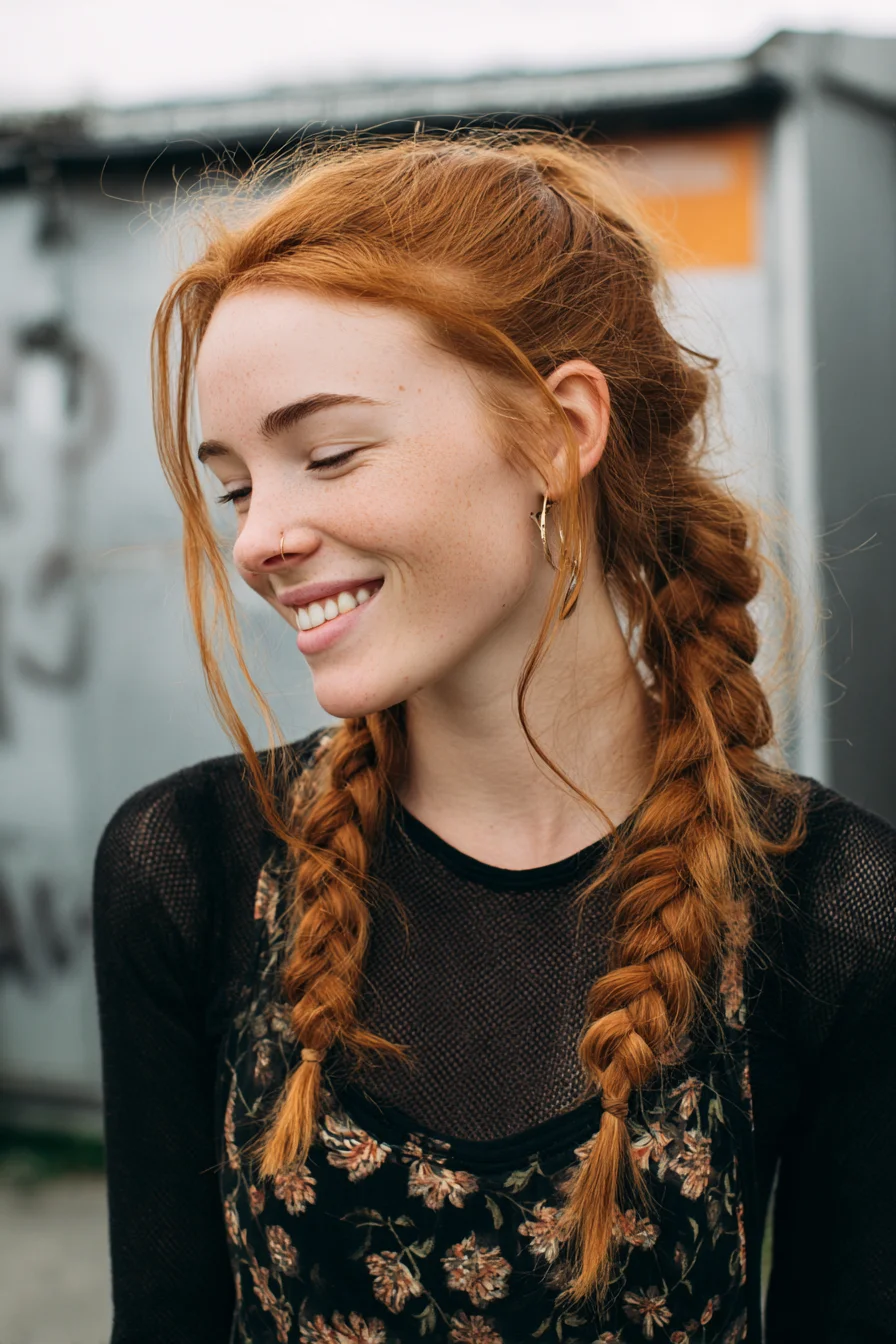
A relaxed, textured double Dutch braid look that works well for everyday wear or casual events. Best suited to medium-to-long hair and medium to thick textures; fine hair benefits from a light texturizing spray or teasing at the roots to add grip. Start with a clean, towel-dried base spritzed with salt spray; create a center part and section into two. Dutch-braid each side (underhand technique) from the hairline, adding hair as you go, then finish with a three-strand braid and secure with a clear elastic. Gently pancake each braid by pulling outer loops to widen them for that lived-in fullness; pull a few face-framing tendrils free and soften with a small barrel-curler if desired. Tools: tail comb, hair elastics, bobby pins, small curling iron, paddle brush. Products: texturizing/salt spray, light-hold hairspray, smoothing serum for ends, dry shampoo for refresh. Difficulty: easy–intermediate — basic braiding skills required plus pancake technique. Maintenance: sleep on a silk pillow or wrap in a scarf, refresh texture with dry shampoo, re-pancake in the morning, and secure any loosened pieces with pins. Avoid heavy oils at the roots to keep texture intact.
Textured Dutch Crown Braid into Loose Romantic Pull-Through Braid
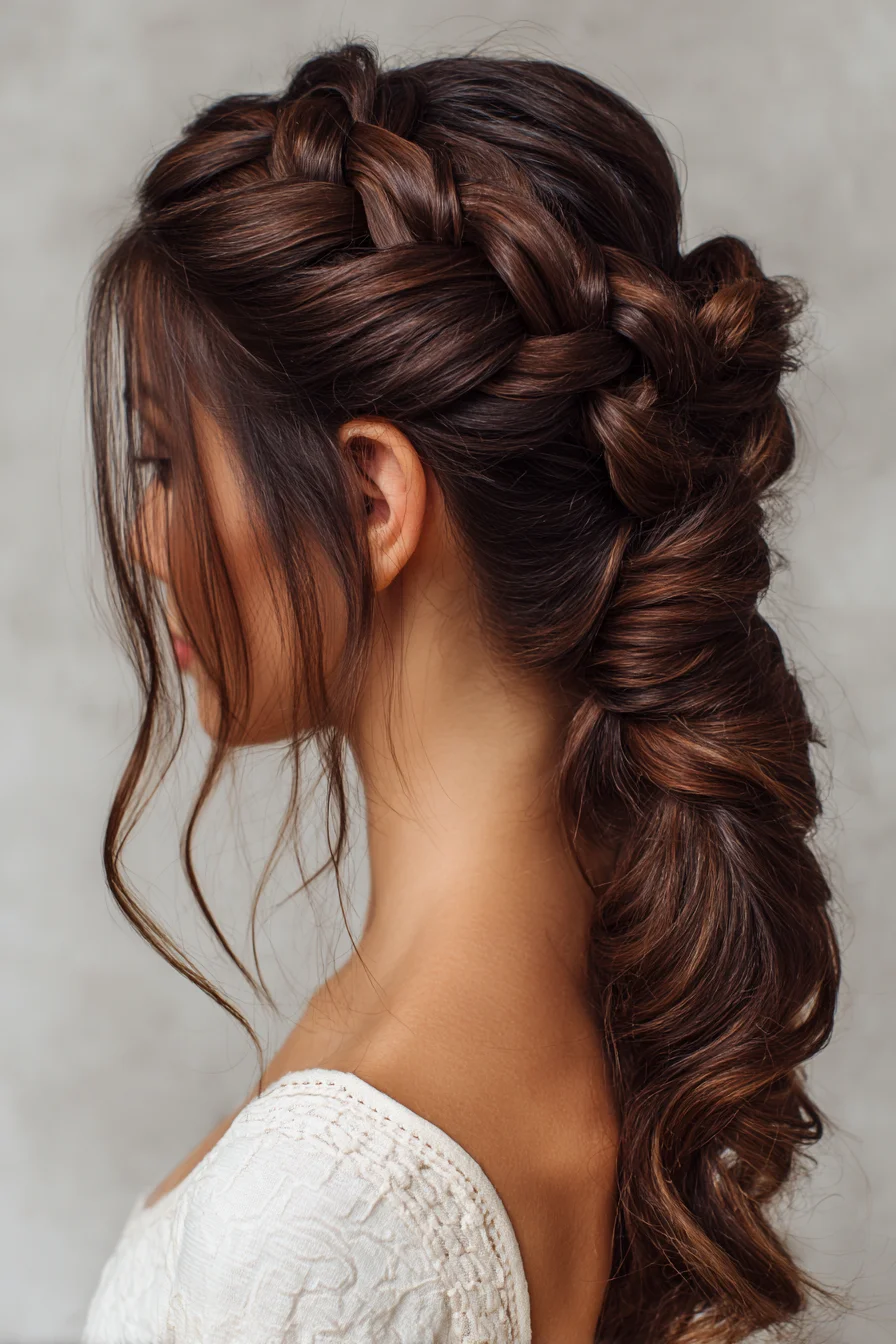
This polished, textured crown-to-pull-through braid suits medium to long hair and works best on medium-thick to thick textures; fine hair benefits from pre-styling volume or clip-in extensions, while naturally curly hair can be smoothed or left with texture for a softer effect. Technique: create a deep Dutch/French braid along the crown, pancake the sections to widen them, gather into a secured low pony, then construct a pull-through or loose three-strand braid, pulling apart sections for fullness and finishing with soft face-framing tendrils. Tools needed: tail comb, medium and fine-tooth comb, 1 curling wand (for tendrils), elastic bands, bobby pins, and sectioning clips. Products required: heat protectant, volumizing mousse or root-lift spray, texturizing spray or dry shampoo, lightweight smoothing serum for flyaways, and a flexible-hold hairspray. Difficulty level: intermediate — requires braiding experience and section control; allow 25–40 minutes. Maintenance tips: sleep on a silk pillow or loose scarf, refresh texture with dry shampoo, retighten elastics or pins as needed, and quickly reshape tendrils with a curling wand to revive the look.
Double Dutch Braids into Wrapped Low Ponytails (Textured Finish)
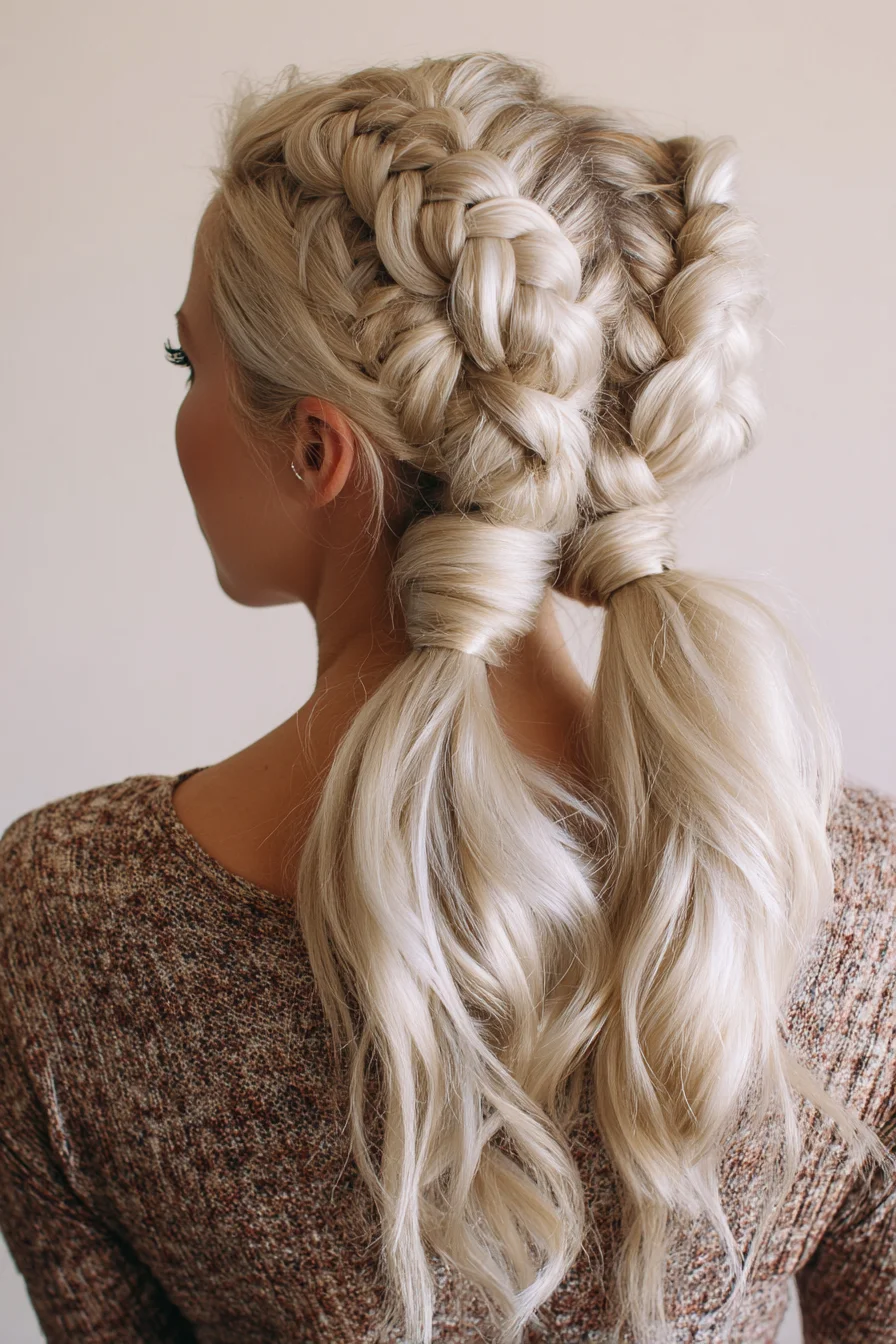
Salon-ready, this hairstyle pairs two Dutch (inside-out) braids running from the hairline to the nape that seamlessly transition into wrapped low ponytails. Its best suited to medium-to-long lengths and adapts well to fine, straight, wavy, and thick textures — fine hair benefits from light texturizing spray or clip-in pieces for extra volume, while naturally textured hair holds the braids easily. Styling technique: start on towel-dried or second-day dry hair for grip. Apply heat protectant and texturizing spray, create a clean center part, then Dutch-braid each side to the nape. Secure with small elastics, gather each braid into a low pony, wrap a small section of hair around the elastic and pin underneath. Finish by waving the loose lengths with a 1–1.5 curling wand for soft movement. Tools & products: rat-tail comb, sectioning clips, small elastics, bobby pins, curling wand, paddle brush; heat protectant, texturizing or dry shampoo, smoothing serum, flexible-hold hairspray. Difficulty: moderate (basic to intermediate braiding skills). Maintenance: sleep on a silk pillowcase, refresh with dry shampoo or salt spray, re-tighten elastics as needed, and avoid heavy oils at the roots to keep texture.
Double Dutch Braids into Loose Curled Ponytails
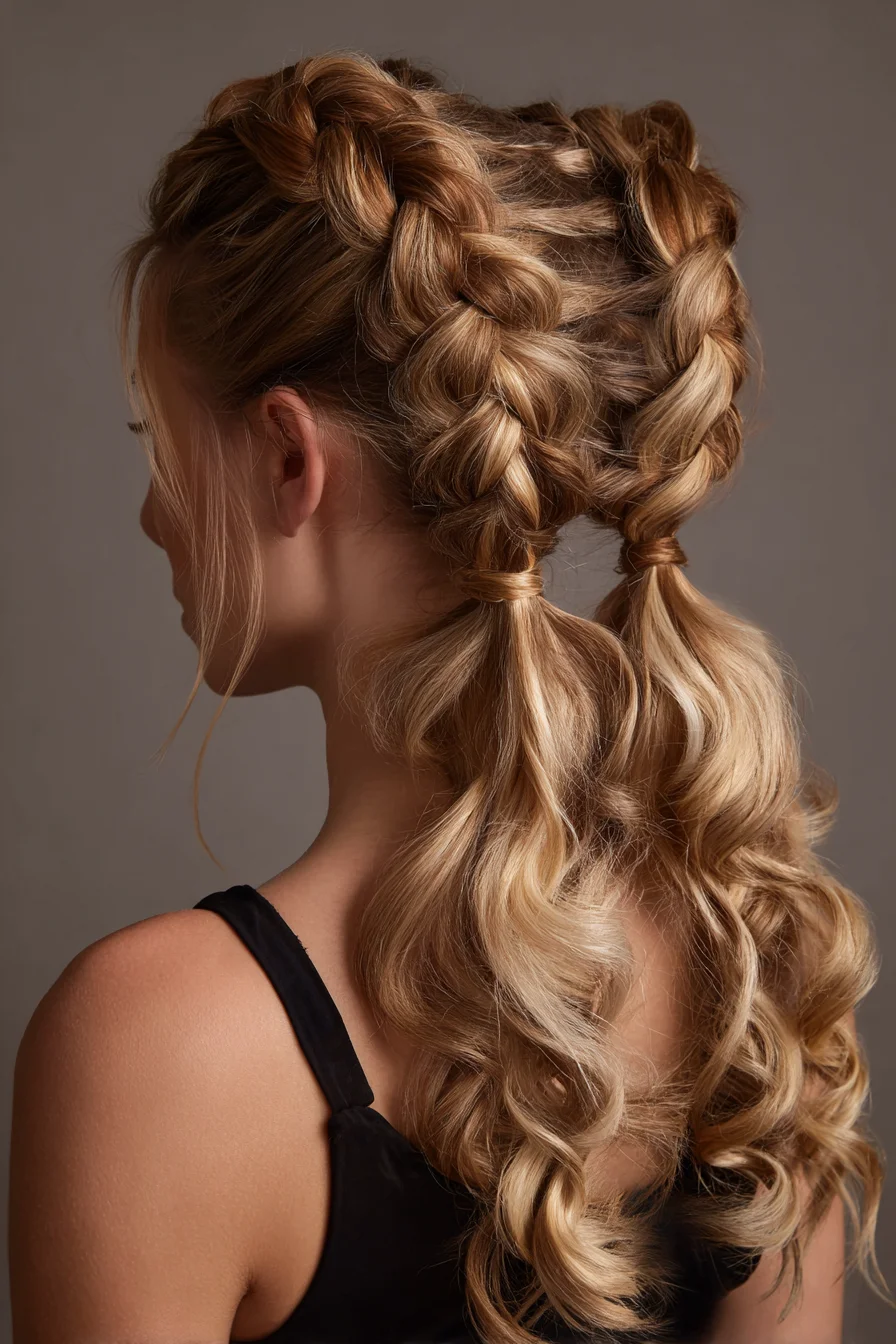
This polished double-Dutch braid into loose curled ponytails works best on medium to long hair and medium–thick textures. For fine hair add volumizing powder or clip-in pieces for fullness; for very curly hair, smooth slightly with a blow-dry or light straightening pass before braiding. Start with towel-dried hair: apply a heat protectant and a volumizing mousse, then blow-dry with a round brush for control. Create a clean center part and Dutch-braid each side from hairline to nape, keeping tension even; secure each braid with a small elastic and wrap a small section of hair around the elastic to conceal it. Use a 1
Textured Double Fishtail Braids with Loose, Messy Crown
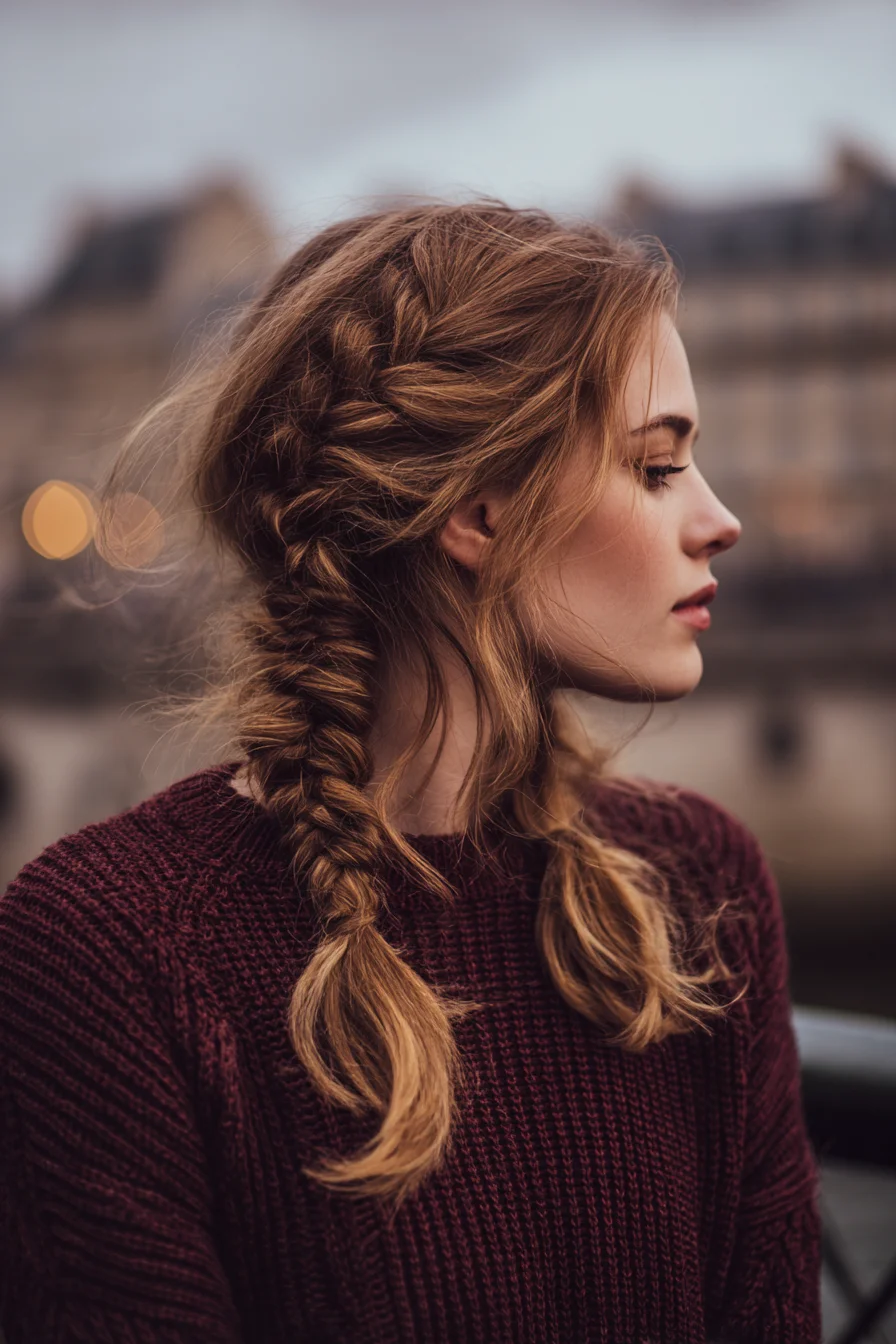
This relaxed, textured double fishtail look works best on medium-to-long hair and flatters straight to wavy textures; fine hair benefits from texturizing for grip, while thick hair creates fuller braids with minimal teasing. Technique: work on dry hair with sea-salt or texturizing spray for hold, create two slightly off-center sections, loosely Dutch/French braid at the crown to gather hair, then convert each side into a loose fishtail braid. Pancake strands by gently pulling the braid edges for volume and pull a few face-framing pieces free for softness. Tools needed: tail comb, sectioning clips, small clear elastics, bobby pins, and a paddle brush; optional 1
As a stylist, my top advice when working with two-braided ponytails is to prep the hair properly, choose the right grip product, and respect your hair’s natural density. Start with clean, detangled hair; use a lightweight smoothing gel or cream for sleek looks and a texturizing spray or powder for grip on fine hair. Don’t over-tighten — secure tension keeps the scalp happy and prevents breakage. For added length or volume, use tape-in or clip-in extensions blended into the base ponytail. Protect styles at night with a silk scarf or pillowcase and refresh with a little dry shampoo or leave-in conditioner mist. Book a professional if you want precision parting or complex braids — it’ll save time and give longer-lasting results. Enjoy experimenting with the 21 images and tailor each variation to your lifestyle, whether you need a polished office look, an active gym style, or an elevated event hairdo.